




When Amy Alexy was in college, she was convinced her future lay in communications. But a single HR internship completely shifted her trajectory—and not for the reason most people might expect.
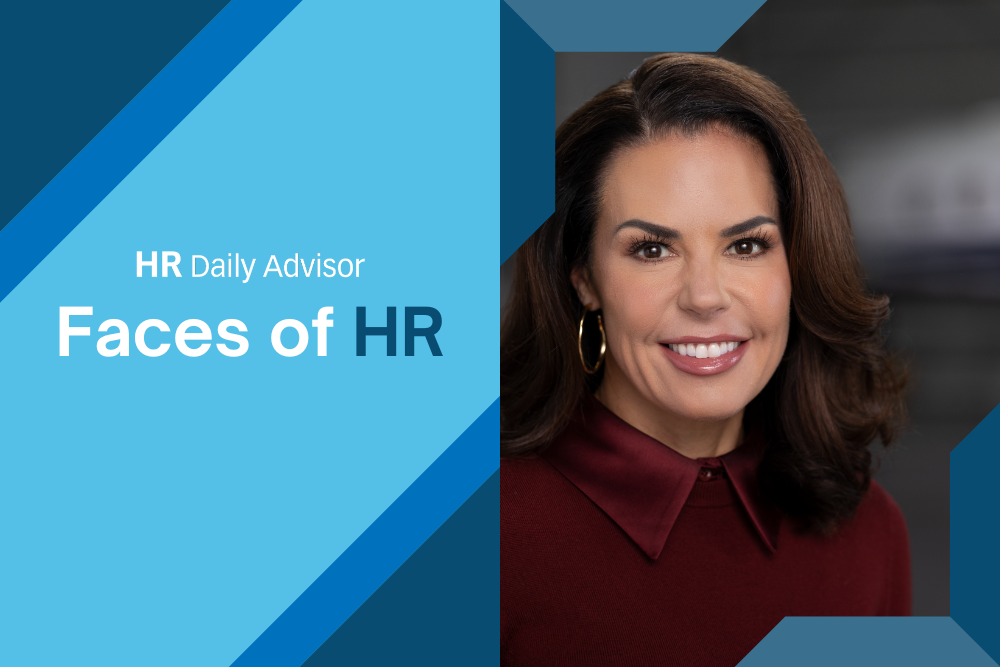
It wasn’t traditional HR tasks that captured her attention. Rather, it was a pivotal realization: organizations rise or fall based on the quality of their people, their leadership, and their culture.
Early in her journey, Alexy gained critical experience working outside traditional HR roles, discovering firsthand that talent development doesn’t happen in neat, predictable categories.
“Some of the most capable leaders I’ve met weren’t obvious choices on paper,” Alexy shared with HR Daily Advisor. “They were people with curiosity, adaptability, and the courage to step into unfamiliar territory. That lesson has stayed with me throughout my career. Potential is often easier to recognize in hindsight than in the moment. One of the greatest responsibilities leaders have is seeing capability in someone before they fully see it in themselves.”
Steering Through Storms and Global Industries
That philosophy—centered on learning agility, transferable skills, and taking on new challenges—has defined Amy’s distinguished career across a wide range of sectors, including hospitality, manufacturing, pharmaceuticals, consumer goods, and financial services.
Prior to her current role, Amy served as Chief Human Resources Officer at Royal Caribbean Group, where she helped guide the company through one of the most challenging periods in its history and played a key role in its return to service following the pandemic. Her resume also includes senior global talent leadership positions at industry giants like Novartis and Goodyear Tire & Rubber Company.
Leading Global Strategy at the Top of Private Aviation
Today, Amy serves as Chief People Officer at Signature Aviation, the world’s largest network of private aviation terminals.
In her role, she leads the company’s global people strategy—focusing heavily on talent, culture, leadership development, and organizational effectiveness. Through it all, her passion remains steadfast: supporting Signature’s continued growth and commitment to exceptional service by building strong organizational cultures and empowering people to reach their full potential.
Who is or was your biggest influence in the industry?
I’ve been fortunate to learn from many exceptional leaders, but one who had a profound impact on me is John Lucas, former Chief Human Resources Officer at Goodyear.
More than a decade ago, he challenged the way I thought about my own future. At a point when I was focused on doing the next job well, he encouraged me to think bigger and see possibilities I hadn’t yet considered for myself.
What has always stood out to me is how he defines success. He doesn’t measure his own success by the positions he held or the results he achieved, although there are many. He measures success by the leaders he helped create.
The most influential leaders understand that their real legacy isn’t what they build personally; it’s what continues because they invested in others. That philosophy has shaped how I lead, how I mentor, and how I think about the impact I hope to leave behind.
What’s your best mistake and what did you learn from it?
One of the biggest misconceptions about successful careers is that they’re supposed to make sense while you’re living them.
Looking back, there were opportunities that didn’t work out, and moments that felt like setbacks. At the time, each one felt significant. In retrospect, many of them redirected me toward experiences that proved far more valuable than the path I thought I wanted.
The most important lesson I’ve learned is that growth often disguises itself as discomfort. Some of the experiences that challenged me the most ultimately expanded my perspective, strengthened my resilience, and prepared me for opportunities I couldn’t yet see.
I’ve also learned that careers are built less by flawless decision-making and more by learning agility. The leaders who continue growing aren’t necessarily the ones who avoid mistakes. They’re the ones who remain curious enough to extract value from every experience.
What’s your favorite part about working in the industry? What’s your least favorite part?
Aviation attracts people who are deeply committed to excellence and possibility. When you walk through one of our bases, you’re surrounded by team members whose work directly impacts safety, service, and operational performance. There is an incredible sense of purpose in that environment. People understand that what they do matters, and that creates a level of accountability and pride that is inspiring to be around.
For an industry that helps connect people and economies around the world, we still have an opportunity to tell our own story more effectively. The future of aviation depends not only on attracting talent, but on helping people see the possibilities they may never have considered.
What I’d like to change is the perception many people have about careers in aviation. Too often, people think of aviation through a very narrow lens. What they don’t see are the extraordinary leadership, operational, technical, customer experience, and business careers that exist behind the scenes.
How can company leaders make HR a value within their organization?
The organizations that get the most value from HR recognize a simple truth: Every business challenge eventually becomes a people challenge.
Growth requires talent. Innovation requires leadership. Transformation requires trust. Performance requires culture.
The most effective CEOs and executive teams understand that business strategy and people strategy are inseparable and intertwined. They don’t engage HR after decisions are made; they engage HR while decisions are being shaped. Simply put: HR helps leaders build an organization capable of executing its ambitions.
Where do you see the industry heading in five years?
Artificial intelligence has undoubtedly changed how work gets done, but the bigger story will be how it changes what organizations expect from people.
Companies have typically hired for specific skills. Increasingly, we are hiring for adaptability, learning velocity, and the ability to navigate constant change. The competitive advantage of the future will be an organization’s ability to help people evolve along with technology.
The companies that will continue to succeed won’t necessarily have the most advanced tools. They’ll be the ones that create environments where team members can reinvent themselves as work changes around them. For HR leaders, that represents both a significant responsibility and an extraordinary opportunity.
What are you most proud of?
Without question, the achievement I’m most proud of is seeing people accomplish goals they once doubted were possible. I’ve had the opportunity of watching individuals take on roles they weren’t sure they were ready for, lead through challenges they never expected to face, and grow into leaders who inspire others. Those moments never get old.
Titles come and go. Strategies evolve. Business cycles change. What endures are the lives and careers you influence along the way.
The longer I am a people leader, the more convinced I become that leadership is ultimately an act of stewardship. We “borrow” opportunities, experiences, and knowledge from those who invested in us, and our responsibility is to leave others stronger than we found them.
Do you have any advice for people entering the profession?
Be sure to understand the business before you try to lead the people strategy.
Many people are drawn to HR because they enjoy working in teams, and that’s important. But exceptional HR leaders are distinguished by something else: They understand how the business creates value.
Spend time with operations. Learn the financial drivers. Ask questions. Sit where decisions get made. Develop a point of view on what helps the business win. The most influential HR leaders are defined by their ability to connect people, performance, culture, and strategy in ways that move the business forward.
And perhaps most importantly, don’t limit yourself to experiences that fit neatly inside HR.
Some of the best leadership lessons you’ll ever learn will come from stepping outside your comfort zone and seeing the organization through a different lens.