




Davida Lindsay-Bell did not start in human resources (HR) on her radar. Inspired by Oprah Winfrey, she initially set out to major in journalism, convinced that storytelling was the most powerful tool in the world. Organizational behavior turned out to be the closest thing—still about people, just applied to the workplace—launching a career that now spans more than two decades of people-strategy leadership.
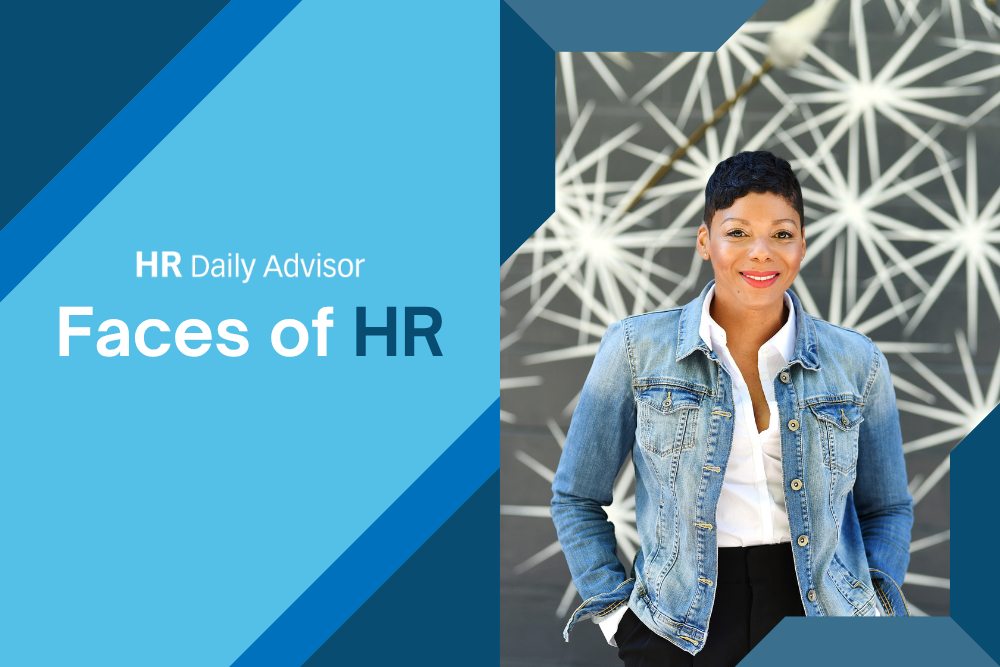
Today, as Chief People Officer at Hanna Andersson, she blends strategic clarity with deep humanity to strengthen culture, help organizations evolve, and unlock human potential across industries ranging from museums to mission-driven consumer brands.
Learning Business from the Ground Up
Lindsay-Bell’s first exposure to business came at Draeger’s, a family-owned grocery chain with no People infrastructure. Because of that, she touched accounting, operations, marketing, and communications alongside the People work. That early experience shaped her as a systems thinker—someone who looks for patterns and the connective tissue in organization, always building solutions before a gap becomes a crisis. Anchored in her belief that people create extraordinary outcomes when they feel seen and supported, her leadership continues to shape one of the most beloved children’s apparel brands.
“The most durable organizations treat purpose as infrastructure, not positioning,” Lindsay-Bell shared with HR Daily Advisor. “When values are embedded in how decisions get made, culture becomes a genuine competitive advantage. Transformation is dynamic and nonlinear, and the leaders who understand that are still standing when the next disruption arrives.”
In our latest Faces, meet Davida Lindsay-Bell.
Who is/was your biggest influence in the industry?
Larry Solomon, EVP of Human Resources at Dr. Pepper Snapple Group while I was Head of HR there. Larry modeled genuine integration between business strategy and People leadership. He came up through Sales, worked across three continents, held a Lean Six Sigma Black Belt and was never narrowly “HR.” He later authored Translate, Motivate, Activate, built upon the idea that leaders don’t just communicate a plan, they translate it, so that it means something at every level. That thinking is baked into everything I’ve built – San Francisco Museum of Modern Art through a pandemic and labor negotiation, Hanna Andersson across a workforce spanning 26 states. I draw leadership insight from beyond HR, where constraints, systems, and culture reveal their true lessons.
What’s your best mistake and what did you learn from it?
Early in my career, I confused activity with impact; building programs and measuring participation without asking whether any of it moved the needle. The lesson? Structure without clarity of purpose is just noise. Now, I ask the harder question first – what problem are we actually solving – before anything gets built.
What’s your favorite part about working in the industry? What’s your least favorite part, and how would you change it?
The leverage is what keeps me here. A People strategy that’s working doesn’t just affect employees. It affects customers, communities, and business health. At Hanna Andersson, we drove an 8-point increase in engagement scores in 12 months with 95% survey participation, outpacing most organizations. That’s not a People story; it’s a business story.
My least favorite part is the persistent underestimation of the function: People is still too often a compliance mechanism rather than a strategic driver, brought in after decisions are made rather than as co-architects of them. As a futurist, I began building AI-adaptable People systems three years ago, long before it was trendy.
It sounds like through your experience you really care about people, and you want to help them feel safe and comfortable, which is important in the industry. Please elaborate here.
Safety and comfort aren’t the end goal; they’re the precondition. I’m building toward high performance, and psychological safety is the most direct route there. Only 2% of employees sustain high performance over time, and psychological safety is the leading differentiator. Up to 76% of the difference between low- and high-performing teams comes from team behaviors and norms. Within my first 30 days at Hanna Andersson, I brought in Dr. Timothy Clark, whose four-stage model, inclusion, learner, contributor, and challenger safety, gave everyone from executives to the frontline employees a common language.
How can company leaders make HR a value within their organization?
Stop treating People decisions as downstream of business decisions. Strategic readiness requires the People function to be a co-architect of strategy, not a responder to it. At Hanna Andersson, culture transformation was co-owned directly with the CEO. “Cultivate Excellence” is a strategic company pillar with KPIs reported to the executive team and investors. Leaders who understand this hold themselves publicly accountable for the culture they’re creating, whether or not they’re in the room.
Where do you see the industry heading in five years? Or are you seeing any current trends?
The organizations that will lead are the ones figuring out how to integrate AI without losing the human infrastructure that makes work meaningful. At Hanna Andersson, we’ve treated this as an intentional test-and-learn period; building trust, governance, and shared literacy before accelerating adoption. The most important lesson, cultural readiness, has to precede technical readiness. The definition of employee wellbeing is also expanding. Gallup’s research across five domains, career, social, financial, physical, and community, shows that organizations focused on engagement scores alone are missing most of the picture. The capabilities that become non-negotiable aren’t technical; they’re human: curiosity, systems thinking, inclusive emotional intelligence, and comfort with ambiguity. The People function itself is becoming an architect of the future of work.
What are you most proud of?
The body of work at Hanna Andersson, built over two years across four pillars: Purpose, Belonging, Connection, and Performance. That architecture sits beneath everything: the engagement outcomes, AI governance, the values reset, the compensation redesign, and Core Week for a workforce spanning 26 states. What I’m proudest of isn’t any single initiative, it’s that the foundation is durable.
Do you have any advice for people entering the profession?
Be industry agnostic, at least early in your career. The pattern recognition you build moving across sectors is worth more than deep expertise in any one of them. The through-line isn’t the industry; it’s the stage of organizational evolution. Learn the business before you try to influence it. Your credibility depends on speaking the language of whoever you’re trying to move, so develop your systems thinking early. Invest in your curiosity like it’s a professional asset, because it is. The leaders I’ve watched plateau are the ones who stopped asking questions outside their domain.