Category: HR Management & Compliance
There are dozens of details to take care of in the day-to-day operation of your department and your company. We give you case studies, news updates, best practices and training tips that keep your organization fully in compliance with ever-changing employment law, and you fully aware of emerging HR trends.
Today’s business environment is extremely dynamic. Not only are new technologies rapidly shifting what is possible in terms of product and service offerings and modes of delivery, but an increasingly global economy means that new competitors can emerge from any corner of the globe. Add to that the fact that consumer tastes and preferences are […]
Feedback is crucial to employee development, both to reinforce positive behaviors and to address and correct negative behaviors. Additionally, regular feedback is important in helping employees advance in their careers within the organization. Unfortunately, many organizations continue to limit their formal employee feedback to an annual review.
An employee continues to make mistakes that cost the company money. You meet with her and place her on a performance improvement plan (PIP). After the 60-day PIP period ends, you conclude that her performance did not improve adequately and terminate her employment. The employee files a complaint with the Equal Employment Opportunity Commission (EEOC) […]
In yesterday’s Advisor we looked at two tips for creating a culture of wellness at your organization by answering what employees want and what they need. Today we’ll look at three more tips including incentives, communication, and feedback.
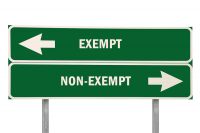
Most employers know that any employee who qualifies as exempt from overtime under the Fair Labor Standards Act (FLSA) must be paid on a salaried basis. Being paid on a salaried basis means that at least the minimum agreed salary for the week is paid, even if the number of hours worked may fluctuate. And […]
You may have seen the recent Department of Labor (DOL) announcement that the Payroll Audit Independent Determination (PAID) Program has been extended by an additional 6 months. If you saw that and hadn’t already heard of this program, it may have you wondering what it is and whether it might be something your organization would […]
Job descriptions are important for several reasons, including providing evidence of the exempt nature of positions classified as exempt under the federal Fair Labor Standards Act (FLSA). This article discusses ways of emphasizing the “exemptness” of positions classified as exempt under the FLSA’s executive and the administrative exemptions.
Yesterday’s post highlighted some important information and statistics you should know about the gig economy. Today’s post will highlight the benefits and downsides of the gig economy you’ll want to consider, for both employers and gig workers.
An organization is only as strong as its people, so in order to operate at its best, employees need to be at their best. That’s where a good wellness program can really make a difference.
Federal law requires many employers to track applicant demographic data and report it to the federal government. Reporting may be imposed by the Equal Employment Opportunity Commission (EEOC) or by the Office of Federal Contract Compliance Programs (OFCCP), for example. But what about employers that aren’t required to track demographic data? Here are some considerations.