



Many HR leaders are rushing to use AI to automate routine, repetitive tasks. The goal seems obvious: clear out the busy work so employees can focus entirely on high-value, complex projects.
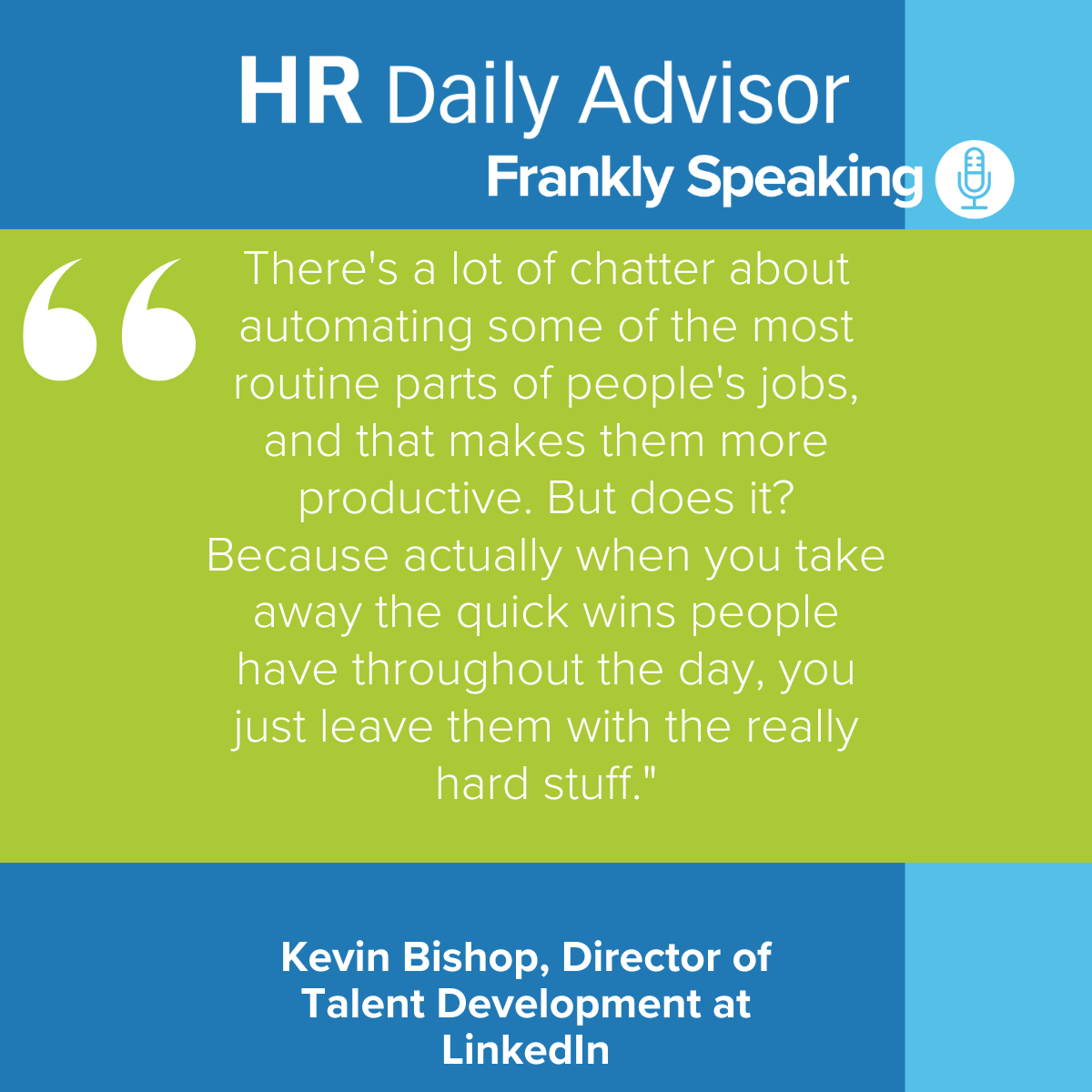
But Kevin Bishop, Director of Talent Development at LinkedIn, warns that this approach might accidentally be driving your team straight toward burnout.
In a recent interview, Bishop shared a story about an organization that handed two-thirds of its routine customer service calls over to AI. On paper, it was highly efficient. But the real-world result on the ground was a morale nightmare.
Before AI, human representatives had a balanced day. They handled tough issues, but they also enjoyed quick, satisfying wins—like helping someone reset a password. Those easy moments provided a mental break and a quick hit of dopamine. Once AI took over the simple tasks, the human workers were left with an exhausting eight-hour shift of dealing only with customers who were angry, yelling, or crying.
As Bishop points out, clearing the deck of routine work comes with a major psychological cost.
3 Takeaways for HR
When rolling out AI tools, look closely at what the leftover workday looks like for the human employee. To protect morale and prevent burnout, keep these guidelines in mind:
- Check the leftover workload: Ensure you aren’t leaving your human workforce with a non-stop, heavy mental or emotional load.
- Keep the easy victories: Make sure employees still have opportunities for quick, satisfying wins that provide a mental break during the day.
- Balance automation with well-being: Look beyond the time saved to see how the technology actually impacts the daily human experience.
Want to learn more? Join Kevin Bishop at SPARK TALENT 2026 in Disney Springs, Florida, where he will dive deeper into LinkedIn’s concept called talent velocity and share practical tools to help you invest in your people.