



Fran Maxwell didn’t set out to redefine human resources—he initially planned to spend his career running a Division 1 university athletics department. But after two years of pursuing that path in graduate school while studying for his MBA, he realized it wasn’t his true calling. Following his interest in business and organizational dynamics, he accepted a role in 2001 with Towers Perrin (which later evolved into Willis Towers Watson)—and never looked back.
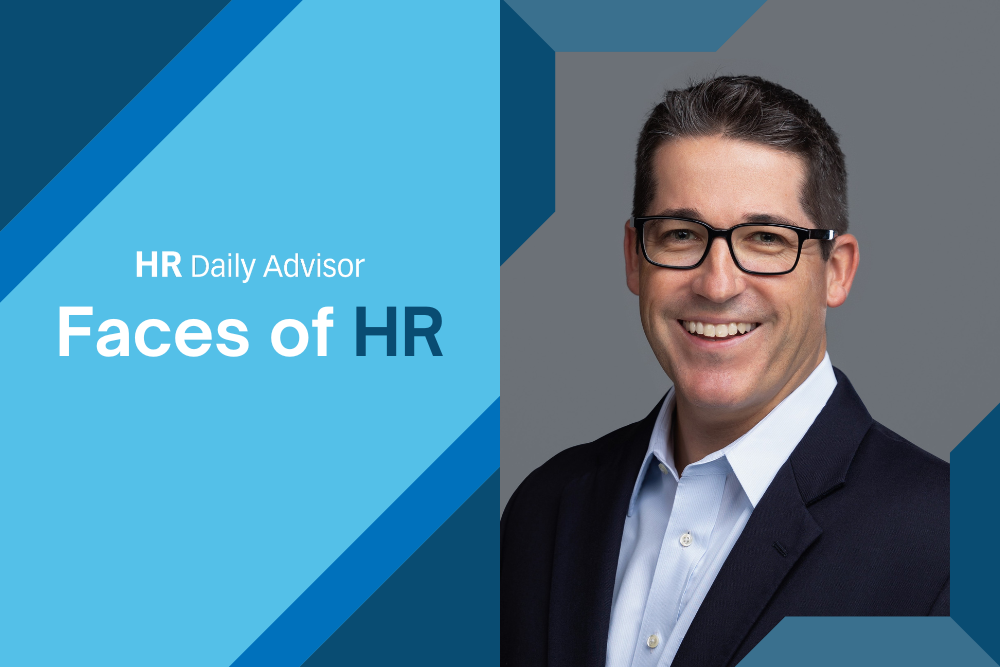
Today, as Global Leader of Protiviti’s People & Change segment, Maxwell brings over two decades of expertise in human resources, workforce transformation, and organizational change.
Driving Results on a Global Scale
Throughout his career, Maxwell has partnered closely with CHROs and senior executive teams to align workforce strategies directly with core business goals.
Before joining Protiviti, he held major executive leadership roles at Willis Towers Watson—including Market Leader and Client Management Leader—where he guided complex, multinational companies through large-scale talent, HR service delivery, and business transformation projects.
Navigating Tech, Skills, and Responsible AI
In an era of rapid technological shifts, Maxwell focuses on helping business leaders navigate an increasingly complex skills marketplace. His current work centers on guiding organizations to:
- Design and adopt AI responsibly across business operations.
- Address the broader human impact of emerging technologies.
- Build more efficient, effective, and future-ready HR functions.
By combining strategic vision with decades of hands-on experience, Fran helps organizations turn workforce disruption into a lasting competitive advantage.
In our latest Faces, meet Fran Maxwell.
Who is/was your biggest influence in the industry?
It’s hard to name just one, but there was a great group at Towers in our early years that really helped mold me, including Tom Keebler (retired) and Glenn Nevill. They believed in me and gave me opportunities early in my career to lead/grow businesses.
What’s your best mistake and what did you learn from it?
My best mistake was very early in my career. I misrepresented a resources experience, and I learned quickly that I would not do anything again to sacrifice my integrity. There were no external repercussions other than how I felt about myself. I think about integrity often and use it as a driving principle in my personal and professional life.
What’s your favorite part about working in the industry?
My favorite part is the dynamic shift that is currently going on; HR functions need to quickly evolve, or they will lose the strategic brand that we’ve worked so hard to achieve for the past 20 years.
What’s your least favorite part, and how would you change it?
Often, business leaders don’t understand the true business value of a strategic HR function. There is a misconception, thanks to shows like “The Office”, that the HR function is the “hall monitor” of the organization. However, if done well, the function can be a competitive differentiator and drive significant, measurable business value.
It sounds like through your experience you really care about people, and you want to help them feel safe and comfortable, which is important in the industry. Please elaborate here.
I believe people are the most important part of any organization. While the purpose of many organizations is to make a profit, this can’t be done without people. In my experience, the people component is often overlooked.
How can company leaders make HR a value within their organization?
The HR function needs to shift its mindset to focus on business outcomes. While there are some things that are compliance and/or risk mitigation related, the function should be at the service of helping the organization achieve their business outcomes.
Where do you see the industry heading in five years? Or are you seeing any current trends?
This is a pivotal time for the HR function, it needs to shift from reactive to proactive, focusing on helping the business achieve business outcomes. In fact, I think it’s time to rename the function – it is not only responsible for Human Resources, and frankly a well-run HR team will be a competitive differentiator for organizations.
What are you most proud of?
I am most proud of the relationships that I’ve built over the past 25 years with clients, with colleagues, with other thought leaders.
Do you have any advice for people entering the profession?
I received advice from a client 25 years ago that stuck with me. She said, “I don’t care how much you know, until I know how much you care” and to me, the “caring” part matters most. We can and do overcome knowledge gaps, but truly caring about the success of your clients, their teams, and the overall organization matters most.