



To close out Spark Talent, former FBI Special Agent George Piro delivered a riveting Day 3 keynote, “Leadership Under Pressure: Influence at the Highest Stakes.”
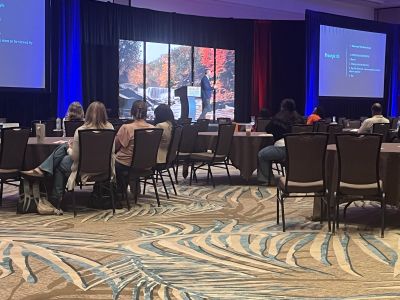
On Christmas Eve in 2003, with less than five years as an FBI agent under his belt, Piro received a call that changed his life: he was selected to lead the team and personally conduct the 7-month, daily interrogation of deposed Iraqi dictator Saddam Hussein. With no playbook, global stakes, and zero room for error, Piro’s operation yielded answers on WMDs, state ties, and a nearly 700-page prosecutor report built for international war crimes tribunals.
Beyond the historical narrative, Piro distilled his high-stakes experience into universal principles for leading teams, building rapport, and exerting influence under extreme pressure.
Here are the top 5 takeaways from the Day 3 closing session:
1. You Don’t Rise to the Occasion—You Fall to Your Level of Training
There is a common leadership myth that when crisis strikes, leaders instinctively “rise to the occasion.” Piro challenged this assumption directly: under extreme pressure, stress, or chaos, individuals and teams default to their level of preparation.
To build genuine executive presence and confidence, Piro studied Hussein’s life, psychological profile, habits, and body language until he knew the dictator better than Hussein knew himself.
- The Actionable Takeaway: Over-preparation isn’t an option; it’s the foundation of confidence. Build team resilience during quiet times through continuous practice and scenario planning so execution becomes second nature when stakes are high.
2. Emotional Intelligence Creates Real Influence
Piro defined the formula for influence as Trust + Credibility + Consistency. Rather than relying on coercion or dominance, Piro leveraged high emotional intelligence (EQ) and genuine human connection to influence behavior.
On Hussein’s birthday, after revealing how the Iraqi public was celebrating the dictator’s absence on live television, Piro used a powerful, high-EQ gesture: he brought Hussein homemade Lebanese cookies sent by Piro’s mother. This unexpected act of empathy shifted the psychological dynamic and opened up dialogue when cold interrogation tactics would have failed.
- The Actionable Takeaway: Emotional intelligence drives outcomes. When trying to move people, technical expertise alone won’t cut it—warmth, empathy, and consistency are what earn psychological safety and commitment.
3. Balance Warmth and Competence
Referencing behavioral research, Piro emphasized that the most effective and charismatic leaders master two distinct levers: Warmth (trust, approachability, empathy) and Competence (capability, execution, reliability).
- Warmth creates connection and opens doors for honest communication.
- Competence builds authority and confidence in direction.
- The Actionable Takeaway: One-dimensional leadership fails. High competence without warmth creates an abrasive culture, while high warmth without competence erodes trust. The best leaders intentionally dial up warmth or competence depending on what the moment requires.
4. Understand What Motivates the Individual (The 4 Drivers)
To persuade or lead anyone, you must understand their core motivators. Piro outlined the four primary forces that drive human behavior:
- Reward: Recognition, appreciation, and being valued (the #1 driver for employees).
- Fear: Risk avoidance or fear of failure.
- Ideology: Deeply held personal, moral, or organizational values.
- Ego: How an individual desires to be perceived and remembered.
In Hussein’s case, reward, fear, and ideology were non-starters; his driver was purely ego and legacy. Piro tailored every interaction around this reality.
- HR’s Actionable Takeaway: Avoid blanket management styles. Take the time to discover whether your team members are motivated by public recognition, autonomous ownership, mission impact, or career progression.
5. Listen to Understand, Not to Respond
In a world full of noise, the single most critical communication skill for any leader is active listening. Piro noted that average leaders listen just long enough to formulate their counter-argument or reply, whereas elite leaders listen to absorb context, pick up on subtle non-verbal cues, and truly understand the speaker’s perspective.
- HR’s Actionable Takeaway: In crucial conversations or performance reviews, pause before responding. Focus on understanding the underlying emotions and motivations before trying to drive your point home.
Day 3 & Conference Wrap-Up
Piro concluded his address with a simple framework for navigating complex corporate or operational challenges: See beyond with a clear ultimate vision, start where you stand with small attainable goals, stay unshakably committed, and control the controllables.