




Driven by a passion for helping people reach their potential, Kimberly Turnmire has built a remarkable 25-plus-year career in learning, leadership development, organizational effectiveness, culture, and talent strategy.
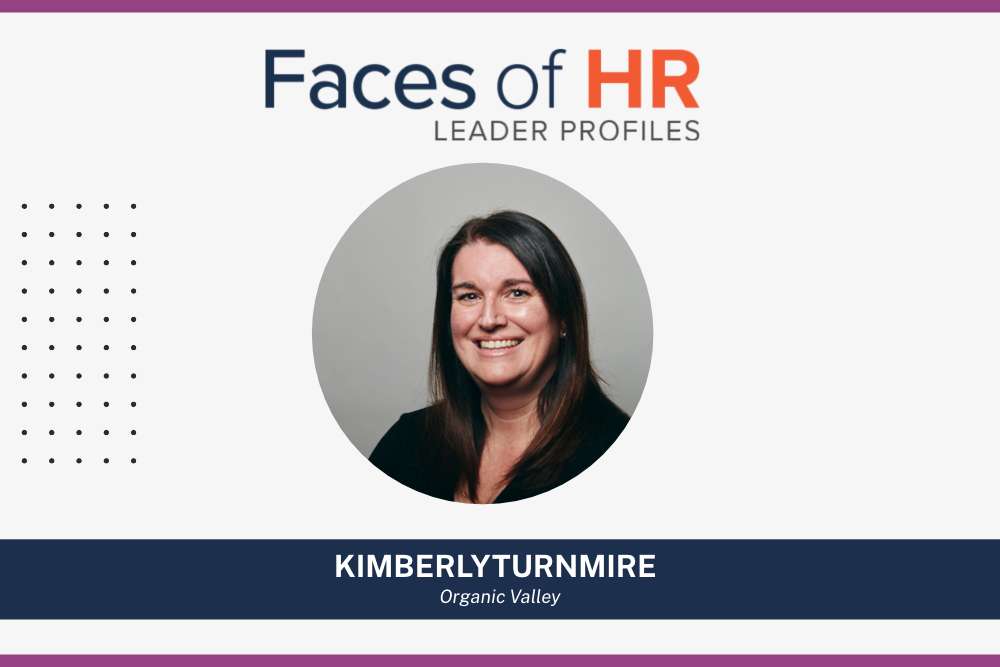
Today, she leads enterprise-wide human capital strategy as the Executive Vice President of People at Organic Valley—the nation’s largest farmer-owned organic food cooperative, representing approximately 1,500 family farms and producing organic dairy, eggs, and other food products from its headquarters in La Farge, Wisconsin.
Finding the Spark
Turnmire is one of the rare professionals in the L&OD (Learning & Organizational Development) field who actually went to school for adult learning. When landing a job right out of college proved difficult, she adapted: she earned her insurance license and took a job selling insurance for a company she heard was deeply focused on employee development and major investments in the space. Her strategy paid off when, just two years later, an instructional designer position finally opened up.
Building Momentum
That pivotal start launched a decade-long journey at Summit Credit Union. There, she grew from instructional design and training roles all the way to Vice President of Financial Education and Business Development.
In 2015, she brought her expertise to Organic Valley as Director of Learning & Organizational Development. Continuing her steady growth, she advanced to Vice President of Organizational Development before stepping into her current executive role as EVP of People.
A Vision for Growth
Throughout her extensive career, Turnmire’s core mission has remained unchanged: aligning people strategy with business performance, fostering employee engagement and belonging, and building resilient organizations where both individuals and teams can thrive.
In our latest Faces, meet Kimberly Turnmire.
Who is/was your biggest influence in the industry?
This is the easiest question – Tracy Nelson, current President & CEO of Aspire Talent Group. Tracy was my manager early in my career at Summit and pivotal to my growth. I think, at times, she believed in me to take on new challenges when I didn’t always see those opportunities myself. She is a wildly talented trainer and instructional designer and was always there to coach and guide me. As my career advanced, Tracy remained my biggest cheerleader. Even after moving to a new organization, Tracy continued to be a dear friend and mentor. While we are all responsible for our own growth and development, I would not have taken those early steps with the same confidence without Tracy’s support and guidance.
What’s your favorite part about working in the industry? What’s your least favorite part, and how would you change it?
What I enjoy most about working in HR is the opportunity to positively impact both people and business outcomes simultaneously. Few functions have the privilege of impacting every stage of an employee’s journey, from recruitment and development to leadership growth and career advancement. I am especially passionate about helping create workplaces where people feel valued, supported, and connected to a greater purpose. When employees feel like they belong and have opportunities to grow, both the individual and the organization thrive. Seeing someone develop new skills, step into a leadership role, or achieve a career goal they never thought possible is incredibly rewarding because it represents success for both the person and the organization.
My least favorite part of working in HR is that too much of our time is spent reacting to immediate issues rather than proactively building the workforce, developing leaders, and shaping the culture needed for long-term success. Compounding that challenge, HR is often expected to enforce policies that leaders themselves are not consistently holding their teams accountable for, which can leave HR positioned as the “villain” rather than a partner. If I could change one thing, it would be to create greater shared ownership between HR and leaders. HR should provide strategy, tools, and guidance, but leaders should be equally accountable for modeling expectations and reinforcing policies. That shift would free HR to spend more time on proactive, strategic work while creating a stronger culture of accountability across the organization.
Where do you see the industry heading in five years? Or are you seeing any current trends?
I think over the next five years, we’ll continue to see workplaces move away from one-size-fits-all models and toward greater flexibility, personalization, and purpose-driven work. Employees increasingly want autonomy in how, when, and where they work, but they also want to feel connected to a mission and to the impact they’re making. At Organic Valley, we’ve found that flexibility works best when it’s paired with trust, accountability, and a strong sense of purpose. Our farmer-owned cooperative structure gives employees a direct connection to meaningful work, whether that’s supporting family farms, strengthening rural communities, or advancing organic agriculture. Looking ahead, I think organizations that can balance flexibility with culture, collaboration, and employee engagement will be the ones best positioned to attract and retain talent.
Do you have any advice for people entering the profession?
My advice is to spend as much time learning the business as you do learning HR. The most effective HR professionals understand not only people and employment practices, but also how the organization creates value. Build strong relationships, stay curious, and listen deeply because trust is your most valuable currency in this profession. Remember that HR doesn’t own culture or employee engagement alone. Every employee impacts culture and engagement, especially leaders. Equip and influence leaders to create great employee experiences while balancing the needs of the business. Most importantly, approach every challenge with a growth mindset. HR is constantly evolving, and the professionals who make the greatest impact are the ones who continue learning, adapting, and finding ways to serve both people and organizational success.