




Chris Johnson isn’t your typical HR leader—and that’s his superpower. As Senior Vice President and General Manager of Employer Services at Equifax Workforce Solutions, Johnson leads a team dedicated to providing HR professionals with people-driven, data-powered solutions.
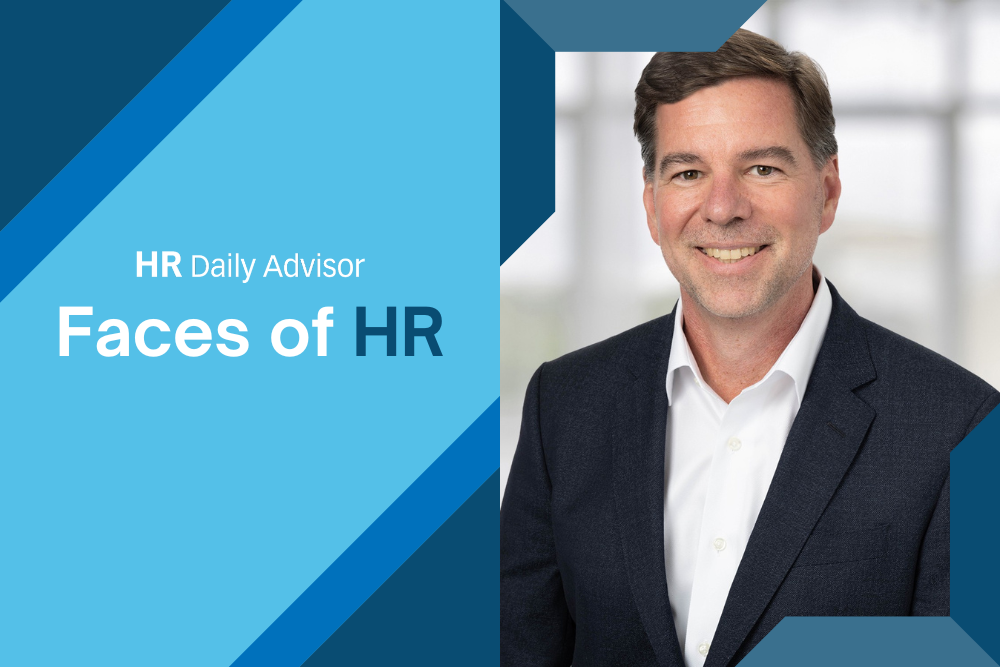
His goal? Take the heavy lifting out of HR compliance so employers can spend less time on administration and more time on what matters most: their people. With more than two decades of executive experience, Johnson has built and scaled innovative businesses across B2B financial services, technology, and media.
An Untraditional Path with a Singular Focus
While Johnson didn’t follow a conventional route into human resources (HR), a single constant has driven his entire career: creating exceptional experiences for both consumers and employees. Beginning in media before expanding into B2C and B2B software, Johnson eventually found himself sitting on the opposite side of the desk as a corporate leader. That first-hand executive experience proved transformative.
“Sitting on the opposite side of the table helped me develop a much deeper, firsthand appreciation for what HR actually does on a daily basis,” he shared with HR Daily Advisor. “Now, I use my perspective as a business leader to help make HR the hero in all of our work.”
Empowering HR to Move at the Speed of Business
Looking toward the future, Johnson believes that for HR to serve as a true strategic business driver, the function must be equipped to move at the speed of business itself.
Achieving that momentum, he notes, requires a focus on agility—whether teams are streamlining workflows or preparing for the changes AI will inevitably bring.
“Whether a team is looking to replace manual administrative tasks with strategic automation or prepare for future industry shifts that will inevitably come from AI, success requires prioritizing agility.”
His recipe for modern HR success? Leverage reliable data, cut out digital friction, and partner with trusted industry experts to turn human resources teams into powerful organizational change agents.
In our latest Faces, meet Chris Johnson.
Who is/was your biggest influence in the industry?
I’m greatly influenced by leaders who view HR as a strategic business driver. One of my clients, who is responsible for one of the largest groups of U.S. employees, reminded me that “HR needs to move at the speed of the business.” That philosophy shapes our work — we should help our clients accelerate progress. We provide the tools and data that help enable HR leaders to prepare the business for challenges that it hasn’t encountered yet and also help enable HR to act as a true strategic partner to the CEO and CFO.
What’s your favorite part about working in the industry? What’s your least favorite part, and how would you change it?
My favorite part is the challenge of innovation. Historically, most HR organizations have been starved for tech dollars. We have to work hard to earn their business. I love having a scrappy, creative attitude so we can pull together solutions that are highly effective but not prohibitively expensive for our HR customers.
A least favorite part of working in the industry is seeing HR practitioners bogged down by manual data entry, repetitive vendor processes, and other purely administrative tasks that keep them from focusing on strategic, people-first initiatives like talent acquisition and culture. Manual workloads often create unnecessary friction in the employee experience and limit HR’s capacity for higher-impact work that builds engagement and drives retention.
I’m working to change this by helping HR teams identify where automation can help simplify processes and reduce exposure to regulatory and financial liabilities. Strategic automation helps free CHROs from administrative burdens and tackle fragmented ecosystems of paperwork and disconnected legacy systems, ultimately providing their C-suite peers with more accurate workforce insights.
It sounds like through your experience you really care about people, and you want to help them feel safe and comfortable, which is important in the industry. Please elaborate here.
When I first started in my role at Equifax, some of my team members asked me what I would do to help ensure stability. The reality of modern business, however, is that stability is a moving target. If an organization attempts to protect itself by remaining static and aging in place, it risks losing its footing. Organizational stability and resilience, which help contribute to people feeling safer and more comfortable at work, are products of agility.
To better maintain a secure position in today’s landscape, leaders and their teams must be able to actively adapt to change. If you aren’t moving forward, advancements like AI and rapidly shifting market dynamics will quickly leave you behind.
How can company leaders make HR a value within their organization?
By viewing HR as a driver of tangible ROI. Company leaders can make HR an invaluable partner by supporting investments that reduce digital friction and tackle fragmented legacy systems. By helping reduce manual burdens and equipping HR with more centralized, reliable data and technology, HR can build on their ability to provide their C-suite peers with more accurate workforce insights.
When HR has a reliable data foundation, which is essential for implementing predictive analytics or AI tools, they can perform data-driven reviews that reveal operational inefficiencies or unclaimed tax credits. Giving HR the tools to balance operational oversight with strategic vision allows them to help ensure talent strategy and business strategies are closely aligned, more proactively manage HR and people-related costs, and build long-term cultural and organizational success.
Where do you see the industry heading in five years? Or are you seeing any current trends?
I see the industry continuing to be intensely focused on the implementation of artificial intelligence, but with a critical realization: your AI strategy can only be as robust as the data that powers it. Right now, there’s a rush to adopt generative tools and predictive analytics, but research suggests that up to 95% of enterprise AI solutions fail to deliver a measurable P&L impact. This often happens because these tools are placed on top of fragmented back-end data ecosystems, leading to severe learning gaps and brittle workflows. Over the next five years, HR leaders will have to prioritize the reliability of their workforce data to build a solid foundation of truth before scaling up their use of AI.
Do you have any advice for people entering the profession?
Stay curious, make data-driven decisions, and don’t try to figure everything out on your own. Partner with peers and organizations that have visibility into the wider market. Tapping into industry-wide benchmark data allows you to see how other successful organizations operate and bring valuable outside trends back to your workforce. And above all, prioritize agility to help your team more effectively adapt to change.