




For Brooke Shreeve, building world-class HR programs isn’t just about strategy—it’s about staying connected to the employee experience at every level. Over a 20-plus year career, she has built People functions from scratch, scaled operations across continents, and guided organizations ranging from 250 to 16,000 employees through major disruptions, including the Great Recession, the COVID-19 pandemic, M&A integrations, and massive business transformations.
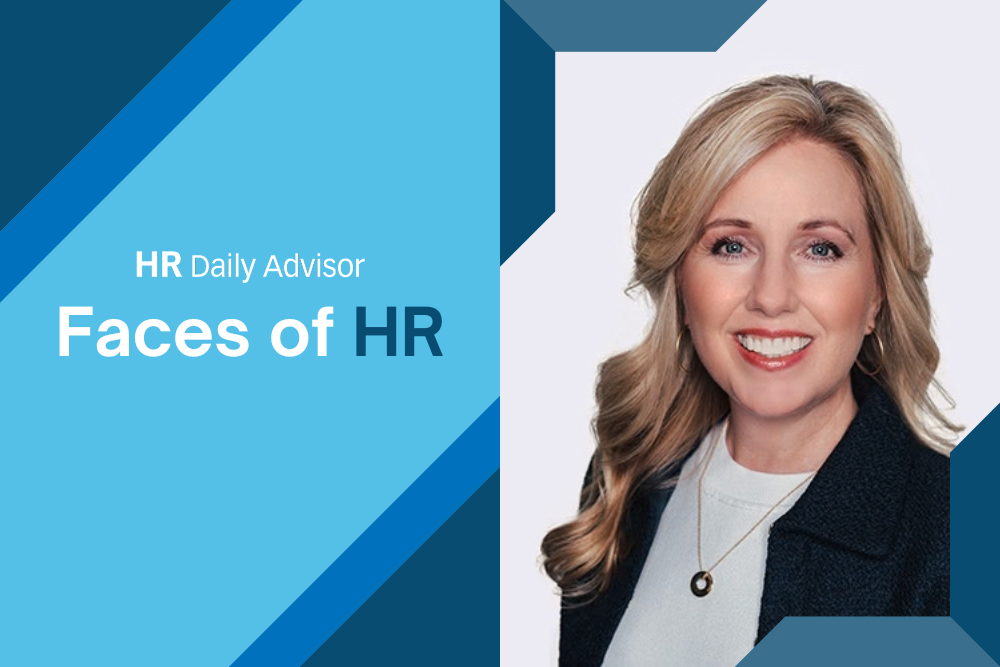
Today, Shreeve serves as Chief People Officer at Weave, where she leads global people strategy, total rewards, and international talent expansion. Her broad executive experience spans companies like Weave, WEX Inc., MarketStar, and Flying J, backed by deep technical expertise in employment law, labor relations, compensation, benefits, HR operations, and HR business partnership.
Shreeve’s signature approach connects people strategy directly to business outcomes using workforce analytics, organizational design, capacity modeling, and total rewards. A Gallup-Certified Strengths Coach with a Bachelor of Science in Business Management from the University of Utah, her philosophy is clear: the best People strategies help employees thrive while delivering measurable value to workers, customers, and shareholders alike.
The Spark That Started It All
Shreeve’s pathway into HR began on the retail floor. While working full-time as a sales associate in the lawn and garden department at Sears, she found herself fascinated by the store’s dedicated HR team and their work across hiring, training, and payroll. When an opening for a store trainer popped up, she jumped at the chance. Landing the role, she took charge of onboarding, new hire training, compliance, product instruction, recruiting, payroll, and everyday employee support. The experience confirmed she had found her passion.
Building a Frontline-First Approach
Her hands-on momentum continued as she stepped up into the Store HR Manager role and later combined those duties with Store Operations. Transitioning into corporate HR after years in retail, Brooke took her skills directly into employee relations, operations, and HR Business Partner roles.
That early experience on the sales floor continues to define her leadership today. Shreeve credits her retail operational roots with giving her an enduring respect for frontline workers and day-to-day business mechanics. As Chief People Officer, that foundation shapes her mission: creating scalable programs that fuel corporate growth without ever losing sight of the people behind the work.
In our latest Faces, meet Brooke Shreeve.
Who is/was your biggest influence in the industry?
My greatest influence is the collection of group of incredible leaders I’ve had the privilege to work with throughout my career. I’ve been so fortunate in every role that leaders have freely shared their perspectives, which taught me to view HR through a strategic lens, keep financial discipline and prioritize long-term scalability in every decision. My various mentors have taught me that people strategy only works when it’s connected to business strategy.
What’s your best mistake and what did you learn from it?
Earlier in my career, I was managing a project that involved heavy data analysis. Through simple human error, I created an incorrect calculation. I realized it was a mistake that likely would have gone unnoticed but guided by the principle of doing the right thing, I immediately told my manager. I was incredibly self-critical and felt horrible, but the reaction from leadership was something I’ve never forgotten. They appreciated the transparency, which allowed us to collaborate on a solution before there were downstream consequences. That experience solidified a core tenet of my leadership philosophy: integrity is about doing the right thing even when no one is looking. Taking radical ownership doesn’t just build trust; it creates an unshakeable foundation that can guide you through almost anything.
What’s your favorite part about working in the industry? What’s your least favorite part, and how would you change it?
I love identifying human potential and then building the programs, mentorship, and development pathways that allow people to thrive.
My “least favorite” part of the industry is the persistent, outdated perception that HR is primarily an administrative or compliance function. When organizations view their people team solely as a benefits administrator and policy-enforcement arm rather than a strategic business partner, they miss out on the most powerful lever for growth they have. To ensure this doesn’t happen, I challenge myself and my team to always lead with data and business outcomes. By consistently tying our HR initiatives to business results, we change the conversation from “what policies can we enforce?” to “how can we support our teams to win in the market?”
It sounds like through your experience you really care about people, and you want to help them feel safe and comfortable, which is important in the industry. Please elaborate here.
At the core of a thriving organization is the “three-legged stool”: employees, customers, and shareholders. Each is critical to the balance and stability of the business. When we prioritize our people equally, it cultivates a high-trust environment with palpable psychological safety. We empower employees to perform at their highest potential, which creates superior value for our customers and long-term success for our shareholders.
When employees feel empowered to speak up, challenge ideas, and admit mistakes without fear, organizations make better decisions.
How can company leaders make HR a value within their organization?
To make HR a true value driver, HR needs to be a partner in business performance. In my experience, that happens when people teams speak the language of the business. People leaders should be included in strategic planning and financial discussions right from the start. When HR is in the room early, we can get ahead of talent gaps, fix performance issues, and build a culture that isn’t just about ‘feeling good,’ but about getting real business results. At Weave, we make sure every People initiative, from compensation to how we develop our teams, is tied directly to our bottom line. When leadership treats people strategy with the same analytical rigor as they treat any other business function, HR becomes a true business partner instead of just a support function.
Where do you see the industry heading in five years? Or are you seeing any current trends?
The integration of AI is no longer a future concept; AI is already changing how HR works. Over the next five years, I expect this intersection of AI and HR to deepen significantly. What excites me most about this is the potential for AI to handle the high-volume, administrative “busy work” that has traditionally bogged down People teams. By leveraging these technologies to automate routine tasks, we can shift our focus toward high-level strategic initiatives, like organizational design, leadership development, and workforce planning, that truly drive business outcomes and create long-term value.
What are you most proud of?
I’m most proud of building the HR function at Weave from the ground up. When I joined, we were transitioning from a startup to a growth-stage company, and our HR processes needed to catch up. I always use the analogy of “building a house” to describe it. We started with the foundation: getting the basics right with policies, our first real HRIS, and a solid recruiting structure. Then we built the “walls,” which included core programs like performance reviews, benefits that actually matter to people, and training. Finally, we put on the “roof and weathervane,” setting up the strategic infrastructure to support where the business is headed.
I’ll be the first to admit that foundational work like policies and systems isn’t always exciting work, but it’s essential. You have to have a stable house before you can do the big things that really move the needle. The key is to build the foundation and walls quickly and efficiently so you can start adding meaningful impact to the business strategically.
I once had an executive look me in the eye and say, “I don’t know why you were hired, and I don’t see the value you will bring.” It was a shocking moment, but about a year later, he stopped me in the hall to say, “I now see why they hired you.” The results my team drives are so undeniable that even the biggest skeptic had to change his tune.
Do you have any advice for people entering the profession?
Build your resume by taking on work that challenges you and helps you grow. Don’t just wait for tasks to be assigned to you. Look for the problems no one owns yet. Figure out how you can help solve them, tell your leader what you’re planning to do, and then go do it. Don’t wait for permission.
Too many people wait to be told what to do. What can truly set you apart comes from spotting opportunities and digging into the work. I believe that my ability to do this is one of the main reasons I’m in this role today.