




Sara Chapman began her Human Resources (HR) career more than 20 years ago, building a strong foundation in employee relations and HR business partnership before advancing into broader HR leadership roles. Early on, that broad experience helped her recognize two vital truths: the power of aligning HR directly with the business, and the immense value of gaining hands-on exposure to multiple areas across the entire HR function.
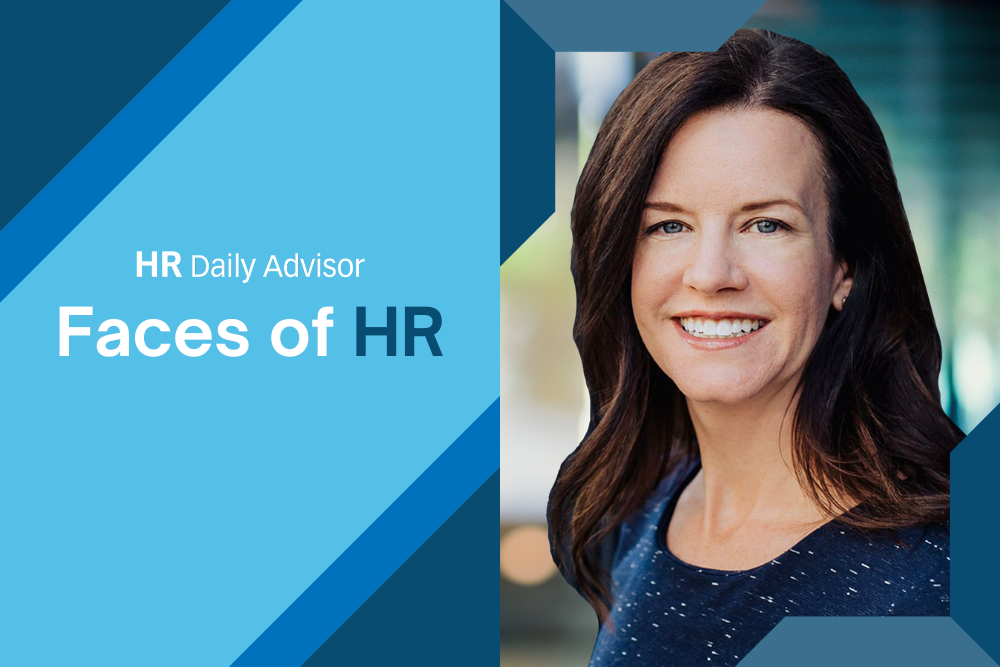
Over time, Chapman progressed through senior talent management roles. She shifted from frontline HR execution to enterprise-level strategy—leading learning and development, succession planning, performance management, and large-scale change initiatives across a complex, regulated utility. Moving from operational HR to strategic talent leadership established the foundation for her executive career, ultimately shaping her people-centered, business-aligned approach as a Chief Human Resources Officer. Prior to her current work, she also held senior HR leadership roles in a high-growth startup and a professional services firm.
Driving Performance at a Purpose-Driven Engineering Firm
Today, Chapman serves as Chief Human Resources Officer at Ulteig, a purpose-driven infrastructure engineering firm. In this role, she oversees HR and partners with company leaders to align talent and culture strategies with long-term business goals. She plays a key role in advancing Ulteig’s people-centric culture, helping employees thrive personally while delivering exceptional work.
A Data-Driven, Certified Approach to Leadership
Chapman brings advanced academic training and specialized credentials to her strategic work. She earned a Bachelor of Science in Business and Human Resources from Minnesota State University, Mankato, and a Master of Arts in Human Resources and Change Leadership from the University of St. Thomas. These credentials allow her to use data-driven evaluations to assess leadership potential, team dynamics, and organizational fit. By blending analytical rigor, coaching expertise, and change leadership, Chapman continues to drive organizational performance and strengthen company culture.
In our latest Faces, meet Sara Chapman.
Who is/was your biggest influence in the industry?
One of the HR thought leaders who has influenced me the most is Marc Effron. In 2011, I read his book, One Page Talent Management, and it fundamentally reshaped how I think about HR, particularly the importance of grounding people practices in real business needs and outcomes. He’s also known for his direct perspective and strong reliance on data-driven research to inform his views. I appreciate that approach, especially in a function that historically hasn’t always been as analytical or evidence-based as it could be. It’s a valuable reminder that we should leverage available data to help make more informed, objective decisions while ensuring HR remains deeply connected to the business.
I’ve been fortunate in my career to have also worked for several influential leaders who have shaped how I show up as a leader today. One was a leader who helped me see that introverts can be effective leaders – that leadership success doesn’t look one specific way – but that different styles can bring different perspectives to a team. Another important influence in my life was a former leader who encouraged me to pursue an opportunity I didn’t quite feel ready for. I accepted the challenge with trepidation and uncertainty. But this experience ultimately challenged me to grow in unexpected ways, redefining what I believed I was capable of.
What’s your best mistake and what did you learn from it?
I’ve certainly made mistakes throughout my career, including some hiring decisions and career moves that, in hindsight, I would approach differently today. But interestingly, many of the mistakes that felt incredibly significant in the moment are ones I can barely remember now. Earlier in my career, I tended to be hard on myself. I would replay situations repeatedly, overanalyzing what went wrong and carrying the weight of mistakes longer than I should have. Over time, though, I’ve gained perspective and realized that most mistakes are far less defining than they feel in the moment.
That realization has probably been my “best mistake” in learning not to equate mistakes with failure. It’s helped me become more self-aware, more resilient and ultimately a better leader. Today, I focus less on perfection and more on continuous learning, thoughtful reflection and making better decisions over time.
What’s your favorite part about working in the industry? What’s your least favorite part, and how would you change it?
One of my favorite things about working in HR is the breadth of the field. You can build so many different careers within it, from analyzing data to facilitating learning. That variety keeps the work both challenging and rewarding. What makes it especially meaningful, though, is the impact it makes. The way people feel at the end of the workday, whether they feel valued, supported, connected and able to contribute, extends far beyond the workplace. It influences families, friends and communities in which our employees work. The work we do in HR matters. While we’re ultimately here to drive business performance, we also play a role in improving the everyday lives of the people who show up to do that work.
There’s also an emotional side to the work. HR has a front row seat to the best and most difficult moments in an organization. While we get to lead rewarding and impactful work, we also carry the weight of knowing where things aren’t working. Much of that comes with confidentiality, so we often hold and work through those heavier situations quietly.
How can company leaders make HR a value within their organization?
Company leaders make HR a true value within their organization by treating it as a strategic partner and enabler rather than a support function, and by modeling the belief that people are central to business success. Leaders reinforce the value of HR when they involve people leaders early in business decisions, seek input on how change will affect employees, and hold themselves accountable for creating inclusive, psychologically safe environments. HR becomes most impactful when it helps leaders translate values into everyday behaviors, such as how teams are led, how feedback is shared and how people are recognized.
Where do you see the industry heading in five years? Or are you seeing any current trends?
Over the next five years, technology will become even more embedded in how everyone works every day. As that happens, the role of HR will also evolve, placing an even greater emphasis on human connection, partnership and human-centered leadership. While technology will enable faster access to information and decision-making, people will continue to come together to solve complex problems. How we lead and support them is paramount. Companies that invest in strong leadership, clear alignment and healthy cultures will be better positioned to navigate change and sustain performance. If implemented thoughtfully, I believe that technology can bring us closer together as a workforce, not farther apart.
For HR professionals, this digital transformation further supports our ability to make data-driven decisions, using insights to shape strategy and inform business decisions while moving away from transactional processes. As technology elevates the function, HR can focus on higher-value, strategic priorities. This shift also raises questions for HR leaders to solve around evolving operating models, redefining decision-making and accountability, and enabling organizations to scale effectively in a more digital environment.
What are you most proud of?
I’m most proud of the risks I’ve taken throughout my career, especially stepping into roles or new organizations where I didn’t feel entirely comfortable or fully prepared. Those moments pushed me outside my comfort zone in ways that were often challenging and at times even uncomfortable, but that’s where the most meaningful growth happened. Looking back, those decisions built my resilience, broadened my perspective, and helped me build strong relationships that contributed to my success today.
Do you have any advice for people entering the profession?
My advice to anyone entering HR today is to truly learn the business, not just the HR function. The more you understand how the organization operates and creates value, the more effective you’ll be as a partner and advisor. Early in your career, also make a point to raise your hand and stay curious. Seek opportunities across different areas of HR to learn what you enjoy most and where you can add the greatest value. The key is to stay open, keep learning and be intentional about gaining diverse experiences.