




For Orlando Ashworth, Chief People Officer at Blood Cancer United, the foundation of a successful HR career wasn’t built in a traditional corporate office—it was forged in the United States Marine Corps.
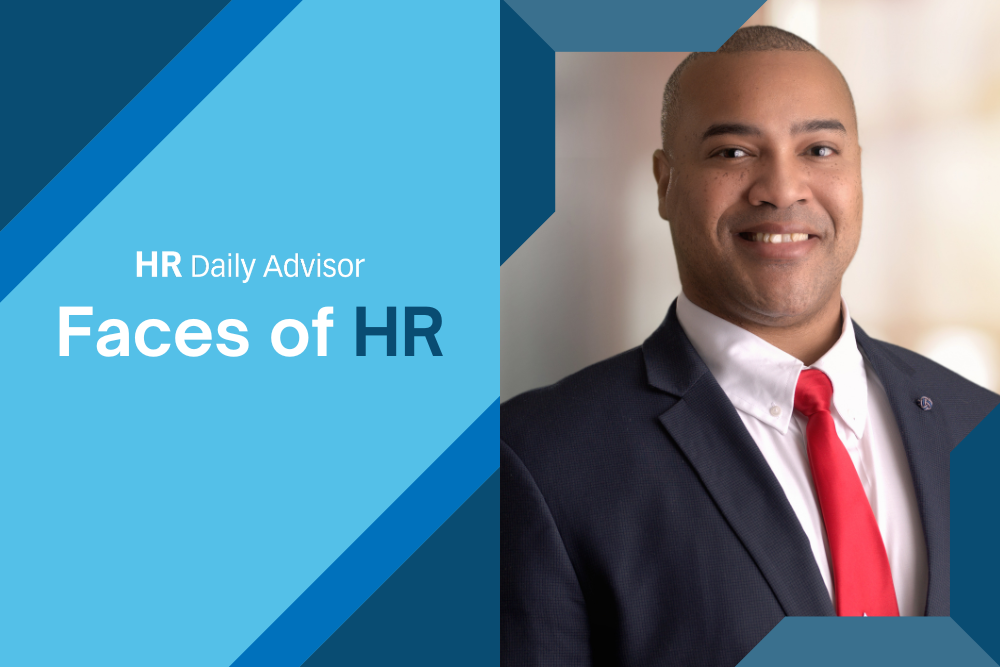
Ashworth served and retired after 20 years in the military. His transition into the human resources field took root in 2005 when he earned his commission as an officer. Facing a choice among roughly 28 different career paths, one specific role immediately caught his attention: the adjutant, the Marine Corps’ equivalent of an HR officer.
Even at a relatively junior rank, Ashworth noticed how much influence these officers held. They were actively shaping careers, guiding leadership, and making a tangible difference in the lives of Marines and their families. That unique mix of service, influence, and organizational impact struck a chord.
When it came time to select his military occupational specialty, his decision was made. However, securing the role was no small feat. Out of approximately 250 officers in his graduating class at The Basic School, only two HR positions were open. Ashworth earned one of those coveted spots—a milestone that launched a career dedicated to supporting people and leading organizations.
In our latest Faces, meet Orlando Ashworth.
Who is/was your biggest influence in the industry?
I’ve had many influences over the course of my HR career, but one that stands out most is the mentorship and leadership I’ve experienced from Johnny C. Taylor, Jr., President and CEO of SHRM. When I think about the kind of HR leader I aspire to be—someone who is both a true thought leader and a credible voice in the profession—Johnny immediately comes to mind. When I retired from the Marine Corps in 2020, Johnny was an incredible mentor for me and played a pivotal role in helping me transition into corporate America. One of the moments that really stayed with me was when we met in person at the start of COVID. With everything shut down in Washington, DC—including restaurants and meeting spaces—we ended up having a meaningful conversation sitting on a park bench just outside Union Station.
What stood out most from that conversation was the genuine confidence he had in my potential and in the value of my military experience. That belief was incredibly impactful. It gave me an added level of confidence in myself, which I carried into the next phase of my career. Shortly after, I was able to secure my first civilian role as Vice President of Human Resources Consulting at AARP. At the time, that was a significant milestone—not just personally, but also because it’s not a transition most service members are able to make so directly. I credit a great deal of that success to the encouragement, perspective, and advocacy Johnny provided during a pivotal moment in my career.
What’s your best mistake and what did you learn from it?
I’ll never forget one of the most important mistakes I made early in my career. It happened in 2007, while I was deployed to Iraq (Al Asad) during Operation Iraqi Freedom. An Army soldier was selling a laptop (difficult to get in that environment) at what I thought was a great price. I remember thinking it was an opportunity where I could buy it and flip it for a few hundred dollars in profit. So that’s exactly what I did. Not long after, my Executive Officer pulled me aside for a conversation. He didn’t focus on the transaction itself as much as the mindset behind it. His message was simple, but it stayed with me: whenever you have the chance to help a young soldier or Marine, you help…no exceptions. As a leader, your role is to give, not to take. That moment reshaped how I think about leadership. It wasn’t just about making the “right” decision—it was about consistently showing up with the right intent. I’ve carried that lesson with me ever since. When I’m faced with tough decisions or competing priorities, that conversation is always in the back of my mind. As leaders, we’re able to create opportunity for others—and when we can, we should always choose to be givers.
What’s your favorite part about working in the industry? What’s your least favorite part, and how would you change it?
When I chose to enter the HR field, it was grounded in a very simple but important belief—I genuinely wanted to help people. As I considered different career paths and reflected on my skill set, HR stood out because of its unique ability to influence people’s lives in meaningful and tangible ways. Whether it’s supporting a promotion, ensuring access to quality health benefits, investing in learning and development, offering competitive compensation, or simply extending a job opportunity. HR has a direct and often immediate impact on individuals and their families. For me, that’s the kind of work that makes a career truly worthwhile.
That said, doing HR well requires real investment. In resource-constrained environments, HR is often viewed as a cost center and, at times, an easy place to make cuts. But those decisions can come at a cost, making it harder to deliver a best-in-class employee experience, attract top talent, and retain the workforce organizations depend on. The most effective HR leaders understand how to bridge that gap. They stay closely connected to the business, embed themselves in its priorities, and clearly demonstrate that investing in people drives measurable outcomes. When done right, HR isn’t just a support function, it’s a strategic lever that delivers both impact and return on investment.
Where do you see the industry heading in five years? Or are you seeing any current trends?
I strongly align with the perspective that AI + HI = ROI—Artificial Intelligence combined with Human Intelligence is what ultimately drives meaningful outcomes. With the rapid rise of AI in the workplace, HR leaders must quickly adapt and embrace new ways of working. Integrating AI into how work gets done is no longer optional—it’s becoming foundational to how we operate and deliver value. Now more than ever, the effectiveness of HR leaders will be closely tied to their ability to understand, adopt, adopt, and thoughtfully apply this technology. But it’s not just about the tools—it’s about how we pair them with human judgment, empathy, and leadership. The future of HR will belong to those who can strike that balance—leveraging AI to scale impact, while bringing the human insight needed to lead organizations through change.
What are you most proud of?
I’m incredibly proud that Blood Cancer United was named one of the inaugural Best Companies for Working with Cancer. Supporting patients and families impacted by blood cancers is at the heart of our mission—and that commitment starts with how we care for our own employees. This recognition is a direct reflection of our team’s intentional focus on building a workplace grounded in wellness, flexibility, and compassion, particularly for those navigating a cancer journey. It’s also a meaningful honor given the selectivity of the recognition. Approximately 75 organizations were considered, and only 17 were recognized. To be included alongside companies like Google, Best Buy, Nestlé, and AbbVie is incredibly humbling, and a testament to the culture we’ve worked hard to build.
Do you have any advice for people entering the profession?
There is more than one path to success. In HR, many of the most influential leaders didn’t start their careers in the field, which speaks to the diversity of experiences that can shape great people leaders. At the individual level, I believe the key to success is simple, bloom where you’re planted. Focus on doing your absolute best in the role you’re in, whether that’s as an HR Business Partner, generalist, specialist, or executive leader. Commit to continuous growth. Read, learn, pursue certifications, and stay current on the trends shaping our profession. Just as importantly, stay deeply connected to the business. Understand its priorities, anticipate its needs, and look for ways to add meaningful value. And then—do it consistently. Success in HR isn’t about a single moment; it’s built over time through credibility, impact, and a track record of delivering for both employees and the organization.