




Jen (JR) Rettig didn’t start her career with a grand plan to climb the HR ladder. She began as a retail operator and department store buyer before a side passion for campus recruiting completely redirected her path. While working as a buyer trainee out of the University of Michigan, Rettig started volunteering to fly back to campuses to interview students. She loved pitching the company, assessing talent, and helping people imagine their futures. That hands-on involvement caught the attention of HR leaders—and ultimately changed the course of her career.
Building Global Teams from the Ground Up
One of those early HR relationships led Rettig straight to Apple, where she joined the original Apple Retail team in Cupertino. On her very first day, she was tasked with recruiting Geniuses and Specialists for stores around the world. During those whirlwind early years, she hired hundreds—likely over a thousand—employees to help launch Apple’s retail presence. She even helped staff Apple’s first store in Tokyo alongside a translator, learning firsthand that curiosity, passion, and cultural connection transcend language barriers.
Aligning People Strategy with Business Growth
That trial by fire launched a 20-year career in talent acquisition before Rettig stepped into her first Chief People Officer role. Along the way, she helped Looker scale from roughly 150 employees through its acquisition by Google, and later served as Chief People Officer at Pendo during a period of massive growth and transformation. Across every role, her core philosophy remained unchanged: people strategy is business strategy, and the best HR leaders are business builders first.
Leading HR from the Front Lines of AI
Today, as Chief People Officer at Guild.ai, Rettig is leveraging more than 25 years of experience across retail, consumer tech, and enterprise software to help build the company, its culture, and its leadership team for the next era of AI.
As technology reshapes the workplace, Rettig is tackling transformation from the front lines. Rather than advising on AI adoption from the sidelines, she works directly with Guild’s engineers to build AI agents that help her own HR team operate more effectively. For Rettig, getting hands-on experience with the tools is essential for understanding how jobs are changing and how to design better workplaces. As Guild helps enterprises operationalize AI, Rettig remains focused on proving that great technology and great teams go hand in hand—and that investing in the people behind the tools is more critical than ever.
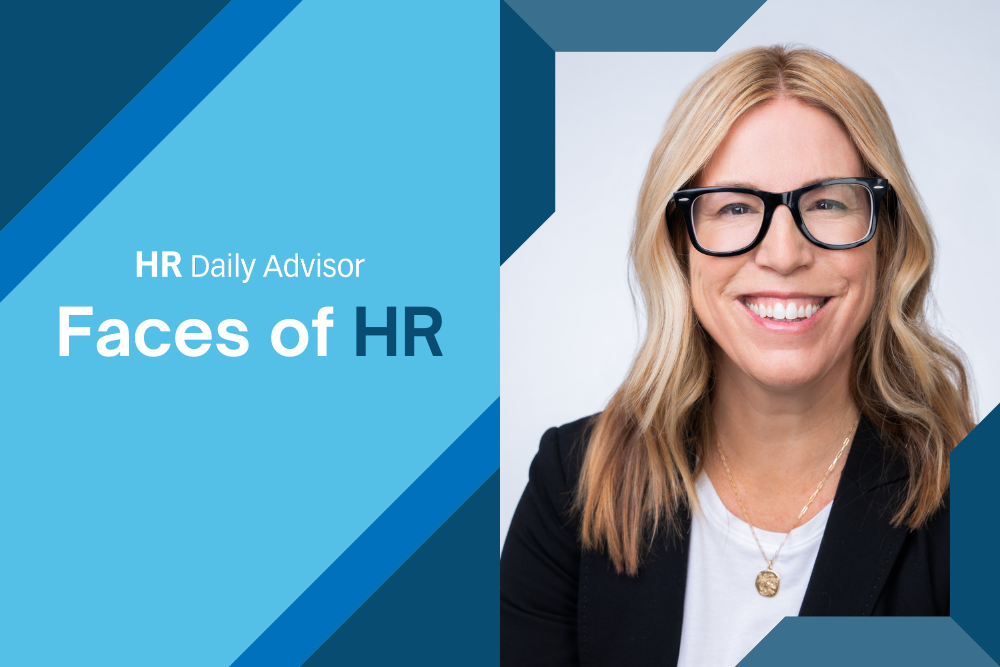
In our latest Faces, meet Jen Rettig.
Who is or was your biggest influence in the industry?
I’ve been fortunate to work for and alongside leaders who believed people strategy belonged at the center of business strategy, not on the sidelines. There isn’t one person I would name as my sole influence. I’ve learned from managers, executives, founders, and peers who combined curiosity, empathy, high standards, and decisiveness. Many of them were challenging bosses. They pushed me, gave me difficult feedback, and regularly forced me to see myself differently. At every level of my career, that made me better.
Our founder and CEO at Guild, James Everingham, is one of those people. We first met at Yahoo in 2013, and he left a lasting impression on me. More than a decade later, when he texted me about the opportunity at Guild, I knew almost immediately that I would take the role.
That kind of professional trust is built over years. It is also one of the things I value most about having a long career: the people whose judgment you trust—and who still trust yours—often come back into your life at exactly the right moment.
What’s your best mistake, and what did you learn from it?
Earlier in my career, I had the dubious distinction of being rated the lowest manager in the company on an employee engagement survey. I was young, and I had been a strong individual contributor. As often happens, the natural next step was to promote me into management. I was intensely focused on our department’s performance, but I spent far too much time talking, directing, and telling people what to do—and far too little time listening to and coaching the talented young people on my team.
They let me have it. I was grateful to keep my job, and the experience was a wake-up call. It taught me early that being good at the work does not automatically make you good at leading the people doing it.
Over time, I learned that leadership is less about having all the answers and more about creating clarity, asking good questions, listening closely, and adapting as you learn. That lesson is especially relevant now. The pace of business—and particularly the pace of AI—means leaders will rarely have perfect information. We have to make thoughtful decisions with what we know, remain open to what we don’t, and adjust quickly without becoming defensive about it.
I would not recommend becoming the lowest-rated manager in your company. But I do recommend getting the lessons associated with that experience as early as possible.
What’s your favorite part about working in the industry? What’s your least favorite part, and how would you change it?
The best part is working at a company that can create strong business outcomes and meaningful employee outcomes at the same time. When a company is growing, customers are succeeding, employees are developing, and people believe in what they are building together, it creates an energy that is difficult to replicate. Growth on both fronts can galvanize people to do the best work of their careers. It doesn’t get much better than that, and I hope everyone finds at least one opportunity like it along the way.
My least favorite part is when companies are disingenuous about the employee side of that equation. There is often a wide gap between what a company says about its people and what its leaders reward, tolerate, and prioritize in practice.
I don’t expect every company to operate the same way. But I do expect honesty. I would much rather work for an organization that is clear and authentic about what it values than one that offers polished language and little evidence. Employees are smart. They know the difference between a value and a slogan.
It sounds like, through your experience, you really care about people and want to help them feel safe and comfortable. Please elaborate.
Psychological safety is foundational to great work. I’m a believer in Maslow: people cannot consistently perform at their highest level when they are worried about whether they belong, whether they can speak honestly, or whether one mistake will be used against them.
That does not mean the workplace should always feel comfortable. Great teams debate, challenge one another, make difficult decisions, and hold high standards. Psychological safety is not freedom from accountability. It is the confidence that you can ask a question, raise a concern, offer an unconventional idea, or acknowledge a mistake without being humiliated for it.
Creating that environment also does not mean avoiding difficult conversations. In many cases, the difficult conversation is kindness in action. It gives someone information they need, respects them enough to be honest, and creates an opportunity for things to improve.
The goal is not constant comfort. The goal is enough trust that people understand the intent, know where they stand, and can focus their energy on doing great work.
How can company leaders make HR a value within their organization?
It begins with the CEO. People leaders need to be included in business conversations from the start—not brought in after a decision has already been made and asked to communicate it, clean it up, or make it feel better. That means being present in the boardroom, in the C-suite, and in the conversations where company strategy, operating priorities, organizational design, and investment decisions are taking shape.
The best CEOs truly see their People leader as a business partner, not simply because the title says so, but because they value the perspective and expect that leader to understand the business.
I often coach People executives who are considering new roles to assess this before accepting one. Ask how the CEO has partnered with HR in the past. Find out when the People leader enters important conversations. Pay attention to whether the CEO talks about talent as a strategic advantage or as a function to be managed.
A People leader can build credibility and improve the partnership, but they cannot manufacture a CEO’s underlying belief that people are the company and a source of competitive advantage. If that belief is fundamentally absent, move on.
Where do you see the industry heading in five years? Are you seeing any current trends?
AI is changing how work gets done, but it is not changing what people need from great leaders. Employees will continue to look for purpose, trust, meaningful connection, growth, clarity, and a sense that their work matters.
Technology will automate more repetitive and administrative work. That should create an opportunity for People teams to spend more time on the work that requires judgment and human understanding: leadership, coaching, organizational effectiveness, workforce planning, team dynamics, and the employee experience.
But that shift will not happen automatically. Automating a bad process simply allows you to do the wrong thing faster. People teams need to understand the technology, question how work should be redesigned, and help leaders make thoughtful decisions about where AI adds value and where human judgment remains essential.
I expect HR to become even more strategic as companies navigate AI adoption, workforce transformation, new organizational models, and rapidly changing skill requirements. Everyone I know in talent and HR is busier—and more in demand—than ever. I don’t see that changing.
I’m most proud of the teams and leaders I’ve had the opportunity to hire and develop over the past 25 years—and of the relationships that have stood the test of time.
My “work friends”—CEOs, peers, investors, team members, and former colleagues—are no longer just work friends. Many of them are among the closest friends I have. We have built companies together, navigated difficult moments, celebrated life events, changed jobs, raised families, and continued to show up for one another long after the org charts changed.
I am proud of the business milestones and companies I helped build. But a career is long, titles are temporary, and every company chapter eventually ends. The people who still call, text, ask for advice, offer help, or pull you into the next adventure are what remain.
I couldn’t have done any of it without them, and I wouldn’t have wanted to.
Do you have any advice for people entering the profession?
Learn the business first.
Make friends with the finance and go-to-market teams. Ask to sit in on customer calls, sales reviews, product meetings, and operating discussions. Learn how the company makes money, what customers value, where the business is struggling, and which metrics actually matter.
Take notes. Ask questions. When someone uses an acronym or unfamiliar jargon, don’t nod as though you understand it—ask. Most of the room will be relieved that somebody did.
I would also encourage people early in their careers to listen more than they speak, build relationships across every function, and understand that trust is earned over time. It comes from being prepared, exercising good judgment, telling the truth, and consistently doing what you said you would do.
Caring about people is important. Understanding the business is what allows you to turn that care into influence and impact.