



Day 2 at SPARK TALENT delivered a masterclass in modern organizational realities: managing through ambiguity, executing massive transformations, de-risking succession, and protecting leader bandwidth.
Here are the top actionable frameworks and insights from some of Day 2’s featured speakers.
1. Shift from “Knowing” to “Not Knowing”
Alison Parrin, Head of The Google School for Leaders
Session: Leading Through Uncertainty: What Today’s Leaders Must Do Differently
As the external environment becomes increasingly unpredictable, the traditional leadership playbook of having allthe answers is no longer effective. Alison called on HR leaders to embrace two fundamental mindshifts:
- From Knowing to Not Knowing: Moving away from being the resident expert to getting comfortable with ambiguity. True problem-solving begins when leaders feel safe admitting what they don’t know.
- From Narrowing to Widening: Stepping back from isolated operational fixes to see the entire ecosystem. How can you enter conversations with the deliberste intention of widening the scope?
The 4 Practices for Complex Times”
- Ask different questions to challenge foundational assumptions.
- Seek multiple perspectives to discover non-obvious solutions.
- See systems rather than individual silos.
- Experiment and learn through rapid, low-risk iteration.
2. Transformation is a Human Cognitive Problem
Victor Arguelles, Global Learning, Design & Development at Marriott International
Session: Transformation is Human: Lessons from Marriott International’s Tech Transformation
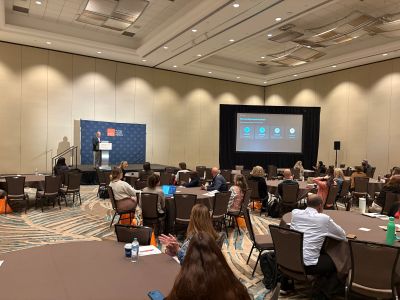
When rolling out the largest tech transformation in hospitality history, impacting 1 million associates across 10,000 properties, Marriott anchored its strategy in a simple truth: Knowledge does not equal performance.
To eliminate friction during major system rollouts, Victor shared how L&D teams must design for human cognitive load:
- Seperate “Need to Know” from “Need to Access: Stop forcig employees to memorize every step of a new system. Teach the core fundamentals, and serve up step-by-step guidance directly inside tools when needed.
- Practice “Unhappy Paths”: Traditional training focuses on scenario paths where everything goes right. Real confidence builds when associates practice handling errors, glitches, and unexected inputs in safe simulation sandboxes.
- Focus on Unlearning: Long-tenured employees struggle significantly more than new hires during tech shifts. The primary barrier to transformation isn’t learning new software, it’s breaking ingrained muscle memory.
- Support Deflection: By embedding real-time digital support directly into software, Marriott achieved a 40% help-desk support deflection rate, enablig self-service while serving millions.
3. De-Risk Business Transitions, Don’t Just Name Successors
Aneisa Simon, Director of Executive Selection & Succession at IBM
Session: Succession with Confidence: Building Leadership Readiness for Business

Traditional succession planning often stops at makig static lists of potential replacements. Aneisa challenged HR leaders to shift the core question from “Who can do this job?” to “Who can lead this business through what comes next?”
The goal of adaptive succession is de-risking business continuity. Before finalizing succession pipelines, evaluate:
- What breaks operationally if a key leader steps down tomorrow?
- How do we preserve continuity across clients, teams, and business performance?
- Who aligns with the future state in both capability and personal interest?
4 Metrics to Measure Succession Health:
- Successors per critical role (categorized by readiness level)
- Ready-now coverage percentage
- Percentage of critical openings filled internally
- Retention rate of named successors
4. Manage Your Energy, Not Just Your Calendar
Joan Peterson, Vice President, Master Facillitator & Leadership Coach at Blueprint Leadership Development
Session: The Alignment Map: Connecting Energy, Purpose, and Time
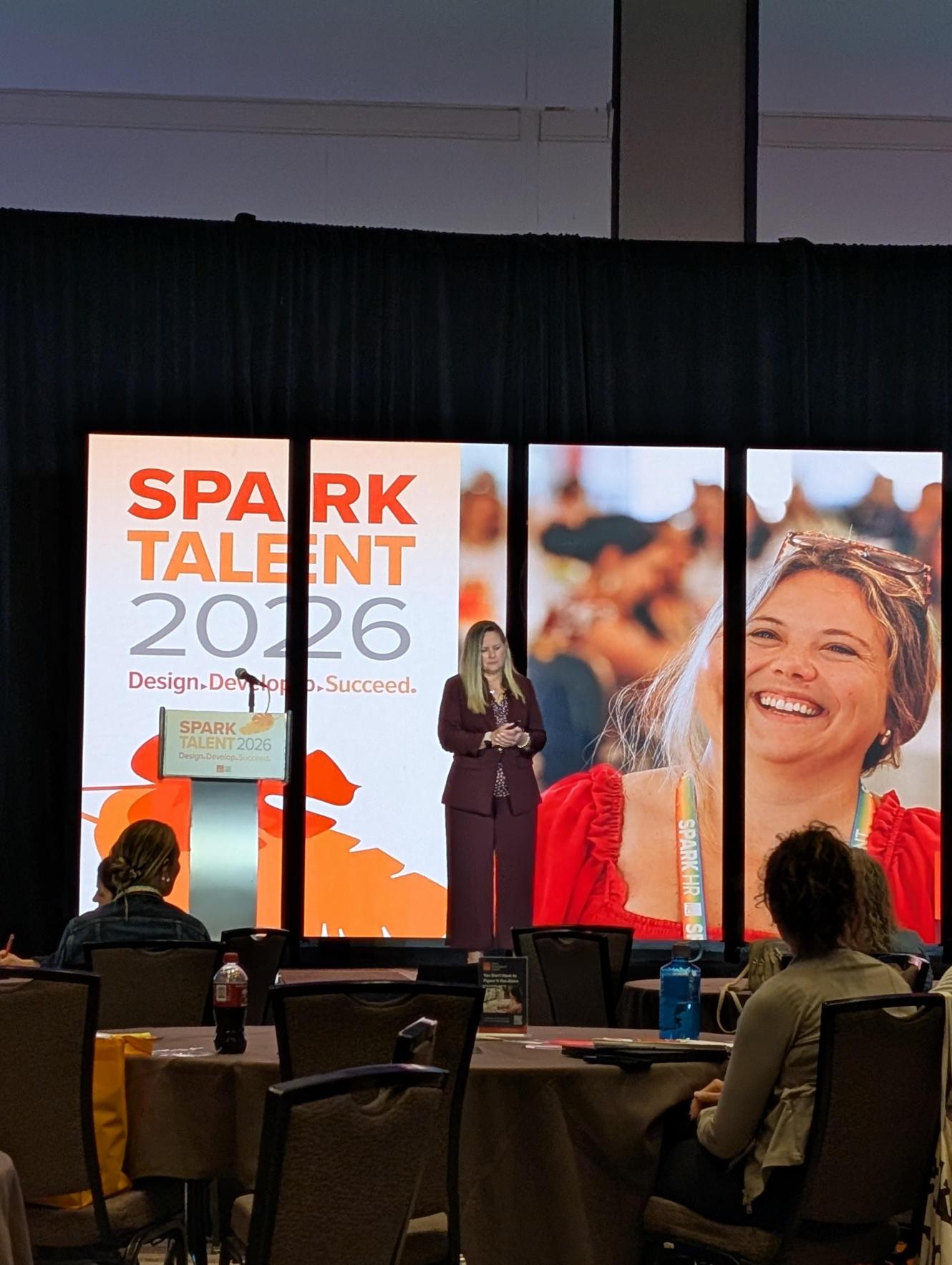
HR leaders spend their careers pouring energy into others, often at the expense of their own well-being. Joan highlighted the difference between schedule management and energy management, urging leaders to stop relying on the “I’ll be happy when…” trap (e.g., when a project ends or peak season passes).
The Energy vs. Purpose Matrix:
Audit your daily schedule across four distinct zones:
- The Drain Zone (Low Purpose / High Effort): Routine administration, expense reports, and unnecessary meetings. Recognize these drain bandwidth and minimize or hand them off where possible.
- The Recharge Zone (Low Purpose / High Energy): Lighthearted activities, hobbies, or breaks that reset your focus.
- The Taxing Zone (High Purpose / High Effort): Meaningful but emotionally demanding work, such as caregiving or tough organizational restructurings.
- The Mojo Zone (High Purpose / High Energy): Creative design, facilitation, coaching, and strategic problem-solving.
The Takeaway: To avoid burnout and maintain peak performance, actively protect time in your Mojo Zone, delegate effectively, redefine what “good enough” looks like for low-impact tasks, and ensure your next calendar decision is made with clear intention.
The Day 2 Bottom Line
Whether you are navigating digital transformation, updating succession frameworks, leading through complexity, or managing team bandwidth, modern HR leadership requires shifting from passive administration to proactive, human-centered systems design.