



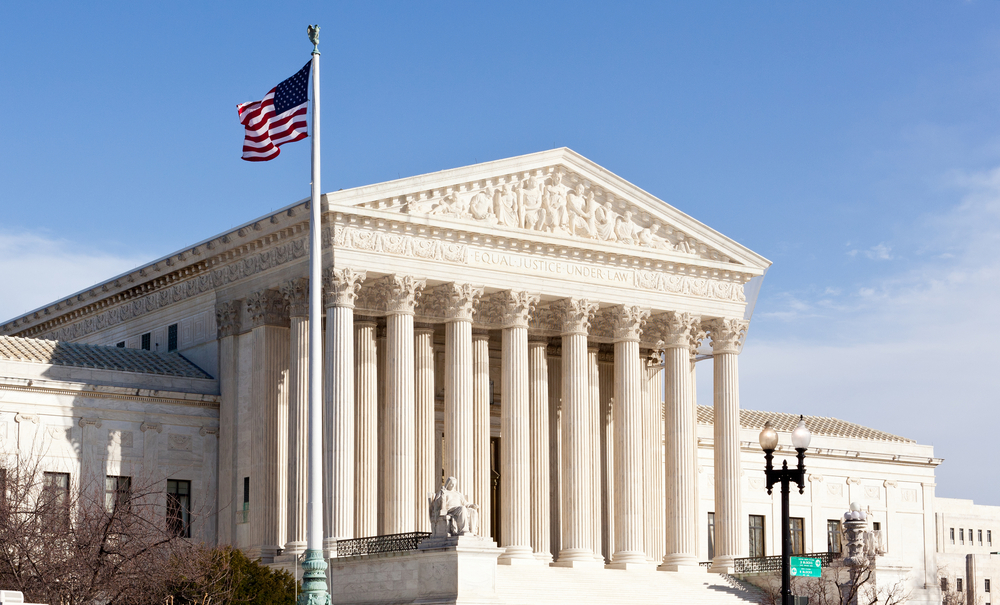
On June 25, 2026, the U.S. Supreme Court issued two immigration decisions with practical consequences for asylum access, Temporary Protected Status (TPS), and employer work authorization compliance. In Mullin v. Al Otro Lado, the Court held that a person waiting on the Mexico side of the U.S.-Mexico border hasn’t “arrived in the United States” for asylum and inspection purposes until crossing the border. In Mullin v. Doe, consolidated with Trump v. Miot, the Court reversed lower-court orders that had postponed termination of TPS for Syria and Haiti.
For employers, the most immediate issue is work authorization. Employees whose authorization is based on TPS for Haiti or Syria may be affected, but employers should rely on U.S. Citizenship and Immigration Services (USCIS), E-Verify, and Form I-9 guidance rather than news reports alone.
What the Court Decided
Mullin v. Al Otro Lado addressed “metering,” a border-management practice under which Customs and Border Protection (CBP) limits how many people may enter a port of entry each day for inspection and possible asylum processing. The Court held that federal law doesn’t require inspection or asylum processing for a person who remains in Mexico and hasn’t crossed into the United States.
The TPS cases involved Department of Homeland Security (DHS) Federal Register notices terminating the Syria and Haiti TPS designations. Syria TPS was scheduled to terminate on November 21, 2025, and Haiti TPS was scheduled to terminate on February 3, 2026. Federal district courts later stayed (halted) those terminations, and USCIS and E-Verify guidance stated that certain TPS-related employment authorization documents (EADs) remained valid under those court orders.
The Supreme Court has now ruled that TPS-related non-constitutional claims are barred from judicial review under the TPS statute and that the Haitian plaintiffs were unlikely to succeed on the equal protection claim before the Court. The Court reversed the lower court and remanded (sent the case back for further proceedings). DHS and USCIS may issue updated implementation and I-9 guidance following the decision.
Who is Affected?
The asylum ruling may affect individuals and families seeking asylum at land ports of entry along the U.S.-Mexico border, especially those waiting outside the United States.
The TPS ruling may affect Haitian and Syrian TPS beneficiaries, individuals with pending TPS-based EAD applications or renewals, and employers with workers whose Form I-9 documentation is based on TPS.
TPS can provide protection from removal and work authorization during the designation period. When a TPS designation ends, TPS-based work authorization may also end unless the employee has another valid basis for employment authorization or agency guidance provides an applicable automatic extension.
Employers must employ only individuals authorized to work in the United States, but they also must avoid discrimination, unfair documentary practices, and national-origin-based treatment. A Supreme Court decision doesn’t by itself tell an employer which specific employee may continue working. That determination depends on the employee’s current documents, applicable automatic-extension rules, and updated agency guidance.
What Employers Should Do Now
In light of the Supreme Court’s ruling, here are some actions you should consider:
- Review Form I-9 records for upcoming reverification dates, including EADs in category A12 or C19, without singling out employees based on nationality or citizenship.
- Check USCIS I-9 Central, E-Verify, and the country-specific TPS pages for Haiti and Syria before acting on TPS expiration or automatic-extension rules.
- Add reverification deadlines to your calendar and update HR tracking systems, but avoid requesting documents earlier or more often than Form I-9 rules allow.
- When reverification is required, allow the employee to choose which valid List A or List C document to present. Don’t demand a specific document.
- Don’t suspend, terminate, or place an employee on leave based only on headlines. Confirm current legal requirements and consult immigration counsel when facts are unclear.
- Prepare neutral employee communications and workforce plans that focus on I-9 requirements, not nationality, immigration history, or assumptions about future status.
The recent Supreme Court decisions don’t resolve every operational question. Border procedures, TPS implementation, and I-9 guidance may continue to change. Employers and affected individuals should monitor official DHS, USCIS, E-Verify, CBP, Federal Register, and court updates before making decisions that affect employment, travel, or immigration status.
Alycia Moss is a director and chairs Fennemore’s immigration practice group. Her national practice focuses guiding businesses, families, and individuals through the complexities of U.S. immigration law. Alycia is based in Fennemore’s Coeur d’Alene, Idaho, office. You can contact Alycia at amoss@fennemorelaw.com. Catherine Renshaw is an immigration attorney, with experience representing clients in matters before USCIS, immigration court, Immigration and Customs Enforcement, and the federal courts. Catherine is based in Fennemore’s Boise, Idaho office. You can contact Catherine at crenshaw@fennemorelaw.com.