




When Courtney Dutter joined ICIMS more than 15 years ago, the company didn’t even have an employment lawyer. Seeing an opportunity to make a meaningful impact, she stepped in to build and lead the company’s legal, privacy, and compliance functions from scratch.
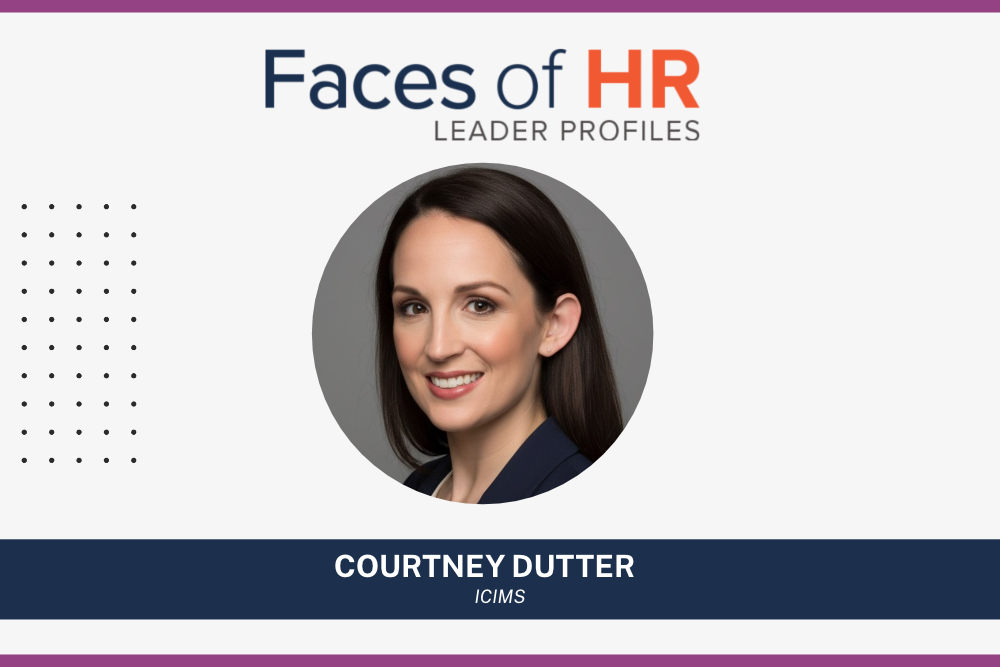
Over the past decade and a half, Dutter—now General Counsel and Chief Compliance Officer—has helped guide ICIMS through major growth, global expansion, acquisitions, and strategic partnerships. Through every milestone, her focus has remained steady: keeping the trust and security of customers and their talent data at the center of the business.
Inspired by HR
Dutter’s passion for employment law and compliance started long before her corporate career. Growing up with a mother who spent most of her career in HR, Dutter was surrounded by conversations about people, leadership, and workplace challenges—and even spent several summers interning for her.
“That early exposure gave me an appreciation for the critical role HR plays in helping organizations succeed,” Dutter shares, noting that those summers ultimately shaped her path into employment law and HR Compliance.
Cutting Through the AI Noise
Today, as HR teams navigate rapid shifts in workplace technology, Dutter’s advice to leaders is clear and practical: don’t let the noise around AI paralyze you.
“Remember that humans carry bias too,” she says. “So much of the conversation assumes AI is introducing bias into hiring, but bias has always existed, and when it is built and deployed responsibly, AI can actually help mitigate it.”
For Dutter, deploying AI “responsibly” comes down to three clear steps:
- Vet your vendors: Ask whether they have real policies, audits, and certifications backing up their claims.
- Keep people involved: Always keep a human in the loop during hiring decisions.
- Be clear with applicants: Communicate transparently with candidates in plain, easy-to-understand language.
Acting Now, Not Later
Above all, Dutter encourages HR leaders not to wait for new regulations before doing the right thing. Existing laws against hiring discrimination already apply, whether or not the word “AI” appears in them.
“Rather than waiting to see how the regulatory landscape settles, focus on building responsible practices now before it is too late,” she urges.
In our latest Faces, meet Courtney Dutter.
Who is/was your biggest influence in the industry?
Without question, my biggest influence has been my mother. She spent most of her career in HR before becoming a Deputy City Manager in California, and she taught me lessons that continue to guide me today. She showed me the importance of leading with empathy, navigating difficult situations with integrity and never losing sight of the people behind every business decision. Those lessons have stayed with me throughout my career.
What’s your best mistake and what did you learn from it?
Early in my leadership journey, I made the mistake of believing the company would struggle without me if I stepped away. And as a result, I wasn’t doing enough to prepare my team to operate independently. Over time, I realized that mindset was limiting both me and my team. It meant I could not truly disconnect, and more importantly, it meant I was not developing others the way I should have been. The experience taught me that great leaders build teams that can thrive without them.
Another lesson came from assuming my career aspirations were the same as those of the people I managed. I learned that every employee has different goals, motivations and definitions of success. The key is maintaining an open dialogue, understanding what matters to them and being willing to adjust your expectations to support their individual growth.
What’s your favorite part about working in the industry? What’s your least favorite part, and how would you change it?
What I love most is helping organizations, including our own, achieve their goals, because so much of business success ultimately comes down to having the right people in the right roles. Whether you are building a company, launching a new initiative or driving innovation, it all starts with talent.
My least favorite part is the perception that lawyers are simply there to say “no” or slow progress down. This perception has only grown as concerns around AI adoption in HR have grown. While there are always exceptions, most legal professionals genuinely want to help businesses move forward. The challenge is that legal teams are often brought in too late or asked to evaluate decisions without enough context. The best outcomes happen when business, HR, product and legal teams work together from the beginning to find solutions instead of focusing only on obstacles.
It sounds like through your experience you really care about people, and you want to help them feel safe and comfortable, which is important in the industry. Please elaborate here.
I believe creating an environment where people feel supported, respected and comfortable being themselves is one of the most important responsibilities a leader has. We spend a significant portion of our lives at work, so it is important that employees feel valued for what they do and for who they are.
I have also found that understanding what motivates people, what energizes them and how they find fulfillment outside of work helps create stronger teams. When employees feel seen and supported as individuals, they are more engaged, more connected to the organization and more willing to go above and beyond when it matters.
How can company leaders make HR a value within their organization?
People are at the center of every organization. If leaders are not partnering closely with HR, whether it is for enablement, helping to coach and mentor or finding that right talent, they are missing out on one of the most valuable resources available to them.
HR leaders bring expertise that extends far beyond hiring. They help organizations develop talent, strengthen culture, navigate change, coach leaders and build the workforce needed to achieve business goals. Companies that treat HR as a strategic partner rather than a support function are often better positioned to grow, adapt, and succeed over the long term.
Where do you see the industry heading in five years? Or are you seeing any current trends?
AI is obviously the trend that dominates nearly every conversation today, particularly in hiring and workforce management. While there is a great deal of focus on AI risk and compliance right now, I believe many of these conversations will become far more commonplace over the next several years, much like the industry’s transition to cloud technology. What feels new and uncertain today will eventually become an accepted part of how organizations operate.
At the same time, AI will push companies to rethink and improve their hiring processes. Organizations will need to become more intentional about how they evaluate talent, make decisions and create fair, efficient hiring experiences. The companies that adapt successfully will be better positioned to hire great people and compete for talent.
What are you most proud of?
I am most proud of the team I have built. Over the years, I have heard many people say that building a highly connected legal team across multiple continents was not possible. We proved otherwise. We have created a team that collaborates effectively across geographies, delivers meaningful and complex work and maintains a strong culture despite the distance. Seeing the team grow and succeed together has been incredibly rewarding.
Do you have any advice for people entering the profession?
Whether entering the legal profession or the in-house profession, be willing to say “yes” to opportunities, especially early in your career. Some of the most valuable experiences come from projects or challenges that stretch you beyond your comfort zone.
I would also encourage people to focus on understanding the business, not just their specific area of expertise. Whether you are in legal, HR or another function, your ability to provide meaningful guidance depends on understanding how the organization operates and what it is trying to achieve. The more you understand the business, the more effective you will be at finding practical solutions and creating value for the people around you.