Most Popular

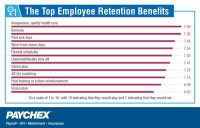
New Survey Uncovers the Key to Retaining Top Talent

Does your organization suffer from high turnover? Are you constantly looking for ways to retain talent? A new survey, conducted by Paychex, may offer more insight into ways employers can keep their current workforce happy, engaged, and most importantly—keep them around! The Paychex survey report, “Employee Retention: What Makes Employees Stay or Leave,” focuses on […]

Chobani serves up stock offering to its employees

by Edward O. Sweeney and Justin St. Louis Chobani, LLC, recently announced that it would be giving most of its employees stock shares pursuant to what is commonly referred to as an employee stock ownership plan (ESOP). As a result of the move, Chobani’s employees will collectively own roughly 10 percent of the company. How […]

Why employee engagement must be a priority, not an option

by Jimmy Daniel When it comes to your workplace, do you know how many members of your team are truly engaged? On average, U.S. companies have an engagement level of 32%. Basically, one out of three of your team members is engaged. Studies suggest that disengaged employees cost the U.S. economy between $400 billion and […]

Super Safety Training Sessions, Part 1: Preparation

Imagine two training rooms, side by side. Both host safety training meetings. In Room A, the instructor drones on and on, doing all the talking, while trainees check their watches, look longingly at the exit, or just slouch at their desks with a 10,000-yard stare in their eyes. When the session breaks, there’s a dash […]

Setting and Achieving Goals

Corporate goals are used by many organizations to formalize company objectives, communicate those objectives to staff throughout the organization, and incentivize staff to work toward the goals. Often, bonuses are tied to goals, for example. In order for goals to be effective, there are a number of basic factors and characteristics that must be taken […]

e-mail

Excessive E-Mail Harming Manager Performance

The advent of e-mail revolutionized the way people communicate in office settings. When e-mail arrived on the scene, fax machines had already allowed the ability to send messages in print to recipients around the world, but e-mail made that ability much more efficient, convenient, and ubiquitous—not to mention cheaper.