



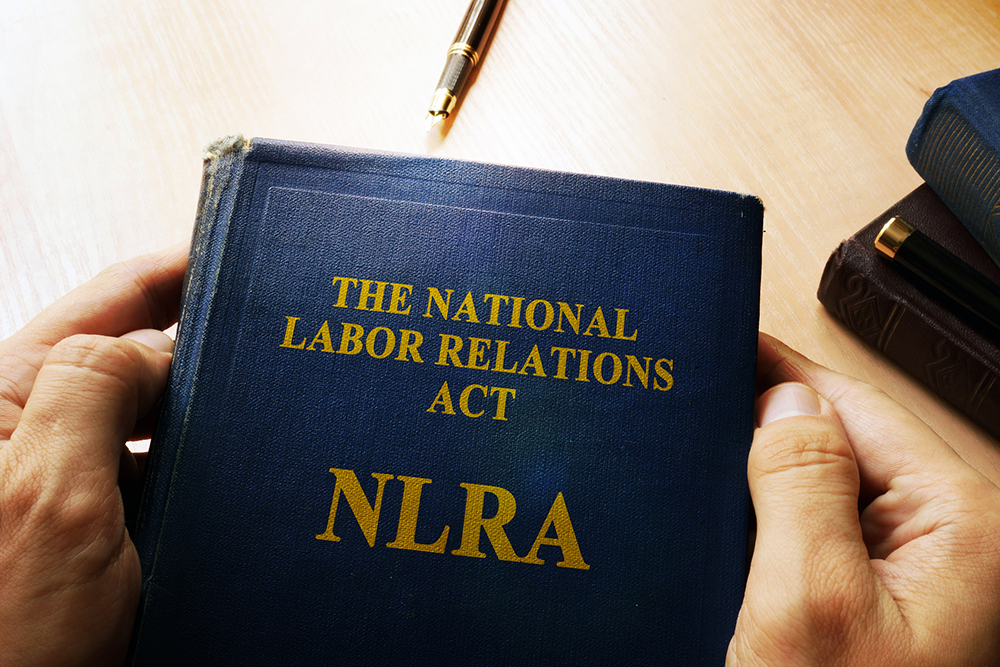
From pay transparency to remote work, employees are increasingly vocal about working conditions both in the office and online. The National Labor Relations Act (NLRA) protects employees—union and nonunion alike—when they engage in concerted activity to address terms and conditions of employment. Employers can’t discharge, discipline, or threaten employees for engaging in protected concerted activity (PCA). Given the rise of employee activism in the workplace, it’s imperative that you understand when you can and can’t lawfully intervene.
What is PCA?
Under the NLRA, employees have the right to engage in PCA for mutual aid or protection. When employees act—either together or alone on behalf of other employees—to improve wages, hours, or working conditions, Section 7 of the NLRA protects their activity, regardless of union status. Accordingly, you must first determine whether an employee’s conduct constitutes PCA.
A single employee engages in PCA when the employee acts on behalf of other employees, brings group complaints to the employer’s attention, or seeks to induce or prepare for group action. However, employee activity limited to personal work concerns without a connection to the interest of other employees is unprotected. For example, employees who are demanding a raise for themselves aren’t engaging in PCA, but an employee who’s advocating for raises for the department based on shared belief or concern is.
- Examples of PCA include
- Discussing wages and benefits
- Refusing to work in unsafe conditions
- Posting online about common workplace issues
- Demanding the right to work remotely
- Voicing a group complaint during a staff meeting
To avoid an unfair labor practice (ULP) charge, you must not interfere with, restrain, or retaliate against employees for engaging in PCA.
When do Employees Lose Protection?
Concerted activity doesn’t give employees free rein or impunity. Although the line between PCA and misconduct can be thin, employees lose protection when their conduct is egregiously offensive, involves threats or violence, or is intentionally false or malicious. While the National Labor Relations Board (NLRB) provides some leeway for impulsive behaviors, and recent decisions suggest conduct must be significantly egregious, the Board must balance the employee’s right to engage in PCA with the employer’s right to maintain order and respect in the workplace. Accordingly, you can enforce a zero-tolerance policy against abusive or discriminatory conduct to comply with applicable state and federal antidiscrimination laws.
You can, and should, enforce neutral policies but must avoid taking adverse actions—such as discharge, discipline, demotion, reduction of hours, or transfer—against employees for engaging in PCA. Otherwise, you may trigger ULP charges.
Recent Trends
Employee activism—and, in turn, the likelihood that employees will engage in PCA—continues to rise, fueled by rising workforce expectations, social movements, and technology that fosters employee collaboration.
Recently, ULP charges have been on the rise, as well, even among nonunionized employers, and the NLRB continues to expand its interpretations of “concerted” and “protected.” As previously discussed, solo employee actions that seek group support or originate from group concerns may be protected, and employees’ online activity is increasingly protected, even when posts are critical or harmful to the employer.
Employer Takeaways
Here are important points to remember:
- Train supervisors: Educate supervisors to identify PCA and consult with you before disciplining employees.
- Review policies: Ensure policies don’t restrict lawful discussions about wages, benefits, or workplace issues. Similarly, avoid overly broad civility rules that could reasonably chill PCA. Focus policies on prohibiting unlawful harassment and discrimination.
- Be consistent: Apply policies equally and consistently to avoid discrimination or retaliation claims. Keep clear documentation of your rationale for any disciplinary action.
- Pause before acting: Refrain from taking immediate disciplinary action. First consider whether the conduct relates to working conditions and analyze the impact of the conduct. Address disruptive, intimidating, or harassing behavior.
Bottom Line
As employees continue to become more vocal about working conditions, you should keep in mind their activity may be protected under the NLRA and proceed with caution before taking adverse action, carefully assessing whether the conduct relates to employees’ terms and conditions of employment. Applying your policies fairly and thoughtfully handling employee activism can both avoid liability and maintain a positive workplace culture.
Amber Larson is an attorney with Axley LLP in Madison, Wisconsin. She can be reached at 608-283-6731 or alarson@axley.com.