


What do NASA’s Jet Propulsion Laboratory, Disney, and Nordstrom have in common? They’ve all turned to Betsy Lopez-Riley to navigate their biggest moments of reinvention. A senior transformation leader with over 20 years of experience, Lopez-Riley knows that big ideas only work when they work for the people executing them.
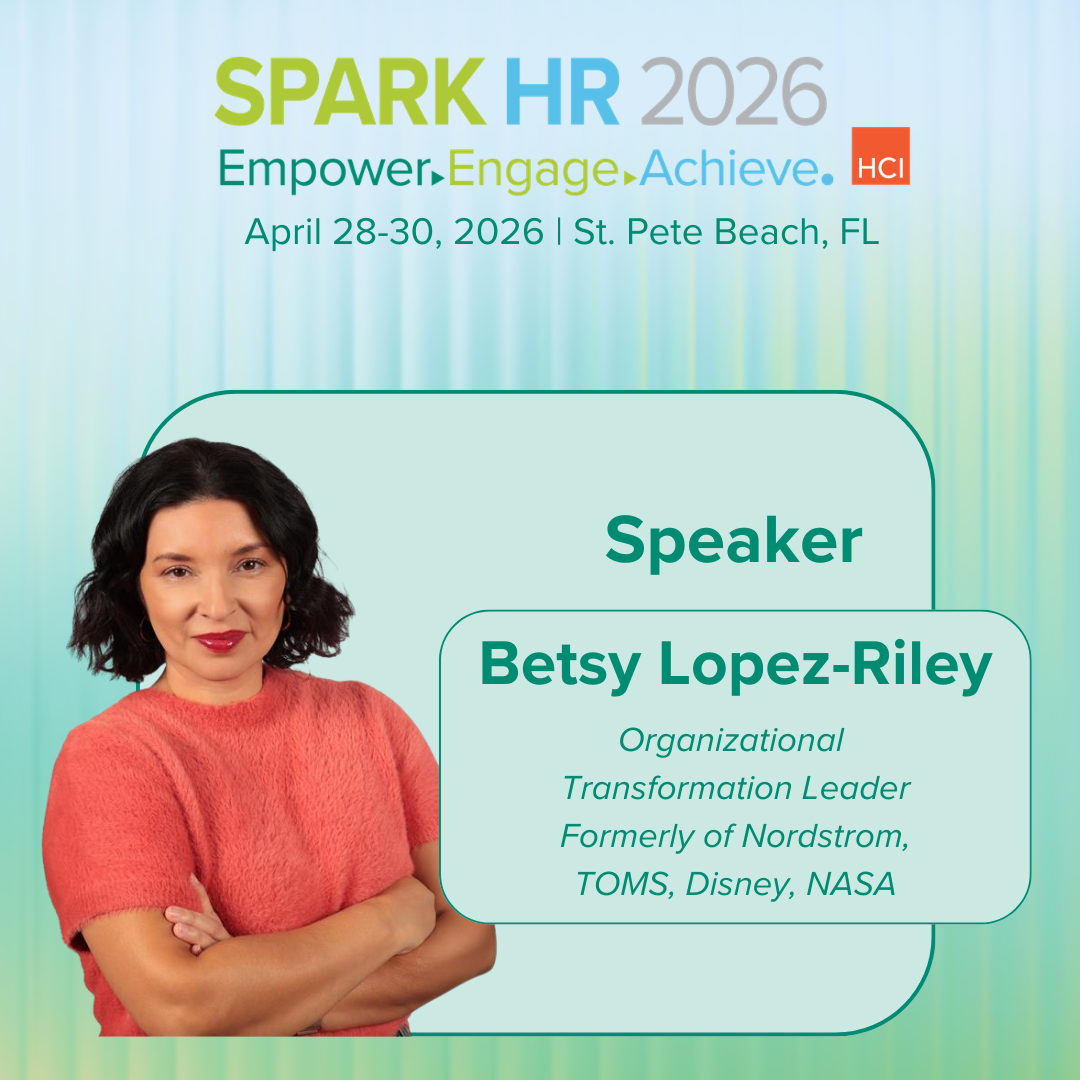
Ahead of her sessions at SPARK HR 2026, HR Daily Advisor sat down with Lopez-Riley to discuss why traditional HR strategies often fail and how to bridge the gap between corporate vision and everyday execution.
Here are 10 actionable takeaways for HR leaders looking to build trust, fix burnout, and simplify strategy.
1. Solve for Uncertainty, Not Complexity
While launching a rocket and redesigning a retail model seem worlds apart, the human dynamics are identical. People are capable of handling hard, complex tasks; what they cannot handle is a lack of clarity.
“People can handle complexity, what they struggle with is uncertainty… When clarity drops or trade-offs are hidden, uncertainty rises. And that uncertainty, more than complexity, is what erodes confidence during change.”
2. Design Around Human Capacity, Not Jargon
“Human-centered transformation” shouldn’t be a buzzword. It requires a disciplined look at whether employees actually have the time and authority to do what is being asked of them.
“Human-centered transformation is very concrete. It means designing change around real human capacity and real human emotion… It isn’t about being soft. It means caring about people and being honest about what it takes to execute.”
3. Stop “Managing” and Start Changing
Listening to employees is only valuable if it results in a visible shift. If you collect feedback but nothing changes, you aren’t building trust—you’re performing.
“Listening only builds trust when it changes something. Traditional employee listening backfires when the cycle stops at collection… Employees don’t feel listened to, they feel managed.”
4. Frame Employee Input as “Decision Intelligence”
Executives often keep employees “under the hood” because they fear it will slow down decision-making. HR’s job is to reframe that input as a way to reduce risk.
“Employees don’t need veto power. They need a meaningful chance to influence what’s still flexible. When input is positioned to pressure test assumptions and reduce unintended consequences, executives see it as strengthening the decision.”
5. Ditch the Justification in Your Strategy
The hardest part of fitting a strategy onto one page isn’t the data—it’s the urge to explain why you made past decisions. To get alignment, you have to be willing to be exposed and focused.
“The hardest thing to cut is justification. It feels important… Slides protect complexity. A single page forces clarity.”
6. Treat Burnout as a Work Design Issue
Yoga and meditation apps are great for recovery, but they don’t fix a broken system. If the workload and decision ownership are misaligned, no amount of self-care will solve the problem.
“Burnout isn’t a resilience problem. It is absolutely a work design problem… Wellness programs support recovery; work design determines sustainability.”
7. Identify the “Silent” Breaking Point
Failure isn’t the first sign of a team in trouble. Look for the “strain” stage—where people are working harder but the actual output has stalled.
“The real breaking point shows up when effort increases, but output doesn’t… You’ve crossed from stretching into overload.”
8. Address the Exhaustion of Ambiguity
Intensity isn’t what kills morale; it’s the lack of context. Teams can handle a heavy lift if they understand the “why” and the “how long.”
“Ambiguity is exhausting. People can handle intensity… What they struggle with is unpredictability without context, without understanding.”
9. Adopt a Visible “Stop List”
When a new priority is added, something must come off the plate. If you only manage a to-do list, you are essentially managing organizational exhaustion.
“Every time a new priority is added, ask, what are we stopping or pausing to make space for this? Make an actual list, make it visible… If you manage a to-do list without a stop list, you’re managing expansion, not sustainability.”
10. Recognize that Trust is a Design Outcome
Trust and energy aren’t random; they are the result of a well-aligned system. When you clarify the work, you automatically improve the culture.
“Trust and energy are design outcomes. When leaders slow down enough to listen upstream, clarify priorities, and design work around real human capacity, trust increases and burnout decreases.”
Want to learn more? Catch Betsy Lopez-Riley live at SPARK HR 2026, April 28-30, in St. Pete Beach, FL, for her full sessions: “Burnout Fix: Real Solutions Leaders Can Make Now” and “How to Turn Employee Listening into a One-Page Strategy Story.”