



In the world of HR, “culture” is often a buzzword that feels hard to pin down. But for Nicholas Lawrence, Executive Director of People & Culture, local franchise for Chick-fil-A Indianapolis, culture isn’t a vague feeling—it’s a measurable standard. During a webinar ahead of his session at SPARK HR 2026, Lawrence shared how one of the world’s most recognizable brands maintains its spot as #1 in customer satisfaction for 11 years running.
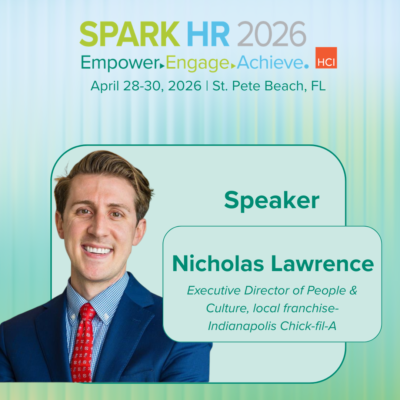
The secret? It’s not just the chicken. It’s a conviction-driven leadership model that turns HR into “culture architecture.”
Here are the top 8 actionable insights from Lawrence on how to build a workforce that doesn’t just work but serves with purpose.
1. Culture is Consistency
Many organizations struggle with culture because they see “highs and lows.” Lawrence defines culture simply: “Culture is your standard—a consistent standard over time.” It’s not just what you say in your handbook; it’s what you enforce (or don’t enforce) every single day.
“When you’re consistent with those standards over time, that defines what your culture is.”
2. Hire for “Grit and Smile,” Not Just Skills
Chick-fil-A doesn’t just look for shift-fillers; they look for people with endurance. Lawrence notes that while technical tasks are trainable, attitude isn’t. They specifically seek out “gritty” people who are willing to roll up their sleeves in the heat or the cold to maintain a high-level mentality.
“We are hiring for attitude, for the smile, for the passion… The fundamentals of people being passionate and having a great attitude, it’s hard to train that part of it.”
3. Your Competitors Already Found Your Best People
Lawrence often tells people that his best team members came from competitors. The difference isn’t the person; it’s the environment. HR leaders should stop asking where to find great people and start asking how to steward them better.
“These people already exist in the marketplace… Think about a plant, it has to have great soil and the right amount of water and great sunlight. What are you doing to care for them?”
4. Leaders Must “Work the Front Line”
In Lawrence’s world, there is no “work from home.” To lead effectively, he believes you must prove you are willing to do the same work you ask of your team—whether that’s taking orders or making milkshakes.
“A lot of leaders say, ‘I would never ask my team to do anything I wouldn’t do.’ But then there’s never really an opportunity to prove that… we get the opportunity as leaders to prove that every day.”
5. Transition from “Traffic Cop” to “Coach”
For many young leaders, the instinct is to “issue citations” for mistakes. Lawrence works to shift this mindset toward restorative feedback. HR’s goal should be equipping leaders to be coaches who help the team “win the game,” rather than enforcers looking for demerits.
“We work a lot on the mindset of: you are a coach, you’re here to give feedback, to raise your team up… not to issue citations and demerits.”
6. Use “Elevated Language” to Set the Tone
Small shifts in vocabulary change the psychological weight of a task. At Chick-fil-A, they don’t “refill” a drink; they “refresh a beverage.” This language signals to both the employee and the guest that the interaction is premium, not transactional.
7. Calibrate Your “Why”
Chick-fil-A’s success is rooted in being “brilliant in the basics” and having a calibrated purpose. Whether it’s faith-based or mission-based, Lawrence argues that a company must have a “higher calling” to keep the team from moving to “autopilot.”
“We’re not on autopilot in leadership or in life… I challenge the audience to think about their ‘why’ and their purpose.”
8. Don’t Lean on “Yesterday’s Home Run”
Even with a decade at the top of the charts, Lawrence warns against complacency. Maintaining a service culture requires adapting to new technology and customer patterns without losing the core standard.
“Yesterday’s home run won’t win today’s game. We have to be willing to adapt and still provide exceptional service.”
Want more “My Pleasure” secrets? Join Nicholas Lawrence at SPARK HR 2026 in St. Pete Beach, Florida, where he will dive deeper into his “culture architect” framework and share practical tools to help you invest in your people.