



Picture this: A high-profile political figure visits your company. An employee confronts them about a controversial issue. Profanity flies, and the video goes viral. HR must respond, but how?
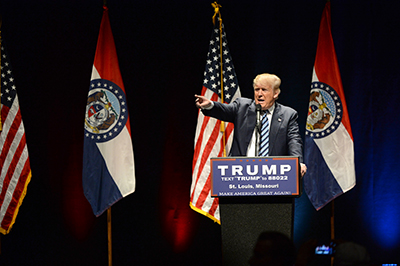
That scenario played out last month at a Ford Motor plant in Detroit during President Trump’s visit. Ford assembly worker T.J. Sabula, a unionized employee, shouted “pedophile protector” at Trump, an apparent reference to the Epstein files. Trump responded with profanity and raised his middle finger. Ford suspended Sabula, and the United Auto Workers union publicly defended him.
For executives and HR professionals trying to navigate political tensions in the workplace – whether during a high-profile visit from a politician or between two employees in the breakroom – the Ford incident offers critical insights about how business context, company positioning, and external pressures shape employer responses.
The Flashpoints Framework
Employers should develop a proactive approach to cultural flashpoints that works for their organization by examining: (1) legal compliance; (2) your organization’s values, policies, and business needs; and (3) employee morale, engagement, and retention. This framework helps ensure that when these moments arise, you’re responding thoughtfully and in accordance with company policy, rather than reactively and in violation of the law.
Legal Reality: Less Protection Than Employees Think
As a legal baseline, employees in private workplaces do not have constitutional free speech protection at work. The First Amendment protects citizens from government censorship, not from facing consequences for expressing their political views at work. Most U.S. workers are employed at-will and can be disciplined or terminated for conduct, including political speech.
In unionized workplaces, collective bargaining agreements govern discipline, typically under a just-cause framework. When Ford suspended Sabula, the UAW immediately invoked contract protections and mounted a public defense. That dynamic – the employer’s authority to act, and the union’s authority to challenge – is exactly the tension that HR leaders in unionized environments must be prepared to navigate.
There are additional protections worth noting. Some states protect off-duty political speech that implicates the workplace, and the NLRA protects concerted activity among workers. But the general rule remains employers have more authority to regulate workplace speech than most employees realize.
Why Business Context Shaped Ford’s Response
Ford’s decision to suspend Sabula did not happen in a vacuum. A range of business considerations may have factored into the company’s response:
- The visit was strategic, not routine. Ford deliberately invited President Trump. The company’s senior leadership, including Executive Chairman Bill Ford and CEO Jim Farley, personally hosted him to highlight tariff policies and domestic manufacturing ahead of the Detroit Auto Show.
- Ford has hosted every U.S. president for 50 years. That is a strategic asset – a signal to successive administrations that Ford is a reliable partner regardless of which party controls Washington. When Sabula’s shout and Trump’s obscene gesture went viral, it didn’t just create an awkward moment. It arguably threatened the visit’s business purpose and potentially damaged Ford’s relationship with the administration.
- External amplification came from both sides. The White House called Sabula “a lunatic” in “a complete fit of rage.” Congresswoman Rashida Tlaib called him a “hero.” Crowdfunding campaigns launched in his favor. Ford was caught in the crossfire of a national argument it did not start.
- Inaction would also have sent a message. Executive Chairman Bill Ford acknowledged embarrassment over the incident. The stakes included the company’s relationship with the President and Treasury Secretary, Ford’s reputation as a reliable partner for high-profile events, and the internal signal about whether employees could disrupt major company initiatives without consequence.
What This Means for Your Organization
The Ford incident offers a framework for thinking through political confrontations in your own workplace:
- Start by assessing what business interests are implicated. Is this a casual interaction that turned contentious, or is it disrupting a critical business imperative? When senior leadership is personally hosting a high-profile figure to advance policy objectives, an employee’s disruption creates a fundamentally different problem than a contentious exchange during a routine event.
- Think about your company’s positioning and brand. Ford’s fifty-year history of hosting every president wasn’t just talk, it was a strategic asset worthy of protection. What is your organization’s equivalent?
- Adopt a position that is reasonably consistent and sustainable going forward. Can you articulate a viewpoint-neutral business rationale for HR’s actions? Would you respond – and have you responded when faced with similar situations in the past – the same way regardless of which politician was involved or which viewpoint was expressed? If not, reconsider.
- If your workplace is unionized, be prepared to defend your business rationale within your CBA. The UAW’s response to Ford’s suspension of Sabula was immediate, coordinated, and public. If your discipline decision cannot withstand scrutiny – including in a potential grievance arbitration – you need to know that before you act, not after.
The Employee Relations Challenge
When you act on a divisive issue in a politically charged moment, roughly half of your workforce will think you’re wrong, regardless of what you decide.
A reasonably consistent approach that is viewpoint-neutral will help employees understand that the issue is not the underlying political position but rather respecting company policies and mission. Ford handled communications carefully, declining to discuss personnel matters while affirming workplace conduct standards. The challenge for HR is communicating your business rationale without getting drawn into political debates.
Preparing for Your Own Moment
Before hosting high-profile events, document what you’re trying to accomplish. That assessment becomes crucial if an incident occurs, helping you articulate a business rationale rather than appearing to make political judgments. Beyond that:
- Set expectations with employees when hosting events with significant business purposes. Brief them on professional conduct and be clear that disruptions will be addressed and explain why, in terms tied to the company’s mission.
- Recognize that different situations call for different responses. Consider limiting the audience for high-stakes events and controlling the environment to reduce the opportunity for disruptions.
- If your workplace is unionized, be prepared to follow your CBA’s processes while clearly articulating your business justifications. Grievance arbitration is a real possibility in these situations. Make sure your rationale can hold up.
- Identify your own internal Cultural Flashpoints task force that will handle such issues. Consider including not only executive leaders, Legal and HR – but also media relations, employee relations and other key stakeholders.
The Bottom Line
Your response should be driven by legitimate business considerations, not political pressure. Not every political comment by an employee requires discipline. But when employees disrupt significant business initiatives, employers may have the right – or obligation – to respond based on legitimate business needs, not political allegiances.
Jennifer Serafyn, Dawn Solowey, and Sam Schwartz-Fenwick are partners in the Cultural Flashpoints practice at Seyfarth Shaw LLP .