




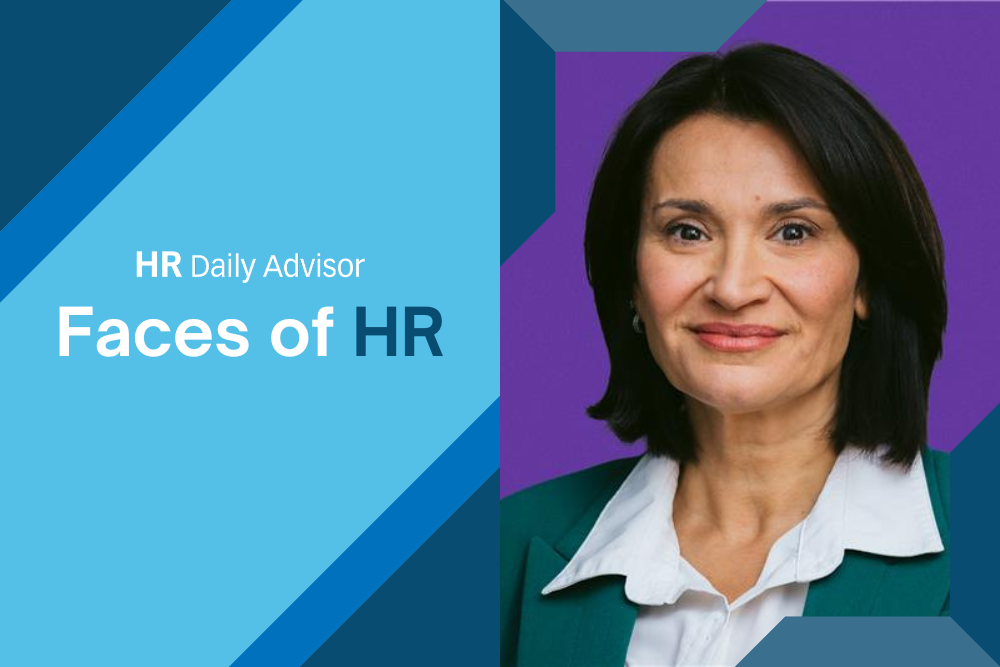
Jeanna Shapiro didn’t just climb the corporate ladder; she built it. With nearly 25 years of experience in the high-stakes world of global professional services, Shapiro now serves as the Chief People & Culture Officer for Grant Thornton and a key member of the Executive Committee at Grant Thornton Advisors LLC. But her journey to the C-suite started far from the boardroom.
From Foundations to Leadership
Shapiro began her career at Booz Allen Hamilton in an entry-level role supporting a consulting team. Proving that no task is too small when you have a vision for the big picture, she transitioned into an executive assistant role for several partners. It was there that she began leaning into recruiting and talent work. By stepping outside her core responsibilities to support project teams directly, she mastered the building blocks of HR—resource management, compensation planning, and performance management.
A Business-First Approach to People
This “boots on the ground” beginning anchored a career defined by rapid growth. Before joining Grant Thornton, Shapiro sharpened her leadership edge at Oliver Wyman, serving as the Chief Operating Officer of the Americas. Today, she is known as a performance-driven leader who speaks the language of business as fluently as the language of people.
Driving Outcomes at Grant Thornton
At Grant Thornton—a financial services powerhouse providing audit, tax, and advisory services—Shapiro is tasked with a complex mission: aligning people strategy with business outcomes. In an industry where specialized talent is the primary product, she uses her deep understanding of professional services to solve complex challenges and sustain high-performing teams. For Shapiro, the goal is clear: creating an environment where the strategy doesn’t just look good on paper, but enables every individual to deliver world-class results.
“One thing I always encourage people to do is to find the fun and passion in their work,” she shared with HR Daily Advisor. “HR can be incredibly rewarding, but it can also be heavy—you’re often dealing with complex issues, tough conversations, and real human challenges. Finding moments of joy, connection, and purpose in what you do is essential to sustaining yourself in this profession. When you enjoy the work and care deeply about it, you show up better for others—and that makes all the difference.”
In our latest Faces, meet Jeanna Shapiro.
Who is/was your biggest influence in the industry?
Interestingly, my biggest influences haven’t been traditional HR leaders, they’ve been the business leaders I worked alongside throughout my career. Learning directly from them helped me understand how deeply people and culture enable business outcomes, rather than viewing HR as a standalone function. Working in professional services for nearly 30 years, I developed a bottom‑up understanding of the business, which shaped how I approach talent strategy. Just as importantly, the consultants and teams I supported taught me how HR is best experienced in the trenches. That perspective continues to guide my focus on making HR practical, relevant, and tightly connected to the business.
What’s your best mistake and what did you learn from it?
One of my most impactful mistakes came when I stepped from a long‑held talent leadership role into the COO role for the Americas at Oliver Wyman. I had deep relationships across the business and assumed those relationships would carry over unchanged. What I didn’t fully appreciate was that my new title and scope fundamentally altered how people experienced me, even though my intent hadn’t changed.
That mismatch created tension and misunderstandings, culminating in some very tough but invaluable feedback from a senior leader. While initially jarring, it taught me a lasting lesson: as you step into more senior roles, you have to recalibrate how you show up. You can’t take relationships for granted, you have to slow down, invest differently, and allow space for relationships to evolve. That experience shaped how I lead to this day. It reinforced the importance of truly listening, internalizing feedback, and adapting your leadership style as your role changes.
What’s your favorite part about working in the industry? What’s your least favorite part, and how would you change it?
My favorite part of working in this industry is engaging directly with people and teams. I’m energized by partnering with the business to solve real problems, rolling up my sleeves, planning, and working through challenges alongside leaders and client‑serving teams. HR and talent sit at the heart of a people business, and I find real fulfillment in understanding what matters to individuals and helping align talent, culture, and strategy to drive results. Most rewarding of all is seeing people develop over time, from early in their careers into leadership roles, and knowing I played a part through honest, real‑time feedback and coaching.
My least favorite part is when teams operate in silos rather than collaborating to solve shared problems. In professional services especially, HR sits at the intersection of the business, finance, and operations, and progress depends on true collaboration and information‑sharing. When that breaks down, it often leads to frustration and finger‑pointing instead of forward momentum.
The way I work to change that is by intentionally bringing people together—sometimes quite literally in the same room or virtual space—to share information, context, and a clear vision for what we’re trying to achieve. I’m very explicit about expectations, the collaborative approach required, and individual accountability. And when collaboration breaks down, I believe in addressing it directly. That means giving real feedback, having tough conversations, and holding people accountable so teams can move forward together. When everyone rows in the same direction, real progress happens.
It sounds like through your experience you really care about people, and you want to help them feel safe and comfortable, which is important in the industry. Please elaborate here.
I strongly believe—both personally and at Grant Thornton—that people do their best work when they feel supported, engaged, and are growing in their careers. When people feel safe and comfortable, they’re more confident, more productive, and more willing to stretch themselves. Creating that kind of environment requires a balance of autonomy and support.
We want our people to learn through real work and challenging assignments, but we also need to surround that experience with the right development programs and guidance. That’s why we’ve invested heavily in structured career milestones, learning and development programs, and tools like digital badging, so people have clarity on where they are and what success looks like at each stage.
Feedback is a critical part of creating that sense of safety and growth, even though it’s not always easy. We recently redesigned our performance management system, RISE, to be much more competency‑based and feedback‑driven. The goal is for our people to know how they’re doing in real time—through ongoing conversations with coaches, leaders, and managers—not just at review time. We also aligned our compensation model more closely with performance, so there’s a clear and fair connection between growth, contribution, and rewards.
Listening is equally important. Through our GT Shape annual survey and regular pulse checks, we consistently ask our people how they’re feeling, what’s working, and where we can do better. That feedback helps us refine our programs, address concerns early, and respond to what our people actually need, not just what we assume they need.
At the core of all of this is what I think of as “support to stretch.” We expect high performance, but we’re committed to giving people the tools, feedback, and support they need to get there, and to listening and adjusting along the way. That combination is what helps people feel both safe and challenged, which is essential for long‑term growth and success.
How can HR most effectively demonstrate its value to the leadership team?
HR demonstrates its value most effectively by stepping beyond the function itself and into the role of a true strategic business partner. That means deeply understanding the business, its goals, challenges, and economics, and solving problems through a talent lens, not just delivering HR programs.
In today’s environment, HR has a unique vantage point. For the last few years, leaders have been navigating rapid shifts in talent availability, changing workforce expectations, mental health and wellbeing, geopolitics, and generational change. HR is closest to those dynamics, but that insight only becomes valuable when it’s paired with a strong understanding of the business and translated into actionable solutions.
HR on its own isn’t the goal. HR that understands the business, anticipates challenges, and helps leaders align people, culture, and strategy is where real value is created. When HR is seen as a problem solver and strategic partner—not just a support function—it earns its seat at the leadership table.
Where do you see the industry heading in five years? Or are you seeing any current trends?
AI and automation are clearly reshaping the future of HR, and I think the most important shift ahead is that HR needs to stop being afraid of innovation. Many traditional HR operating models are evolving. As workforce expectations, business needs, and technology continue to change, HR has an opportunity to adapt in ways that strengthen its impact and relevance.
Over the next five years, I expect HR to fundamentally rethink how work gets done and what talent looks like including a blend of people, technology, and AI‑enabled support. That will require reimagining centers of excellence, too. For example, learning and development will look very different: more digital, more self‑directed, and more embedded into daily work, while still preserving high‑impact, in‑person experiences where they matter most.
What are you most proud of?
I’m most proud of my journey. I started my career as an executive assistant and, over time, grew into the role of Chief People & Culture Officer. That progression reflects decades of learning, persistence, and growth, and it reinforces my belief that with the right support, opportunity, and feedback, people can build careers that evolve in ways they may not have initially imagined.
Do you have any advice for people entering the profession?
My advice is to come into HR because you truly care about people, talent, and development, but recognize that those qualities alone aren’t enough anymore. The future of HR requires a balance of human insight and business savvy.
New HR professionals should be comfortable with technology, data, and operational thinking. Leaders today expect HR to develop people, improve performance, and build culture while also doing so in a cost‑effective, scalable way. That means understanding data, using technology thoughtfully, and being able to demonstrate the return on investment of people programs through clear metrics and KPIs.
HR is no longer just a “soft‑skills” function. It’s becoming a hybrid role. One that blends empathy and talent expertise with problem‑solving, analytical thinking, and operational discipline. Those who can bridge people and business in that way will be the most effective and impactful HR leaders of the future.