



Search Results for: AGING WORKFORCE

Social Learning Technology for Companies of All Sizes

In fact, more than 65 percent of companies that participated in a recent survey reported that they are using social learning technology. “State of the Industry Study: A Pulse on Social Learning” surveyed 500-plus decision makers at companies of all sizes and in a variety of industries. The study, conducted by Saba®, in partnership with […]

Train Employees on Safety Data Sheets (SDSs)

Along with labels on containers and SDSs, employee training is one of the three core components of a comprehensive hazard communication program. Remember that under HazCom 2012, your employees not only have the right-to-know but also the right to understand the chemicals in the workplace and how to handle them safely. Training is needed to […]

Do Your Employees Understand the Current MSDS/SDS Situation?

The Occupational Safety and Health Administration’s (OSHA) Globally Harmonized System of Classification and Labelling of Chemicals (GHS) revisions to the hazard communication standard (HazCom) have been in effect since May 2012, including a 3-year phase-in period that manufacturers, importers, and distributors will have to switch the material safety data sheets (MSDSs) to the new safety […]

Train Supervisors to Explain 401(k)s

Because 401(k)s are such an important benefit, employees are likely to have many questions about how the plan works and how they can make their money grow. Your supervisors should be able to field basic questions about your 401(k) plan and help employees learn what they need to know to make informed investment choices and […]

Work with Your Community to Train the Next Generation

Strong partnerships between employers, educational institutions, and local communities are essential for effective workforce training programs, according to a blog from the U.S. Commerce Department. Secretary Penny Pritzker had recently announced a strategic vision for the Department of Commerce, which includes a focus on ensuring that workers are prepared with the skills that employers need. […]

Be Careful When Training Older Generations

Today’s Advisor contains answers from our “Ask the Expert” feature on HR.BLR.com.. The question is, “Is it permissible to exclude employees from training if they are expected to retire soon?” Here is how our expert responded: Especially in light of the economy, it is understandable that an employer would want to invest its training dollars […]

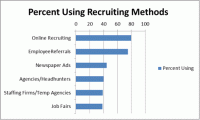
Recruiting Survey Results: How Do You Compare?

We garnered an impressive 1,379 participants in this year’s survey, which was conducted in November 2013. Here are the detailed survey results. How does your organization measure up? What Recruiting Methods Are Used? When asked which methods are used to recruit for open positions, online recruiting leads the pack at 79.7%, followed closely by employee […]

Filling the engagement gap: How employers can fight employee flight

A couple of recent surveys paint a disturbing picture: One survey from talent management firm Right Management found that 83 percent of 900 North American employees surveyed plan to seek new positions in 2014. Another Right Management survey reports that 56 percent of the more than 1,800 human resources managers polled concede that their employee […]

Train New Hires to Reduce Their Number of Injuries

According to the Occupational Safety and Health Administration (OSHA), 40 percent of injured employees have been on the job less than a year. Farmers Insurance Group says that more than half of new workers injured were employed for less than a month, and one of every eight injuries occurred on the first day of work. […]

Survey Says: Companies Plan to Invest More in Training

In addition to the 51 percent listed above, 35 percent of surveyed executives at companies that are facing a skills shortage acknowledge that they have not made a big enough investment in training in the past. The “Accenture 2013 Skills and Employment Trends Survey: Perspectives on Training” (www.accenture.com/SkillsGap) confirmed that the skills gap remains a […]