




For Lauren Tropeano, the secret to a thriving company isn’t found in a handbook or a static set of programs. It’s found at the intersection of human potential and technology.
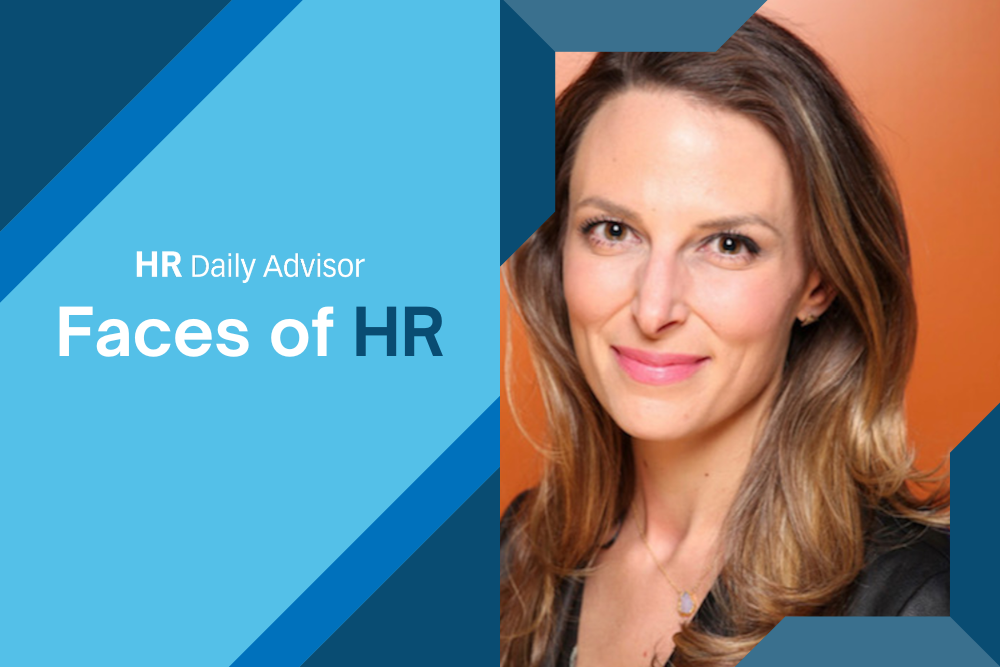
As the Chief People Officer at Docebo, Tropeano brings over 20 years of experience navigating the intense waters of global tech giants like DraftKings, Skillshare, and Dell/EMC. In environments where the stakes are high and the pace is relentless, she has turned “people strategy” into a durable competitive advantage.
The Front-Line Foundation
Tropeano didn’t start her career in the executive suite. Her journey began on the front lines of recruiting, a role she describes as a fascinating deep dive into the human experience.
“Recruiting allowed me to learn about all types of people and their experiences,” Tropeano says. “Being on the front lines of hiring gave me a strong foundation.” This early exposure taught her a vital lesson: talent is the primary force that shapes a business’s success.
Driven by a college background in Organizational Behavior, she wasn’t content to stay in one lane. She intentionally moved through operational roles, talent management, and HR business partnerships. Her goal was to understand the entire employee lifecycle—learning how to not just find talent, but to organize and develop it so that both the person and the company prosper.
Leading Through the “High-Growth” Whirlwind
Tropeano has made a career out of leaning into the chaos of rapidly transforming companies. From scaling multinational teams to leading through cultural evolutions at Pivotal Software, she has consistently found that the faster a company changes, the more culture matters.
For Tropeano, the job isn’t just about building HR programs; it’s about designing conditions. She views her role as an architect of environments where individuals can adapt and grow alongside a scaling business.
The AI Frontier
Now at Docebo, Tropeano is looking toward the next great shift: AI. She is inspired by how technology is reshaping the way work gets done, but her philosophy remains rooted in the “human side” of the business.
Whether she is scaling a team across borders or navigating the complexities of AI in the workplace, the “through line” of Tropeano’s career remains the same: putting the human at the center of the change. By focusing on what drives people and how teams operate, she ensures that organizations don’t just survive transformation—they thrive in it.
“It’s important to have a true belief that your work in HR matters,” Tropeano says. “It’s not just a mindset, it’s a responsibility. When you approach your work with conviction, you signal to others that people strategy is business strategy, not a support function on the sidelines. That belief shows up in how you show up, the standards you set, and the decisions you influence. And over time, it shifts how others think as well. When HR leaders consistently demonstrate the impact of their work, they don’t just earn credibility; they actively reshape how the organization values people, performance, and growth. Be your own best champion.”
In our latest Faces, meet Lauren Tropeano.
Who is/was your biggest influence in the industry?
I’ve had 3 significant mentors/leaders who have helped me grow along my career journey. Interestingly, all three were men, and they were not just mentors who helped me, but they sponsored me and my work. I’ll always be grateful to them for the time and trust they placed in me to try new things, give me opportunities to learn through new work, and the grace to make mistakes. They helped me hone my skill sets and helped open some doors for me.
I find myself often looking outside the current HR industry I work within to practices for new ways of thinking and influences. I seek out cultural patterns that emerge more broadly to apply to corporate cultures because I believe that work is just an extension of life and the systems we operate within as humans. I enjoy studying the works of psychologists, cultural anthropologists, and futurists as I think about how to make sense of cultures, how to look ahead to what’s emerging, and how to help people evolve.
What’s your best mistake and what did you learn from it?
I like the framing of this question- a “best mistake!” is a great concept. What comes to mind is not a specific project per se, but about learning how to reframe my thinking. I previously made the mistake of operating with a fixed mindset. I was guilty of taking things personally and being afraid to fail, which limited my ability to take risks and develop the resilience needed to be truly successful in a way that was mentally sustainable for me.
As I grew as a person and as a professional, I gained the very helpful perspective that most people are doing their best, and how they react or respond is often not about me, but about producing great work or sometimes about them and their needs. When I evolved my way of thinking to more of a growth mindset, I was able to bring a lot more empathy, objectivity and openness to my work and relationships. It’s really changed how I view myself and my work and it’s been a gamechanger.
What’s your favorite part about working in the industry? What’s your least favorite part, and how would you change it?
My favorite part is seeing how the right environment allows people to truly thrive. When organizations intentionally create clarity, psychological safety, and opportunities to experiment, teams become more innovative and resilient. That’s incredibly rewarding to witness because it proves the power of human-centered work design.
My least favorite part is when organizations treat and view HR as a transactional function, focused on compliance, policies, or transactional matters, because it severely limits the ability for practitioners of this work to drive real impact, which then feeds the very inaccurate narrative that HR isn’t strategic or valuable to a business.
To change that, I’d embed people strategy directly into the business, ensuring HR leaders have the visibility and influence to shape outcomes. In a flattened, high-growth world, managers are often stretched thin, and HR’s role is to support them in thinking through how to bring out the best in their teams to accomplish their work. This involves coaching them to develop genuine connections and relationships with their teams, providing clarity on work, helping them think about how best to deploy the unique skills of the talent on their teams and leaning into vulnerability to foster safety on the team. When HR is strategic, it drives engagement, retention, and long-term performance. Organizations are missing out on significant value if they don’t view and leverage the talent in the function in this way.
It sounds like through your experience, you really care about people, and you want to help them feel safe and comfortable, which is important in the industry. Please elaborate here.
Absolutely. Connection and trust are the foundation of all relationships- and that extends into high-performing teams at work. People perform at their best when they feel seen, heard, and supported, and when they know it’s safe to experiment and even fail. That doesn’t mean removing accountability. Instead, it means creating conditions for learning and growth while maintaining clarity about expectations.
For example, as organizations adopt AI or other new technologies, success depends less on the tool itself and more on preparing people to use it effectively. That involves upskilling, apprenticeship-style learning, and giving employees permission to experiment. My goal is to make those conditions intentional and scalable, so humans remain at the center of work even as technology evolves. When people feel safe, clear and capable, organizations can achieve sustainable performance rather than short-term compliance.
How can HR most effectively demonstrate its value to the leadership team?
HR demonstrates value when it directly connects people strategy to business outcomes. That means thinking beyond administrative and day-to-day tasks and focusing on human readiness, smart organizational design, engagement, and culture. For instance, when implementing AI, organizations often focus on technology adoption but neglect the human element of that change. The real value comes from preparing employees to use new tools effectively, fostering psychological safety, and providing skill-building opportunities that align with evolving business needs.
HR leaders also show value by embedding themselves into decision-making, translating strategy into human impact, and creating structures that enable managers to coach, connect, and remove obstacles. Measuring success should focus on outcomes like retention, engagement, skills readiness, and sustained performance. By taking a strategic, human-centered approach, HR becomes an indispensable partner to the business, like how we operate here at Docebo.
Where do you see the industry heading in five years? Or are you seeing any current trends?
The industry is evolving toward more fluid, skills-based organizations where job titles no longer define the work people do. Skills—not roles—are becoming the true currency of adaptability, as AI reshapes how work gets done without replacing the value of human contribution. At the same time, the relationship between employees and employers continues to evolve. To meet these shared expectations, there must be clear alignment on what “great” looks like and a shared understanding of the currency that underpins that relationship- trust, transparency, and a consistent commitment to delivering meaningful, high-quality work while feeling well supported.
Organizations that succeed will focus on human readiness- helping employees build skills, develop judgment, and feel empowered to experiment in a changing environment. We’ll see continued emphasis on the manager as a core enabler of performance rather than just a task executor, and on HR embedding itself fully into business strategy. Leadership will be measured not by efficiency alone but by how well teams feel supported, connected, and capable of sustained growth. In this future, adaptability, connection, and human-centered design will define organizational success.
What are you most proud of?
I am most proud of how I’ve had the courage to do hard things and always find learning opportunities in my work. These are qualities that I am proud to talk with my children about and believe it’s a strong example of how we all continue to grow and learn as humans, even when we have achieved significant success. Even after doing this work for many years, I learn new things every day, and that is really rewarding. I am proud that I am still intellectually curious, have not become complacent or jaded, and continue to be courageous when faced with difficult things.
Do you have any advice for people entering the profession?
- Listen more than you speak and ask really great questions. People will tell you everything you need to know and you can fill in the rest by leaning into curiosity.
- Don’t hesitate to experiment and get involved in all different types of work. The breadth of work you will experience will help you grow your skillsets and develop greater empathy for the work that others within the function do. Some of the best learnings and experiences I have come from roles or projects that I never planned to take or work on, but were very formative to my understanding of how HR works holistically.