




For many, the rise of Artificial Intelligence feels like a race to automate. For Laura Maffucci, it’s a call to advocate. As the Head of HR at G-P, she’s spent over 25 years proving that the secret to a high-performing global workforce isn’t just better tech—it’s better mental health.
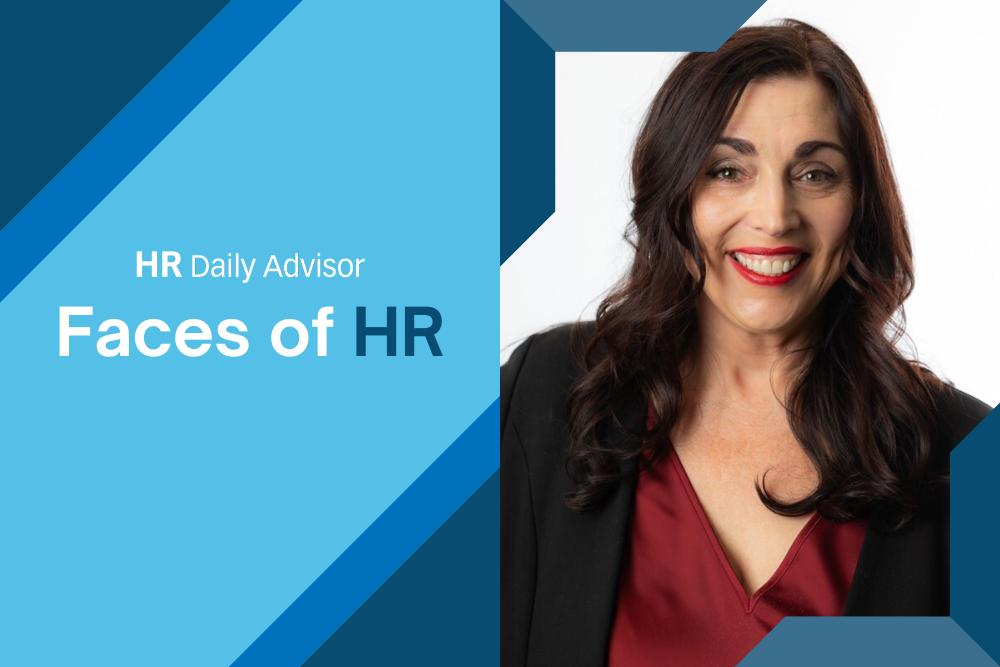
In the fast-paced world of global employment, it’s easy to get swept up in the latest corporate trends. But Laura Maffucci isn’t interested in the hype. With a career spanning more than two decades, she has become a leading voice on the global stage for compensation, employee well-being, and most importantly, the human side of AI.
Her mission? To ensure that as we invite robots into the office, we don’t push our people out of the conversation.
Bridging the AI Anxiety Gap
Maffucci’s advocacy for mental health is the lens through which she views every new innovation. She warns that there is a dangerous disconnect currently brewing in the corporate world: while leadership sees AI as a productivity win, many employees see it as a source of deep anxiety.
“In the rush to adopt new technology, we risk overlooking a growing workplace mental health crisis,” Maffucci notes. Her solution isn’t to reject AI, but to integrate it mindfully. As a member of G-P’s dedicated AI council, she works to ensure the technology is used to solve real problems and reduce burnout—transforming it from a stressful mandate into a tool that actually helps employees thrive.
From Multi-State Roots to Global Scale
Maffucci didn’t start at the top; she built her foundation in the complex world of multi-state labor laws. That early experience taught her a vital lesson: a “one-size-fits-all” approach never works. Whether you are dealing with different state laws or entirely different cultures, understanding local dynamics is the key to human connection.
Since joining G-P in 2021, she has put that experience to the test, building out massive global functions from scratch. From compensation to HR tech stacks, she has evolved G-P’s HR department from a foundational infrastructure into a powerful driver of business impact.
Normalizing the Value of Work
Ultimately, Maffucci’s goal is simple: she wants to normalize the value of work everywhere. By championing diversity of thought and inclusive AI, she is designing a future where employees from every corner of the globe can show up authentically, protect their well-being, and add value wherever they go.
In Maffucci’s world, the goal isn’t just to stay ahead of the curve—it’s to make sure no one is left behind.
In our latest Faces, meet Laura Maffucci.
Who is/was your biggest influence in the industry?
My first HR mentor has had the biggest influence on how I think about leadership. The advice she gave me early on has stuck with me ever since: leadership is about surrounding yourself with people smarter than you and empowering them to do their jobs. Leaders are there to remove obstacles so their teams can be successful. Just as importantly, she modeled what it means to lead authentically. From her, I learned to reject superficial corporate jargon in favor of being honest, straightforward and transparent with people. She showed me the immense power of just being exactly who you are. That perspective completely reframed how I approached my own career. It’s less about maintaining a rigid corporate facade or being the expert in the room and more about showing up as your true self and creating the right conditions for others to do their best work.
What’s your favorite part about working in the industry?
The core of my enthusiasm for this work is the chance to empower employees globally to realize their full potential, enabling them to contribute value in all their roles. As Head of HR, my role is to make sure employees feel supported, empowered, and connected—no matter where they sit in the world. For me, that means focusing on the employee experience and meeting people where they are, whether that’s through upskilling, transparent communication or ensuring policies and resources help them feel secure in a constantly changing environment.
It sounds like through your experience you really care about people, and you want to help them feel safe and comfortable, which is important in the industry. Please elaborate here.
People have always been the heart of my work. I believe that diverse perspectives are essential for a healthy workplace, and my goal is to build a culture where every employee, no matter their location, has a seat at the table and is empowered to do their best work.
This commitment extends deeply to employee well-being and mental health. The stress of the last few years has been significant, and supporting a global team across different time zones and cultures is one of the most important challenges we face today. We have to recognize that inclusivity isn’t the same as belonging. Inclusivity might give someone a seat at the table, but true belonging means they feel completely safe being exactly who they are once they sit down. Part of alleviating workplace stress is building a culture rooted in this genuine sense of belonging, where people are never forced to hide behind a rigid corporate persona.
Creating that psychologically safe environment starts at the top and sets the tone for the entire organization. It requires leaders to lead with genuine authenticity, honesty, and transparency. When leadership models what it means to just be exactly who you are, employees feel safe bringing their true selves to work and sharing their ideas and concerns without hesitation. This level of trust doesn’t happen by accident. It requires intentional, everyday effort from leadership to remove obstacles and create the conditions for our teams to truly thrive.
How can HR most effectively demonstrate its value to the leadership team?
Modern HR is light years beyond managing compliance and paperwork; it is an active engine for driving business performance. We must approach our people strategy with the same data driven rigor as any other function. Today, that means focusing on what moves the needle: actively clearing systemic roadblocks and aggressively developing managers into stronger, more authentic leaders.
A massive part of that modern mandate is HR stepping up to lead AI transformation across the business. We are not just guiding leadership through the rapid influx of workplace technology; we are at the helm, preventing companies from chasing shiny objects or adopting artificial intelligence just for the sake of it. We are the ones coaching leadership to deploy these tools with intention, using them to eliminate friction and streamline actual daily work, rather than slapping new tech onto broken processes and expecting a miracle.
It is HR’s job to close the gap between boardroom expectations around AI and the reality of how it impacts the employee on the ground. When HR leads this charge, equipping leaders to navigate this kind of change thoughtfully while driving bottom-line results, the conversation with the executive team changes entirely. It proves that a sophisticated people strategy is a primary driver of company success, every bit as vital as finance or operations.
Where do you see the industry heading in five years? Or are you seeing any current trends?
AI is, without question, the defining trend in HR right now, and its influence is only growing. HR is currently facing the unique challenge of being tasked to lead enterprise-wide AI transformation despite a significant lack of dedicated tools and resources. Success in this shift requires leaning heavily into a “hire what you can’t teach” philosophy. We must move away from recruiting for static technical skills and prioritize foundational attributes like curiosity, learning agility, critical thinking and courage. The technical mechanics of using AI can always be taught, but you cannot easily teach discernment or “AI taste,” that vital human judgment required to know when an output is actually good, when to trust it and when to push back.
Rather than simply bolting AI onto existing organizational structures, the focus must be on a fundamental redesign of work itself. It takes courage to question how roles would be structured if they were built from scratch for today’s rapidly changing environment. While the fear of job replacement persists, our strategic priority is to use that human discernment to identify exactly which tasks should be automated, empowering our people to pivot toward higher-value workflows and human-agent collaboration.
Additionally, we’re seeing top talent will choose companies not based on perks, but on autonomy. Forward-thinking leaders are realizing that location-agnostic strategies aren’t just about ‘where’ people work, it’s about unlocking a global talent pool that was previously out of reach. The most resilient companies won’t be defined by their physical footprints, but by their ability to integrate top-tier talent from any time zone.
The future of HR is global, flexible and supported by smart technology.
Do you have any advice for people entering the profession?
The most impactful HR leaders won’t be the ones who resist innovation, but those who strategically lean into it. I have always been a firm believer in “let go or be dragged”. Whether you personally love AI or hate it, the technology is here, and you will not be served well, personally or professionally, if you try to avoid it. The most impactful HR professionals won’t be the ones who resist this innovation, but those who strategically lean into it. This shift requires the corporate world to stop chasing AI as a shiny object and instead embrace it as a fundamental cultural transformation. To succeed, AI integration must solve an actual problem and be responsible and respectful of the people it serves. To do that the process must begin with education and transparency rather than just mandates and technical training.
Ultimately, companies are not losing the AI race due to a lack of tools or technical skills, but because their workforces are too intimidated to experiment. By fostering an environment of psychological safety and curiosity, HR leaders can ensure that employees are agile enough to work differently, shifting the focus from the fear of displacement to the strategic evolution of how we work.