




Brandon Roberts didn’t choose between a career in numbers or a career in people—he chose both. As the SVP of Talent Strategy & Workforce Transformation at ServiceNow, Roberts has spent his career proving that data, math, and problem-solving are the ultimate tools for unlocking human potential.
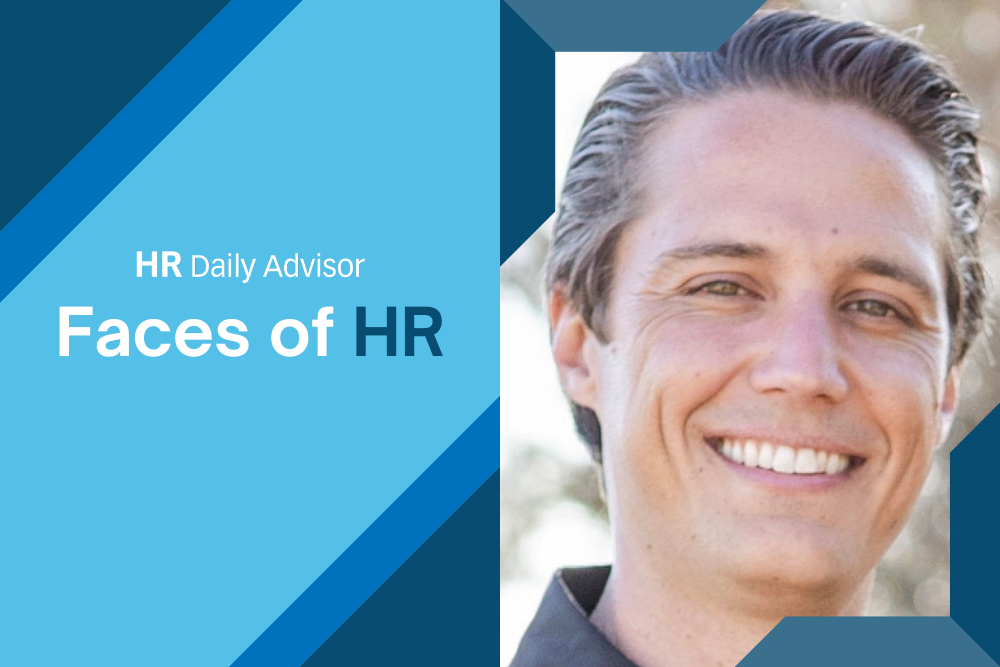
What started as a passion for analytics naturally evolved into a mission to transform the modern workplace. By blending data science with deep empathy, Roberts is helping organizations move past guesswork to make smarter talent decisions. From optimizing human resources technology to scaling AI, his ultimate goal remains simple: using data to create a workplace where employees feel more engaged, more effective, and empowered to do their absolute best work.
In our latest Faces, meet Brandon Roberts.
Who is/was your biggest influence in the industry?
I’ve been incredibly fortunate to have several leaders who’ve influenced me, but Jacqui Canney stands out. She believed in me even in moments when I didn’t feel I had delivered my best—and instead of pulling back, she leaned in, she helped me improve, guided me and gave me more responsibility to help me learn. That kind of trust is transformative. It taught me that great leaders don’t just evaluate performance, but they invest in potential. I’ve tried to carry that forward in how I lead my own teams.
What’s your best mistake and what did you learn from it?
One of the biggest “mistakes” in my career was taking on a new function and not delivering as strongly as I wanted to for the first key deliverable. I wanted to deliver fast, but I missed on quality. At the time, it felt like the biggest failure of my career. What changed everything was how it was handled. Instead of losing trust, I was given more responsibility, support, and clear direction on next steps. That experience reinforced two things: growth isn’t linear and failure can be a part of success, and the right environment makes all the difference. It also shaped how I think about leadership—creating space for people to learn, recover, and ultimately perform at a higher level.
What’s your favorite part about working in the industry? What’s your least favorite part, and how would you change it?
My favorite part is the impact. We spend such a large portion of our lives at work, so if we can improve someone’s experience, even in small ways, that’s incredibly meaningful. My least favorite part is how hard it is to truly measure that impact. HR leaders know the work matters, but historically it’s been difficult to quantify outcomes like engagement, experience, or culture in a way that ties directly to business results. If I could change one thing, it would be making it easier to measure the real impact of HR because when you can measure it, you can improve it. The good news is that AI and better data is starting to help close that gap by giving us better visibility into outcomes and behavior.
It sounds like through your experience you really care about people, and you want to help them feel safe and comfortable, which is important in the industry. Please elaborate here.
At the core of HR is trust. If employees don’t feel safe, whether that’s psychologically, professionally, or even in how technology is used, then they won’t fully engage or do their best work. As we bring more AI into the workplace, that responsibility only grows. We have to ensure transparency, fairness, and ethical use of technology. It’s not just about efficiency but about building systems and cultures that people trust. For me, it comes down to this: if we’re not improving the human experience at work and in daily life, then we’re missing the whole point.
How can company leaders make HR a value within their organization?
It starts with mindset. HR can’t just be seen as a support function; it has to be viewed as a strategic driver of business outcomes. Your people have to be seen as a unique lever for competitive advantage. That means treating talent as a core business priority, investing in the right data and technology, and measuring impact the same way they would any other part of the business. At ServiceNow, we talk a lot about reallocating capacity created by AI into higher-value work. If that capacity isn’t reinvested into innovation and growth, then it’s not really creating value. That’s where HR becomes a true value creator when it’s directly tied to business strategy. HR also plays a unique role as a connector across the organization. AI and transformation touch everything—legal, IT, operations, engineering, sales—so HR has to help align those groups while keeping the workforce strategy at the center.
Where do you see the industry heading in five years? Or are you seeing any current trends?
We’re in the midst of a human shift, not just a technology shift, and that will continue to define the next several years. AI is accelerating change, but the real transformation is how work itself gets done. Work is being broken down and rebuilt. Instead of static roles, organizations are starting to think in terms of tasks—what can be automated, augmented, or entirely reimagined. AI isn’t just driving efficiency; it’s reshaping how work is structured and how people contribute. The companies that win will be the ones that intentionally reinvest the capacity AI creates into innovation and growth—not just efficiency gains. At the same time, skills will be critical. Roles are evolving quickly, and organizations that invest in reskilling and bring employees along the journey will have a real advantage, because no one wants to be left behind. Agility is the name of the game.
What are you most proud of?
Professionally, I’m proud of the work we’re doing to transform how HR operates, especially using AI to create more meaningful, strategic work for employees. But personally, I’m most proud of my family. Being a good father and husband is what matters most to me. If I can be remembered as someone who was curious, kind, and made a small positive impact—that’s what I care about most.
Do you have any advice for people entering the profession?
First, commit to continuous learning. The pace of change isn’t slowing down, and the most successful people are the ones who build a habit of learning every day, even if it’s just 10 to 15 minutes. Second, don’t be afraid of AI and lean into it. You don’t have to be an expert on day one, but you do need to start. The earlier you engage with it, the better positioned you’ll be for the future.