




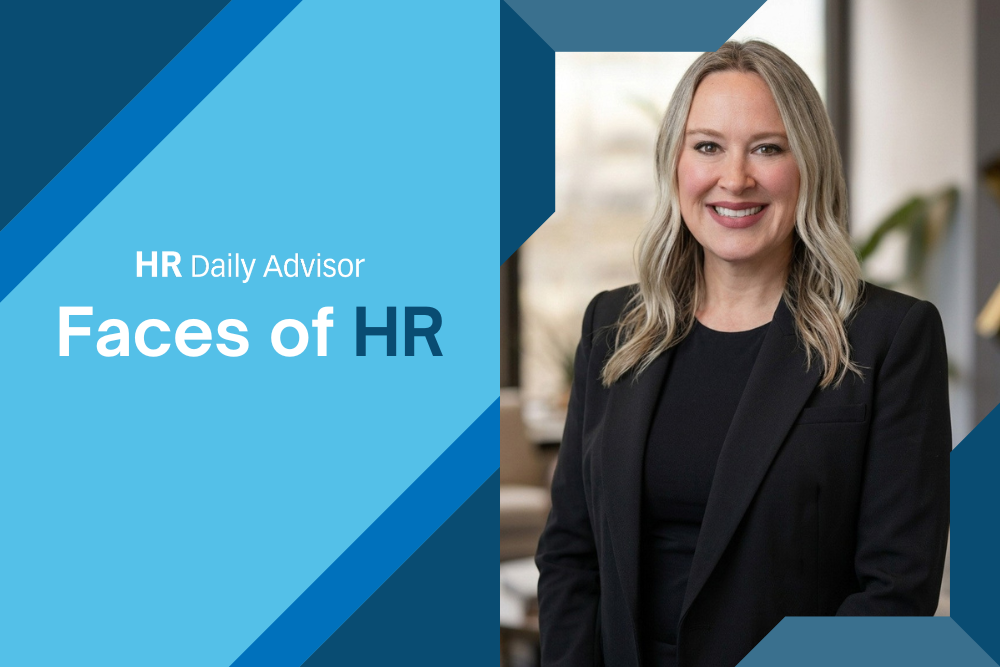
Serah Morrissey didn’t plan on a career in human resources (HR), she found it by chance. Starting out as an hourly administrator, she rolled up her sleeves and worked her way from the ground floor all the way to the executive suite. Today, she serves as the Senior Director of People & Culture at Schoox, bringing a uniquely human touch to the world of learning technology.
Before entering the tech space, Morrissey spent more than two decades leading HR, talent acquisition, and training in the fast-paced hospitality industry, mostly in full-service hotels. Managing complex operations gave her a deep, firsthand understanding of the real challenges frontline employees face every day. It was during this time that she first encountered Schoox as a learning management system, admiring it as the exact tool she had always wished for in her previous roles. A past President of CHART (an association of hospitality trainers), Morrissey also became a prominent industry voice, writing and speaking on critical workplace topics like mental health, grief, and performance management.
When the pandemic eliminated her hospitality role in 2021, Morrissey used the moment to reflect on her professional non-negotiables. When an opportunity emerged to build out the internal HR function for Schoox, she knew it was the perfect fit. Morrissey successfully transitioned the company from outsourced HR to a dedicated in-house team, using her extensive hospitality background to deeply understand their clients’ needs while mastering the tech side on the job. A little over four years later, Morrissey’s journey has come full circle. She now leads HR for a company that serves the very industry she grew up in, focusing every day on creating a workplace culture rooted in joy, balance, and empowerment.
In our latest Faces, meet Serah Morrissey.
Who is/was your biggest influence in the industry?
My biggest influence in the industry was my first hotel General Manager who took a massive risk by elevating me to a leadership position about a year after I started as an hourly admin. To this day, I remind him often of the impact he had on my confidence. He encouraged me to listen to my gut feelings and instilled in me the belief that people are inherently good. He was also a leader who understood how HR could be a true business partner by caring for the operation’s people. He remains one of the Midwest’s most renowned hoteliers, and I am so thankful he dared to believe in my potential.
What’s your best mistake and what did you learn from it?
My biggest mistake was trying to be someone I wasn’t. Early in my HR career, I felt I needed to be an enforcer of rules, above all else. Even when the rules didn’t make sense to me, I would walk the property like an agent on patrol, looking for infractions. It felt inauthentic, and I knew I wasn’t focused on the right things to help develop people and drive business impact.
Over time, I started questioning rules that felt extreme or nonsensical. This shift became the catalyst for our leadership team to revisit the company’s handbook and refine our approach. By doing so, we were able to empower employees to use their best judgment, rather than micromanaging every small behavior. Rules are black and white, but people are a million shades of grey. As HR professionals, we have to account for that.
What’s your favorite part about working in the industry? What’s your least favorite part, and how would you change it?
The best part of working in HR is the variety of ways I can impact the business. There’s no such thing as a ‘typical day’, which suits my personality and work style. I love change and competing priorities. Most of all, building genuine relationships and really getting to know people is what makes the work meaningful.
My least favorite part is when business decisions dictate organizational changes that impact people personally. Telling someone their position was eliminated and they’ve lost their job is gut-wrenching every single time. While I can’t change that reality, I do everything I can to ensure people leave with dignity and grace to every degree possible. I often share with people that I’ve been in their shoes – twice in fact – and encourage them that every ending means a new beginning is ahead.
It sounds like you really care about people, and you want to help them feel safe and comfortable, which is important in the industry. Please elaborate here.
The success of any business begins and ends with its people. But it goes beyond simply having a mechanism for employee feedback. The best way to show people you care is to show them that you trust them. Hire great talent and then give them the autonomy to manage their time and workload in a way that works for them and supports their work-life balance and individual needs.
Another way to show people you care is by welcoming them to be their authentic selves in the workplace. Policies of authenticity are just words in an employee handbook. Companies must take measurable actions that enforce belonging. In leadership positions I have always led with unapologetic love. If you don’t believe that all people deserve compassion, empathy, and grace within reason, HR is not the right field for you.
How can company leaders make HR a value within their organization?
Company leaders can make HR a value by upskilling HR leaders to act as strategic influencers. If employees feel valued and supported, they are far more likely to care about the organization’s goals and contribute meaningfully to them. HR leaders have a unique opportunity to influence policy and decision-making early by demonstrating how empathetic leadership drives business outcomes through stronger loyalty, longer tenure, and a positive organizational reputation.
At the same time, it’s important to note that influence in the workplace is not limited to those in senior positions. Any employee can become an influencer by consistently showing up prepared, demonstrating expertise in their domain, and contributing thoughtful insights to conversations that matter. True influence often comes from being the person colleagues trust for perspective and guidance. By listening actively, engaging with others’ ideas, and offering meaningful contributions, employees can build credibility and shape decisions, regardless of where they sit on the organizational chart.
Where do you see the industry heading in five years? Or are you seeing any current trends?
Even with all the advances in AI, a non-human entity will NEVER be able to process human behavior and communication like another human. While software can improve HR processes in practical ways and eliminate workload, there will always be a need for real people.
What are you most proud of?
I’m most proud of not compromising the values that are important to me. It is okay to lead with love and optimism and wear your heart on your sleeve! You don’t have to lose your warmth to gain influence. I was once coached by a leader for having an “optimism problem” with an employee I believed was in the wrong role. I said, “thank you for the feedback” and went on to demonstrate how the employee involved was indeed cut out for a much different role at the company, a role in which they thrived.
Do you have any advice for people entering the profession?
Be clear on why you are entering the field of Human Resources. It’s a profession where you constantly walk a tightrope, balancing the needs of the business with the needs of the people who make it successful. You have to be adaptable and willing to embrace change. Most importantly, you need an extraordinary capacity for empathy to meet people where they are across all levels of an organization.