




Nick Avery didn’t climb into the executive ranks through a traditional corporate fast-track. Back in the 1990s, structured HR graduate programs were rare, so he had to engineer his own path into the field. He started with a part-time operations role at an airline while finishing his degree, eventually finding his way into staff training a few years later. Falling in love with the technical side of helping people learn new jobs effectively, he rose to training manager before finally landing a staff development role at head office within the HR department. This hands-on foundation in frontline operations and training gifted him a practical, real-world perspective that has shaped his entire career.
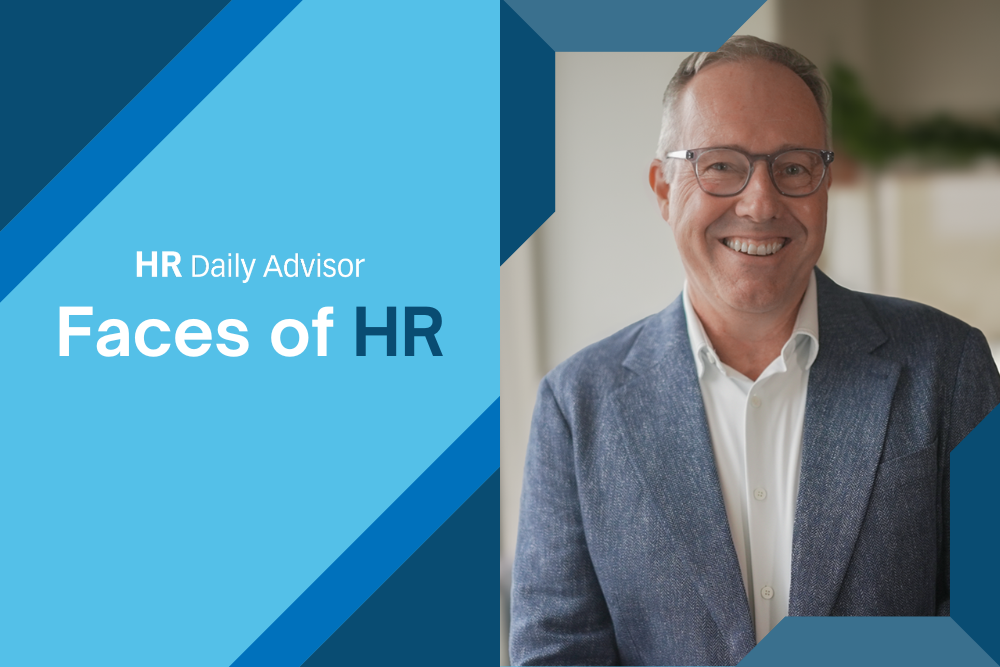
That early ground-level experience stayed with him as his career expanded over more than 25 years. He navigated complex leadership roles across diverse industries—including aviation, consumer goods, consulting, and financial services—and managed global initiatives spanning Australia, Asia, and North America. Notably, he spent over seven years at BlackRock as Managing Director and Global Head of Talent Management, as well as Head of HR for Asia Pacific. Armed with advanced and undergraduate degrees in organizational dynamics, economics, and human resources, he has never lost sight of a core truth: HR is ultimately in service of the business.
Today, as Chief People Officer at Carta, Avery brings that same pragmatic, product-oriented approach to the evolving world of work. Partnering closely with the executive team, he leads the global People & Culture function to build a high-performing, scalable organization. By focusing heavily on elevating the employee experience, increasing talent density, and developing a modern infrastructure, he is building a world-class people organization. For Avery, the goal is clear: creating future-ready workplaces through sharper talent decisions, stronger leadership, and People teams that operate with absolute clarity, accountability, and measurable impact
In our latest Faces, meet Nick Avery.
Who is/was your biggest influence in the industry?
I’ve been fortunate to have some good managers over the course of my career, people who believed in me and gave me opportunities at just the right time. Sometimes it was a new job, but more often it was a project or an assignment that needed to get done and taught me something new. I believe that learning is key to growth, development and professional advancement.
I once spent two days at a small RBL workshop with Dave Ulrich in Park City, Utah, which was particularly impactful. Dave is often credited as being the catalyst for transforming HR from an administrative department into a recognized commercial function. His HR operating model has dominated HR org design for 30 years. Seeing his frameworks applied with such clarity in a small group setting changed how I thought about our role in the business.
What’s your best mistake and what did you learn from it?
Early in my career, I overestimated how much structure and process would solve people problems. In my first specialist talent role I was fixated on operationalizing a definition of high potential and a bunch of aligned processes—criteria, frameworks, checklists, approval workflows—thinking that if we documented and standardized everything properly, we’d eliminate inconsistency and risk. What I learned is that people (especially executive teams) don’t need more rules; they need clarity of purpose and context. The most effective leaders I’ve worked with rely on clear communication and trustworthy judgment calls. This lesson resurfaces constantly now. We’re building AI-powered tools that could easily become more process, more bureaucracy. But the opportunity is to strip away the bureaucratic noise—the excessive documentation, and the performative status updates—and get HR teams and managers focused on what matters: relationships, development conversations, and solving real business problems. My early mistake taught me that less process, better judgment is almost always the answer.
What’s your favorite part about working in the industry? What’s your least favorite part, and how would you change it?
My favorite part about working in the industry is the opportunity to get involved in commercial events and be part of problem solving with leadership teams. I remember being part of a leadership team in a turnaround situation—we’d put a lot of work into some fundamentals like talent planning and organizational design, and seeing brands develop while sales improved, which was a fantastic thing to be part of. It goes both ways of course, sometimes things get tough (like COVID) but being part of an effective leadership team, where you’re working on something together, is always compelling.
On the flip side, I really struggle with performance management. It’s long fascinated me that we invest so much in a process with so many imperfections that very few people like or enjoy. I thought it was dead 10 years ago when some big and influential companies stopped walking away from annual review cycles and ratings, but it morphed, persisted and grew. Thankfully, AI will help us to fix a lot of what’s wrong and help us get back to what’s really important: delivering actionable feedback to help people improve.
It sounds like through your experience you really care about people, and you want to help them feel safe and comfortable, which is important in the industry. Please elaborate here.
Safety and comfort are prerequisites for everything else. When people don’t feel psychologically safe—when they’re worried about judgment, punishment, or looking bad—they go into protective mode. They stop asking questions. They stop offering ideas. They stop taking the small risks that drive innovation and growth. In HR safety has to be structural. It’s not just about tone—it’s about how we design policies, how we communicate, how we handle difficult conversations. When someone is fired, how do we do it? When someone makes a mistake, how do we respond? When someone needs time off or is struggling, is our first instinct to help or to audit? Now, with AI, we have a chance to build even more safety in. Bias detection in hiring. Equitable compensation analysis. Early signals of disengagement so we can intervene before someone leaves. The technology should make the environment safer, fairer, and more supportive—not more surveillance or controlled.
How can company leaders make HR a value within their organization?
This is something HR has to demonstrate and earn. Too many HR professionals are process-focused or compliance-focused. The HR leaders who change perception are the ones who can walk into a room and talk fluently about the business, the competitive landscape, and how people initiatives fit in that equation. They’re commercial first, HR specialists second. Finally, don’t measure activity (number of trainings delivered, tickets closed), measure outcomes. Retention of high performers. Time-to-productivity for new hires. Internal promotion rates. Manager effectiveness and engagement. Those are the metrics that tell you whether HR is creating value.
Where do you see the industry heading in five years? Or are you seeing any current trends?
I think AI will push us beyond the Ulrich model in the next five years. Tasks, workflows, jobs, teams and organizational design are transforming at a rate we have never experienced. Traditional management is being disrupted for the first time in 100 years. HR must adapt with it and for me this is about finding ways to become more adaptable as an industry. Static HR structures will slow companies down. I expect us to embrace more agile ways of working, with small groups of AI savvy people coming together to solve problems and then disbanding to work on other things. Think smaller dedicated specialist teams (COEs) and more cross functional problem-solving groups.
What are you most proud of?
Seeing people I’ve worked with go on to do bigger and better things. I’ve worked with some very talented people in a bunch of different industries and countries. It’s always a delight to see a new role come up on LinkedIn or read a thought leadership piece written by someone who has worked for me along the way. I think the most exciting part of being a leader is knowing that you’re essentially a talent steward for a limited amount of time and being able to help shape a career.
Do you have any advice for people entering the profession?
Be commercial first, HR specialist second. That principle has served me well throughout my career, and it’s truer today than ever. Understanding the business, understanding the market, understanding where the company is trying to go—that context makes everything else you do in HR more relevant and impactful. Second, embrace AI. Find ways to use it to solve problems and don’t be afraid of it. The people who will thrive in HR over the next decade are the ones who get comfortable with AI early, who experiment with it, who figure out how to work alongside it. AI is a tool and like all tools, it amplifies what you’re already capable of. If you’re commercial and good at solving real problems, AI makes you exponentially more valuable. If you’re not, AI won’t fix that. And finally, remember why you got into HR. Probably because you care about people and want to help them succeed. Hold on to that. All the technology, all the process, all the strategy, should ultimately be in service of that purpose.