




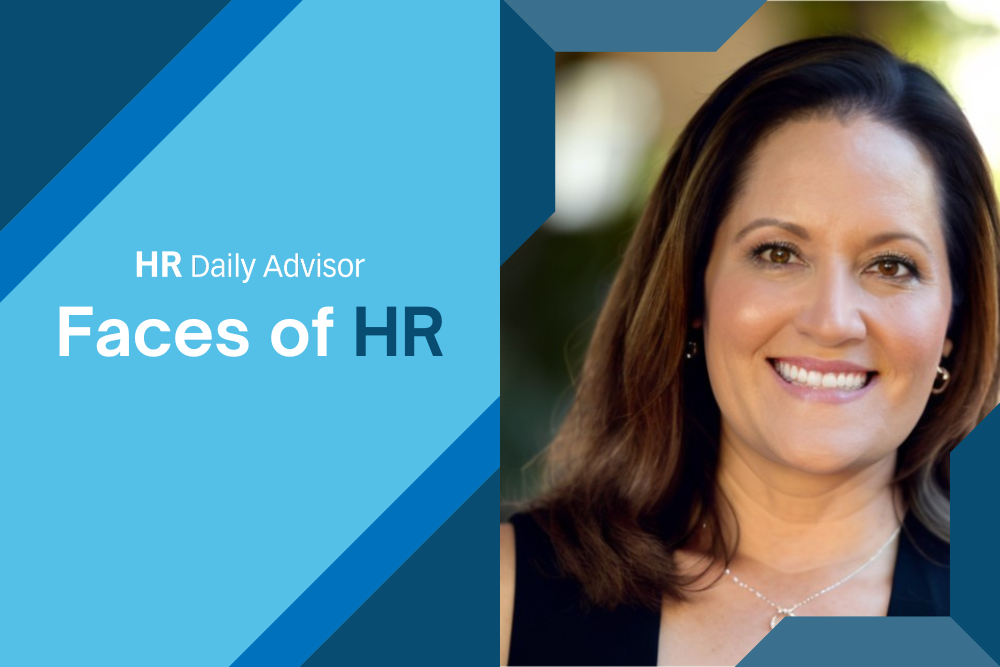
Long before “HR Business Partner” became an industry staple, Macaire Montini was already doing the work. Entering the field in the mid-2000s at the global management consulting firm Oliver Wyman, she started out during an era when human resources was strictly defined by traditional tracks like Assistant and Specialist. Yet, Macaire earned an early seat at the table.
Over six years of rapid company growth, she wore nearly every single hat in the department. This “boots-on-the-ground” experience deeply embedded her in two distinct worlds: the technical side of elite-level workforce planning and the human side of progressive, employee-centric policy and engagement. It taught her a fundamental lesson that would define her entire career: a workforce is only truly productive when they feel deeply supported.
Learning People-First Leadership from Scratch
That early realization laid the foundation for a brilliant, 20-plus-year career as a seasoned HR executive. Macaire has spent two decades driving people-centric, data-informed strategies across the tech, finance, and pharmaceutical sectors.
Following her foundational years at Oliver Wyman building expertise in HR operations, risk mitigation, and employee relations, she stepped into leadership at TheStreet.com. There, she steered talent acquisition and employee development during a highly transformative period for digital media.
Macaire then brought her talents to Envision Pharma, dedicating 13 years to the organization and ultimately serving as its Global Director of HR. During a period of rapid growth, she helped scale the company from the ground up by implementing programs and policies that elevated the employee experience and sharpened the company’s competitive edge.
Later, as Chief People Officer at Agio, she played a pivotal role in preparing the business for expansion, keeping a steady focus on culture and employee engagement during a time of major transition.
Forward Movement
Today, Macaire serves as the VP of People & Culture, Americas at HiBob. In this role, she continues to build on her rich track record of progressive, practical HR leadership. She is focused on developing strategies that align perfectly with organizational goals while positioning companies to thrive in an increasingly AI-driven future—all while remaining deeply committed to making a meaningful, lasting impact on the employee experience.
“HR is often a lonely role because you’re the bridge between the executive ideators and the front-line operators,” Macaire shared with HR Daily Advisor. “Seeing both sides of every argument and advocating for the best outcome in results, both that support the company and the individual can be a solitary road. That’s why I’m passionate about building communities for HR professionals to support one another, because you can’t pour from an empty cup.”
In our latest Faces, meet Macaire Montini.
Who is/was your biggest influence in the industry?
I’d have to say Kim Scott, the author of Radical Candor. Her work resonated with me because it gave a name to the balance I’ve tried to strike in my own brand of HR for my entire career. Scott’s philosophy taught me that creating a safe and comfortable environment isn’t about avoiding hard truths; it’s the opposite. When an employee knows you care about them as a whole person, you earn the trust required to be incredibly honest with them. I believe HR’s greatest value is creating a culture where people feel safe enough to be challenged as well as supported enough to fail and try again. That balance is what transforms a group of individuals into a high-performing team.
What’s your best mistake and what did you learn from it?
Early on, I felt that to be a true HR Leader, I had to have a policy for every possible scenario. I once spent weeks building an exhaustive, complex performance management system that was technically brilliant but practically unusable for a fast-moving management consulting team. I had over-engineered the solution and we ended up going back to what we were doing before until we came up with the right solution. It was my ‘best’ mistake because it forced me to simplify. It taught me that the best HR policies are invisible. They should facilitate work, not get in the way of it. Today, I prioritize ‘minimum viable bureaucracy’—creating just enough structure to ensure safety and efficiency, while leaving enough room for people to actually do their jobs.
What’s your favorite part about working in the industry? What’s your least favorite part, and how would you change it?
My absolute favorite part of the industry is being able to witness the ‘lightbulb moment’ when a people manager transitions from being merely a supervisor of another’s work, to a true coach and advocate for their team – and for the company. My least favorite part of the industry is the tendency toward ‘Retroactive Integration’—the habit of bringing HR into the room only after a major business decision has been finalized. Too often, we are asked to ‘make it work’ with the people or to manage the fallout of a change, rather than being invited to help design the strategy from day one. When HR is treated as a secondary, reactive function, the organization misses out on critical insights regarding talent risk and organizational health.
I would change the industry by pivoting HR toward data-driven advocacy. When we show how employee engagement directly impacts the bottom line, we earn our seat as strategic partners rather than just compliance officers.
It sounds like through your experience you really care about people, and you want to help them feel safe and comfortable, which is important in the industry. Please elaborate here.
Psychological safety and a sense of belonging are the prerequisites for high performance. If an employee is looking over their shoulder or feels they can’t be their authentic self, they’re not innovating. I view HR as the ‘Psychological Safety Architect.’ My goal is to create an environment where the ‘social contract’ between employer and employee is honored, which allows people to do their best work without anxiety.
How can company leaders make HR a value within their organization?
Stop viewing HR as a cost center and start viewing it as a Value Center – I often say that HR is the center of gravity for decision-making. Leaders should involve HR in the earliest stages of business planning, not just when it’s time to hire, fire or reorganize. When the people strategy is truly integrated into the business strategy, the organization as a whole becomes much more resilient.
Where do you see the industry heading in five years? Or are you seeing any current trends?
I see HR becoming more deeply integrated into business strategy, rather than just supporting it. Over the next five years, the focus will shift to dynamic workforce planning, leveraging AI for personalized employee experiences, and proactively shaping your corporate culture as a competitive advantage. HR leaders – you’ll need to master data literacy and ethical tech governance in order to be the best employee advocate you can be, all while fostering adaptability in a rapidly changing workforce.
What are you most proud of?
I am most proud of my 20+ year career legacy and the specific ‘brand’ of HR leadership I’ve cultivated over my tenure. Looking back, I’ve navigated the evolution of this industry by consistently striking a delicate balance: between the business and the person, the policy and the transparency, and now, the technology and the human. We are currently on the brink of a new corporate culture — an ‘AI boom’ that threatens to disrupt the human experience at work in ways we haven’t seen before. I believe HR leaders in my tenure bracket possess a unique and vital value right now. We have the foundational ‘human’ perspective required to guide organizations through this technological disruption without losing our soul.
Do you have any advice for people entering the profession?
Develop your business acumen. To advocate for people effectively, and have the most meaningful policies & culture, you have to speak the language of the CEO and the CFO. Understand the P&L (Profit and Loss) as well as understand human psychology.