
Every Single Employee is Essential to Your Success
“Will it really make a difference?” “Will anyone care whether I do it or not?” “Who would notice if I didn’t show up?”
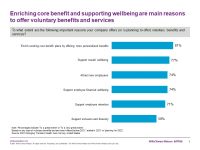
As a consultant who feels strongly about providing employees with both choice and value in their overall benefits package, I am heartened to see that employers increasingly see voluntary benefits as a means of enriching their core benefits plan by allowing employees to choose more personalized benefits. However, it is important to focus on providing […]
In previous posts, we’ve discussed the importance of meeting minutes as well as the elements that should be included in meeting minutes. One item, in particular, we noted as important is action items. There are many ways to document action items, but we recommend using a consistent structure in a table format to make sure […]
Last week, I shared anecdotal concerns from attendees at SHRM 2019’s session “The Top Five Priorities for an HR Department of One.” The session was given by Jennifer Currence, SHRM-SCP, MBA, and President of The Currence Group. Here, I would like to share the top five concerns, in descending order, of HR departments of one. […]
A workplace that promotes psychological safety—the feeling of freedom to be one’s whole self at work without negative repercussions—comes with myriad benefits, from more productive, happy employees to a better corporate reputation. But even more important are the things it can help you avoid. Fines, lawsuits, bad press—without psychological safety, you can’t effectively prevent these […]
Employee engagement has many definitions, can take many forms and has many measures. The Conference Board, a nonprofit specializing in management and marketplace research, defines it as “employees’ emotional and intellectual attachments to their jobs.” The Gallup Management Journal says that “engaged employees work with passion and feel a profound connection to their company.”
Question: An employee works on a boat (manual labor so does not meet job duties tests) that goes out for days at a time. He essentially “lives” on the boat while out at sea. How do we determine his “hours worked” in order to be compliant with the FLSA?
In a squeaker of a vote, a modified version of the American Health Care Act (AHCA) passed the House today, 217-213. The vote was cleanly split along party lines, with no Democrats supporting the legislation (and 20 Republicans voting against it).
For most of us, the traditional 9–5 workweek is normal and so ingrained in us that we don’t question it. For some businesses and their employees, however, there has been a shift to more flexible working patterns. Today, you’ll find working from home and compressed hours are regular occurrences. But what does the perfect workweek […]
Although employers may be automatically liable for supervisors or administrative personnel harassing subordinate employees under certain federal laws, they may also be held liable if another employee (even one subordinate to the harassed employee) or a third-party such as a customer or vendor harasses an employee based on their race. What Will Courts Consider When […]