




Jenny Shiers didn’t take the traditional path to the executive HR suite. She actually started her career inside the fast-paced world of City law firms, working as a lawyer in a large commercial practice and specializing in employment law. It was there, working hand-in-hand with HR teams, that she caught a firsthand glimpse of just how deeply a people strategy can impact overall business outcomes.
Driven by that insight, she transitioned in-house to set up the EMEA employment law team at Salesforce, before making a pivotal leap into the company’s “Employee Success” function. For Shiers, that shift changed everything—moving her from a role where she merely advised on people challenges to one where she could actively shape how organizations support and enable their workforces at scale. She eventually rose to become the VP of Employee Success for the UKI and North EMEA regions at Salesforce, leading initiatives to build inclusive, high-performing workplaces while driving regional talent attraction, development, and retention.
In 2023, Shiers brought her unique blend of legal foundation and innovative people strategy to Unily, an AI-native employee experience platform, stepping into the organization’s history books as its very first Chief People Officer. Today, she is responsible for shaping and scaling Unily’s people strategy during a period of rapid organizational growth.
Her legal background gives her a rare and powerful edge in HR leadership, allowing her to seamlessly balance pressing business priorities with dedicated employee advocacy. Shiers is particularly passionate about fostering equality, firmly believing that a strong, differentiated culture is the ultimate driver of long-term business success. As Unily continues to scale into a global organization, she remains focused on enhancing employee experience and engagement as a core lever for growth, working every day to preserve the company’s unique culture while evolving it to meet the demands of the future.
“HR is at a really interesting inflection point,” Shiers shared with HR Daily Advisor. “Expectations are higher than ever, and the pace of change is only increasing. There’s a real opportunity for HR leaders to play a central role in helping organizations navigate that — not just by supporting employees, but by enabling better, faster, and more effective ways of working.”
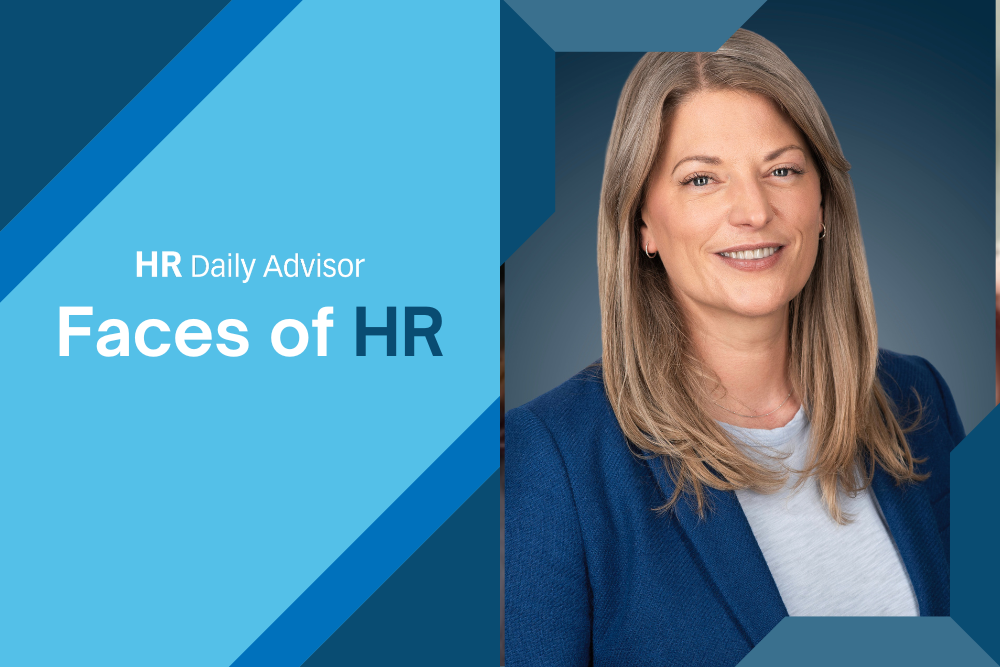
In our latest Faces, meet Jenny Shiers.
What’s your best mistake and what did you learn from it?
I’ve made plenty of mistakes, but one that stands out was early in my legal career when I missed a court filing deadline due to a diarization error. At the time, it felt catastrophic. What stayed with me most wasn’t just the importance of getting the basics right, but how my manager handled it. He didn’t blame or overreact — he expected accountability but also supported me in fixing the situation. That experience has really shaped my leadership style. Mistakes happen in every role, but creating an environment where people can take ownership, learn quickly, and move forward is far more valuable than trying to avoid them entirely.
What’s your favorite part about working in the industry? What’s your least favorite part, and how would you change it?
I love the ability to drive real business impact through people strategy, helping organizations succeed by enabling their people to do their best work. It’s especially rewarding when you can create the conditions for individuals to grow, develop, and genuinely thrive. What I find more challenging is the lingering perception that HR is purely operational or reactive. In reality, the most effective HR functions are deeply strategic, they shape how organizations scale, adapt, and execute. Changing that perception comes down to consistently demonstrating impact and linking people initiatives to measurable business outcomes.
It sounds like through your experience you really care about people, and you want to help them feel safe and comfortable, which is important in the industry. Please elaborate here.
Fundamentally, people are at the core of every organization’s success. When employees are engaged, clear on what’s expected of them, and able to do their jobs without unnecessary friction, performance follows. For me, it’s about creating environments where people feel supported but also empowered to take action and contribute meaningfully. When you get that balance right, it’s a win for both the individual and the business — and that’s where HR can have its greatest impact.
How can company leaders make HR a value within their organization?
I think this starts with reframing HR as a driver of business performance rather than a support function. The most effective leaders bring HR into strategic conversations early and ensure people strategy is aligned to business goals from the outset.
There’s also an increasing need for closer partnership between HR and IT, particularly as AI becomes more embedded in how organizations operate. Many of the biggest opportunities — and challenges — sit at the intersection of people, technology, and ways of working. When HR and IT are aligned, organizations are much better placed to design experiences that are not only efficient but genuinely enable employees to do their best work. Finally, it comes down to outcomes. When HR initiatives are clearly linked to things like productivity, retention, or execution, their value becomes much more visible — and much harder to overlook.
Where do you see the industry heading in five years? Or are you seeing any current trends?
AI will have a significant impact on HR, but the biggest shift won’t just be automation, it will be how work itself is designed and delivered. Many of the more process-driven elements of HR will be augmented by AI, which creates space for HR teams to focus more on enabling the business to execute effectively through its people. At the same time, expectations from employees are increasing. People don’t just want access to information, they want clarity, relevance, and the ability to take action quickly. That’s putting pressure on organizations to move beyond fragmented tools and disconnected experiences, and instead create more unified, intuitive ways of working.
Looking ahead, I think we’ll see HR play a much bigger role in shaping how organizations reduce friction and improve flow of work. The focus will shift from measuring engagement in isolation to understanding how employee experience drives real outcomes, things like productivity, speed of execution, and the ability to adapt to change. The organizations that get this right will be the ones that can turn strategy into action more effectively, and ultimately move faster than their competitors.
What are you most proud of?
I’m most proud of the people I’ve had the opportunity to support and develop over time. There’s nothing more rewarding than seeing individuals grow in confidence, step into new challenges, and achieve things they may not have thought possible. Creating the conditions for people to succeed, whether that’s through guidance, opportunities, or simply the right environment is something I really value. Watching that progress over time and seeing the impact it has both on individuals and the wider business, is incredibly fulfilling.
Do you have any advice for people entering the profession?
One of the biggest things I’ve learned is that great HR professionals don’t just understand people, they understand the business. If you have a clear view of how an organization operates, its goals, and its challenges, you can approach people decisions in a much more effective and balanced way. From there, it becomes about finding solutions that work for both the business and its employees, rather than treating those as competing priorities.