



I didn’t like giving reviews, and I don’t like receiving them. There must be a better way. Here are some suggestions generated by “Gen AI Could Fix Performance Reviews—or Make Them Even Worse,” an article in the Harvard Business Review by Chrysanthos Dellarocas (May 26, 2026).
Challenge
We all fool ourselves. A recent study shows that 90% of managers think they’re good coaches, while 75% believe they’re excellent at team development.
But the numbers don’t add up. Thirty percent of employees think their managers give inaccurate evaluations, while 33% of HR professionals believe managers overestimate their talent in this area. It reminds me of George Bernard Shaw’s observation that the problem with communication is the illusion it’s occurring.
Solution
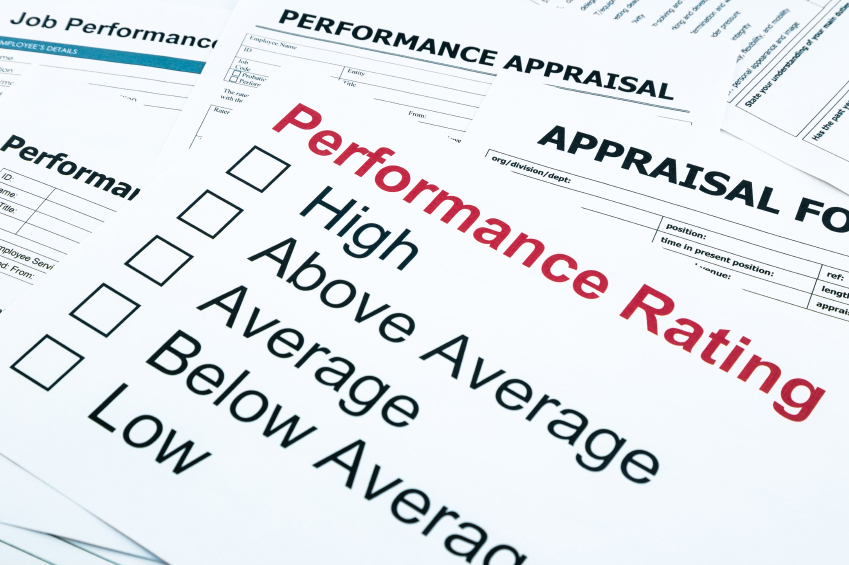
Too many reviews rely on conclusions and suppositions, not facts and evidence. This stops by using the right frame, whether with a self-evaluation or a manager evaluation. Here are three illustrations:
Don’t: Describe your employee’s leadership style.
Do: What are the moments your employee’s work most clearly reveals their style?
See the difference in what’s asked for? The first is a conclusion that begets a conclusion. By contrast, the second penetrates beyond conclusions to facts. Let’s keep playing!
Don’t: Rate the employee’s strategic thinking.
Do: What moment this quarter best revealed your employee’s strategic thinking?
Once again, the resulting answer is substantive, not ephemeral.
Don’t: Assess your employee’s ability to deal with ambiguous situations.
Do: When did your employee demonstrate an ability to resolve ambiguous situations?
You get the idea!
Role for AI
Ah, the much maligned artificial intelligence (AI)! But AI is only a tool. Its value—like any other tool—depends on how you use it.
Don’t: Ask AI to compose a paragraph on the employee’s strategic thinking.
Do: Here’s what Dellarocas writes in his article:
Ask AI to surface the decision memos, project pivots, and cross-functional emails where . . . strategic thinking becomes visible. The performance review becomes anchored not in evaluative language but in primary source material. Managers . . . examine the artifacts themselves: the original documents where judgment was exercised, influence was demonstrated, and outcomes were shaped.
Bottom Line
We all think in conclusions. It’s easier and allows us to use less cognitive processing power. One of my goals as a law professor is to retrain my students’ minds to think in terms of facts instead of in terms of conclusions. Give it a try!
Michael P. Maslanka is a professor at the UNT-Dallas College of Law. You can reach him at michael.maslanka@untdallas.edu.